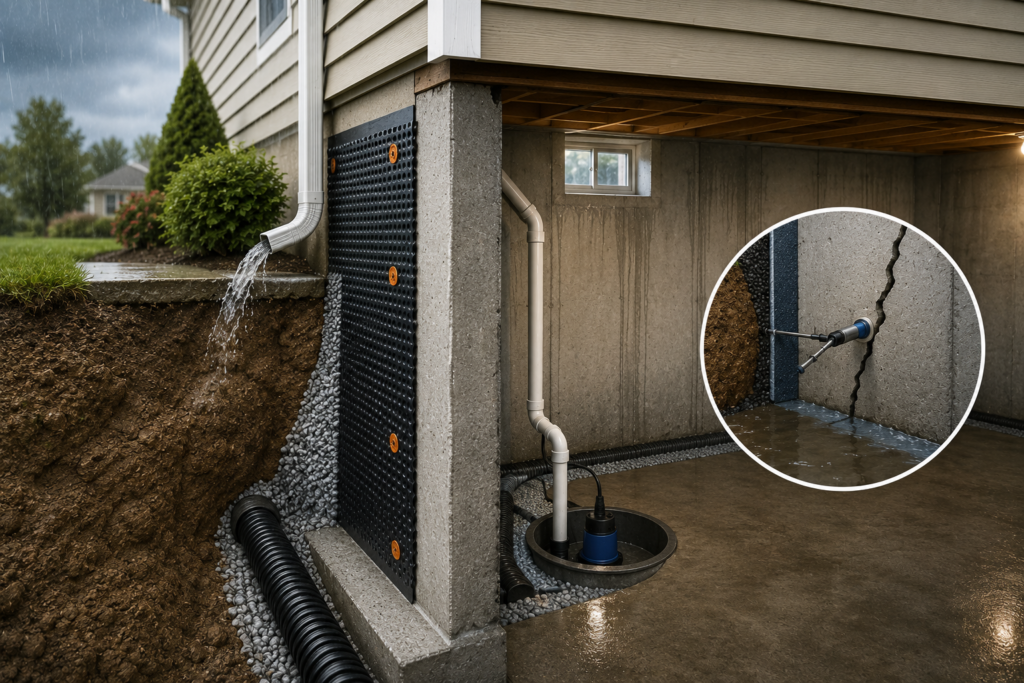
A wet basement is one of the most common problems homeowners face.
You may notice water on the floor after a heavy rain, damp walls, a musty smell, or even mold growing in the corners. While these problems can be frustrating, they're often signs that your basement needs better waterproofing.
The good news is that many basement water problems can be fixed, and in many cases they can be prevented from happening again.
This guide explains everything homeowners should know about basement waterproofing in simple, easy-to-understand language. You'll learn why basements leak, how waterproofing works, what your repair options are, and when it's time to call a professional.
Book A Free Inspection
Or
📞 Call Now for a Free Assessment
What Is Basement Waterproofing?
Basement waterproofing is the process of preventing water from entering your basement. Depending on the cause of the problem, waterproofing may involve sealing foundation cracks, improving drainage around your home, installing a sump pump, or adding an interior or exterior waterproofing system. The goal is to keep your basement dry and protect your home from water damage. Read more: What Is Basement Waterproofing?Why Is My Basement Wet?
There are many reasons why a basement can become wet. Water may enter through foundation cracks, leaking window wells, poor drainage around the home, or hydrostatic pressure pushing groundwater through the foundation. Sometimes the problem is easy to fix, while other situations require a more complete waterproofing solution. Read more: Why Is My Basement Wet?What Causes Basement Leaks?
Basement leaks usually happen because water finds a way inside. Some of the most common causes include:- Heavy rain
- Poor grading around the house
- Clogged gutters
- Short downspouts
- Foundation cracks
- Hydrostatic pressure
- Plumbing leaks
- Window well leaks
Interior vs Exterior Basement Waterproofing
There are two main ways to waterproof a basement. Interior waterproofing manages water after it reaches the foundation and directs it safely away using drainage systems and sump pumps. Exterior waterproofing stops water before it reaches your foundation by sealing the outside walls and improving drainage. The best option depends on your home's construction and the cause of the problem. Read more: Interior vs Exterior Basement WaterproofingSigns Your Basement Needs Waterproofing
Many homeowners don't realize they have a water problem until they notice visible damage. Common warning signs include:- Water on the basement floor
- Damp walls
- Musty odors
- Mold or mildew
- White chalky deposits on concrete walls
- Peeling paint
- Rust on metal objects
- High humidity
How Much Does Basement Waterproofing Cost?
The cost depends on what's causing the water problem. A simple crack repair may cost much less than installing a full interior drainage system or exterior waterproofing. Every home is different, so the best way to understand the cost is through a professional inspection and estimate. Read more: How Much Does Basement Waterproofing Cost?Can I Waterproof My Basement Myself?
Some small problems can be handled by homeowners. For example, cleaning gutters, extending downspouts, or sealing tiny gaps around windows may help reduce moisture. However, if water continues entering your basement, a professional waterproofing solution is often the better long-term investment. Read more: Can I Waterproof My Basement Myself?How Long Does Basement Waterproofing Last?
A properly installed waterproofing system can last for many years. The lifespan depends on the repair method, the quality of the installation, and how well the drainage around your home is maintained. Regular inspections and simple maintenance can help keep your basement dry for a long time. Read more: How Long Does Basement Waterproofing Last?Does Basement Waterproofing Increase Home Value?
A dry basement is something most homebuyers appreciate. Waterproofing can make your home more attractive to buyers by reducing concerns about water damage, mold, and future repairs. It also helps protect finished basements, flooring, and stored belongings. Read more: Does Basement Waterproofing Increase Home Value?Who Should I Call for Basement Waterproofing?
If your basement is leaking or showing signs of moisture, it's usually best to contact a company that specializes in basement waterproofing. An experienced contractor can inspect your home, identify the cause of the problem, and recommend the best solution. Getting two or three estimates is often a smart way to compare repair options. Read more: Who Should I Call for Basement Waterproofing?Can Basement Leaks Be Prevented?
Not every basement leak can be prevented, but regular maintenance can greatly reduce the risk. Here are a few simple ways to protect your basement:- Clean your gutters regularly.
- Make sure downspouts carry water away from your home.
- Keep the ground sloping away from the foundation.
- Repair foundation cracks promptly.
- Check window wells for debris.
- Test your sump pump before heavy rain.
- Watch for damp spots or musty odors.
Frequently Asked Questions
Is a damp basement normal?
A basement should remain dry. Damp walls, standing water, or musty smells often indicate a moisture problem that should be investigated.Will waterproofing stop basement leaks?
In many cases, yes. The key is identifying the source of the water and choosing the correct waterproofing solution.Is waterproofing expensive?
Costs vary depending on the type of repair needed. Minor repairs are generally much less expensive than complete waterproofing systems.Can mold grow in a wet basement?
Yes. Moisture creates the perfect environment for mold and mildew, which is another reason to address leaks as soon as possible.Should I wait before waterproofing my basement?
It's usually better not to wait. Water problems often become worse over time and can lead to additional damage to walls, flooring, insulation, and belongings.Final Thoughts
A wet basement doesn't have to become a major problem. Many basement leaks can be repaired successfully, especially when they're caught early. By understanding what causes water problems, recognizing the warning signs, and choosing the right waterproofing solution, you can protect your home and enjoy a dry, healthier basement for years to come. If you notice water, dampness, or musty odors in your basement, don't ignore them. Taking action early is often the best way to prevent larger and more expensive repairs in the future.Book A Free Inspection
Or