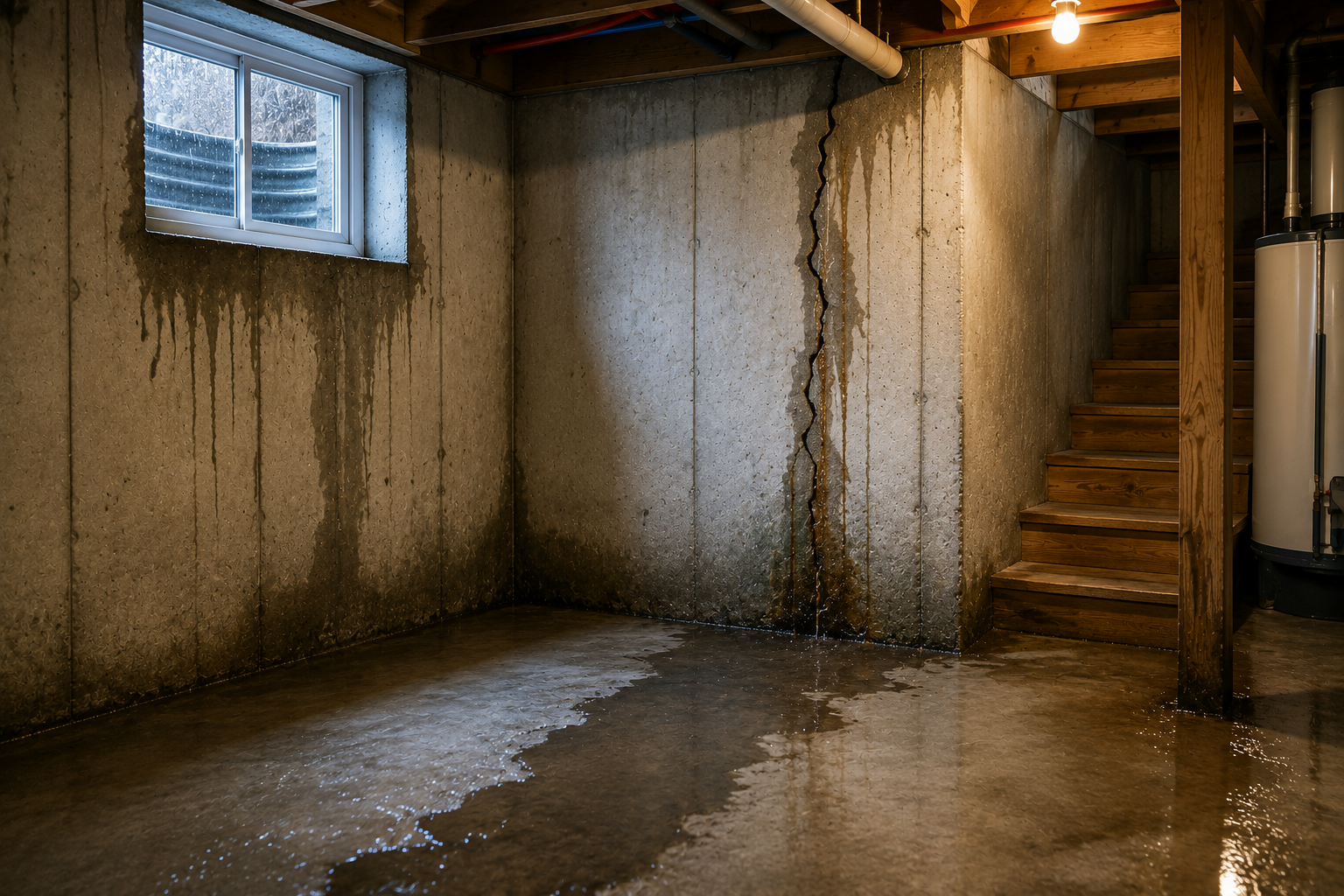

Finding water in your basement can be frustrating and stressful.
Maybe you noticed a small puddle after a heavy rain. Perhaps your basement walls feel damp, or there's a musty smell that won't go away.
If you're asking yourself, "Why is my basement wet?", you're not alone. Basement moisture is one of the most common problems homeowners face.
The good news is that most wet basement problems have a cause—and once you find the cause, you can choose the right solution.
In this guide, we'll explain the most common reasons basements become wet and what you can do about them.
Is It Normal for a Basement to Be Wet?
No. A basement should stay dry all year round. If you notice water, damp walls, or a musty smell, it's usually a sign that moisture is getting into your home. Even if the problem only happens after heavy rain, it's worth investigating before it gets worse.1. Heavy Rain
One of the most common causes of a wet basement is heavy rainfall. When the ground around your home becomes saturated with water, that water pushes against your foundation. If there are cracks or weak areas, water may seep into your basement. You may notice this problem only after large storms.2. Poor Drainage Around Your Home
Rainwater should always flow away from your house. If the ground slopes toward your foundation instead, water collects around the basement walls. Over time, that water can find its way inside. Poor drainage is one of the most common reasons homeowners experience basement leaks.3. Clogged Gutters
Your gutters help carry rainwater away from your roof. If they're full of leaves and debris, water can overflow and pour directly beside your foundation. The more water that collects around your home, the greater the chance it will enter your basement. Cleaning your gutters regularly is one of the easiest ways to help prevent water problems.4. Downspouts That End Too Close to the House
Even if your gutters are clean, short downspouts can still cause problems. If they empty water right beside your home, the soil around your foundation becomes soaked. Extending your downspouts several feet away from the house can often make a big difference.5. Foundation Cracks
Concrete foundations can develop cracks over time. Some cracks are small and harmless, while others allow water to enter your basement. Water often follows the path of least resistance. If there's an opening in the foundation, water may slowly seep through during wet weather.6. Hydrostatic Pressure
This may sound like a complicated term, but the idea is simple. After heavy rain or snow melts, the soil around your home becomes filled with water. As more water builds up, it pushes against your foundation. This pressure can force water through tiny cracks, joints, or even the concrete itself. Hydrostatic pressure is one of the most common causes of basement leaks.7. Window Well Leaks
If your basement has windows below ground level, they probably have window wells around them. If these wells fill with water because they don't drain properly, water can leak through the window and into your basement. Keeping window wells clean and free of debris can help prevent this problem.8. Plumbing Leaks
Sometimes the water isn't coming from outside at all. A leaking pipe, water heater, or washing machine can make it look like your basement has a waterproofing problem. If you're unsure where the water is coming from, a professional inspection can help identify the source.9. Condensation
Not every wet basement is caused by a leak. Warm, humid air can collect on cool basement walls and pipes, creating condensation. This often appears as:- Damp walls
- Water droplets
- Small puddles near pipes
Signs Your Basement Has a Moisture Problem
Sometimes water is obvious. Other times, the signs are more subtle. Watch for:- Water on the floor
- Damp walls
- Water stains
- Musty smells
- Mold or mildew
- Peeling paint
- White chalky deposits on concrete walls
- Rust on metal objects
- High humidity
Can a Wet Basement Cause Other Problems?
Yes. Ignoring water problems can lead to:- Mold growth
- Damaged drywall
- Damaged flooring
- Rotten wood
- Higher humidity
- Damaged furniture and storage boxes
- Foundation damage over time
What Should I Do If My Basement Is Wet?
If you notice moisture in your basement, start by checking:- Your gutters
- Your downspouts
- The grading around your home
- Basement windows
- Visible foundation cracks