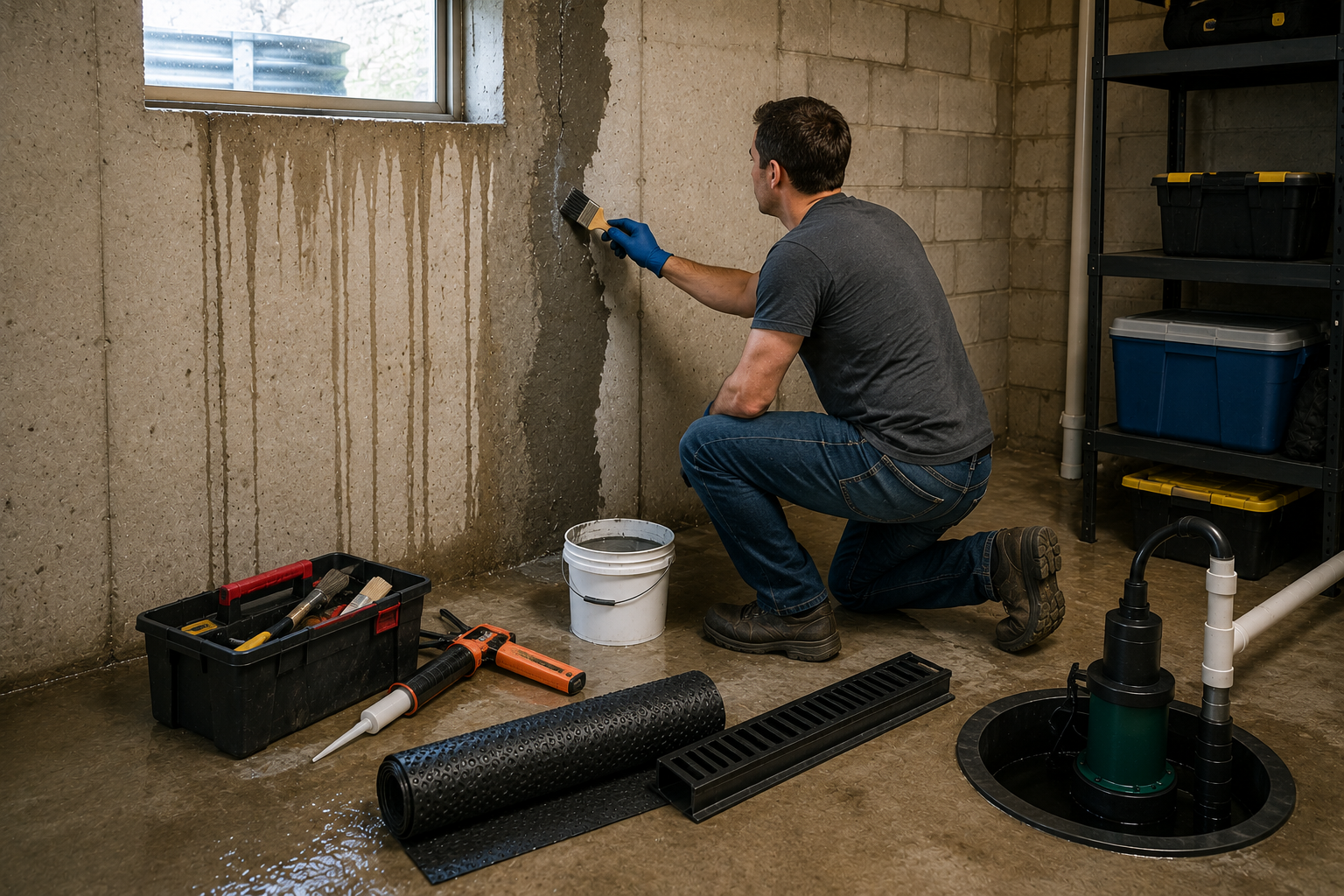

If you've found water in your basement, you may be wondering:
"Can I fix this myself and save some money?"
The answer is sometimes.
There are a few small jobs that many homeowners can do on their own. However, larger water problems usually require professional waterproofing.
The most important thing is to understand what's causing the water to enter your basement. If you fix the wrong problem, the leak may simply come back.
In this guide, we'll explain which basement waterproofing jobs you can do yourself and when it's better to call a professional.
Start by Finding the Source of the Water
Before buying waterproofing products, try to figure out where the water is coming from. Ask yourself:- Does the basement only get wet after heavy rain?
- Is water coming through a crack?
- Is the wall damp all the time?
- Is there a plumbing leak?
- Is there a musty smell but no standing water?
DIY Jobs Many Homeowners Can Do
Some simple maintenance tasks can help reduce basement moisture. These are often good projects for homeowners.Clean Your Gutters
Clogged gutters are one of the most common causes of basement water problems. When gutters overflow, rainwater falls beside your foundation instead of flowing safely away. Cleaning your gutters several times a year can help reduce the amount of water around your home.Extend Your Downspouts
Downspouts should carry water several feet away from your foundation. If they empty beside the house, the soil around your basement can quickly become saturated. Adding downspout extensions is a simple project that many homeowners can do themselves.Improve Drainage Around Your Home
Take a walk around your house after a heavy rain. Does water collect near the foundation? If so, improving the grading around your home may help water drain away instead of pooling beside the basement walls.Keep Window Wells Clean
Leaves, dirt, and debris can block drainage inside basement window wells. If water builds up there, it may leak through the basement window. Cleaning window wells regularly is simple and can help prevent leaks.Seal Small Gaps Around Pipes or Windows
Sometimes water enters through small gaps where pipes or utility lines pass through the wall. In some cases, these small openings can be sealed to help reduce moisture. However, if water continues entering after sealing the gap, there may be a larger problem that needs professional attention.What DIY Waterproofing Usually Won't Fix
Some basement problems require more than a simple repair. For example:- Water coming through foundation walls
- Water entering after every heavy rain
- Large foundation cracks
- Flooding
- Bowing basement walls
- Hydrostatic pressure
- Ongoing moisture problems
Does Waterproof Paint Stop Basement Leaks?
Many homeowners buy waterproof paint hoping it will solve the problem. While waterproof paint may improve the appearance of basement walls, it usually does not stop water from entering. If water continues pushing through the foundation, paint alone won't solve the underlying issue. It's important to fix the source of the water—not just cover it up.Can I Repair a Foundation Crack Myself?
Some very small, non-structural cracks can be repaired using products sold at home improvement stores. However, if the crack:- Is getting larger
- Leaks water
- Is horizontal
- Appears in several places
- Is part of a larger foundation problem
When Should You Call a Waterproofing Professional?
You should consider calling a professional if you notice:- Water entering after heavy rain
- Water on the basement floor
- Large foundation cracks
- Damp basement walls
- Mold growth
- A strong musty smell
- Water coming through several areas
- A basement that stays wet even after simple repairs
Is Professional Waterproofing Worth It?
For many homeowners, yes. Professional waterproofing can help:- Keep your basement dry
- Protect your home's foundation
- Prevent mold growth
- Reduce humidity
- Protect finished basements
- Prevent future water damage
How Can You Help Prevent Basement Leaks?
Even if you hire a professional, regular maintenance is still important. Here are a few simple habits that can help:- Clean gutters every spring and fall.
- Keep downspouts pointed away from the house.
- Check window wells regularly.
- Repair plumbing leaks quickly.
- Test your sump pump before heavy rain.
- Inspect your basement several times a year.