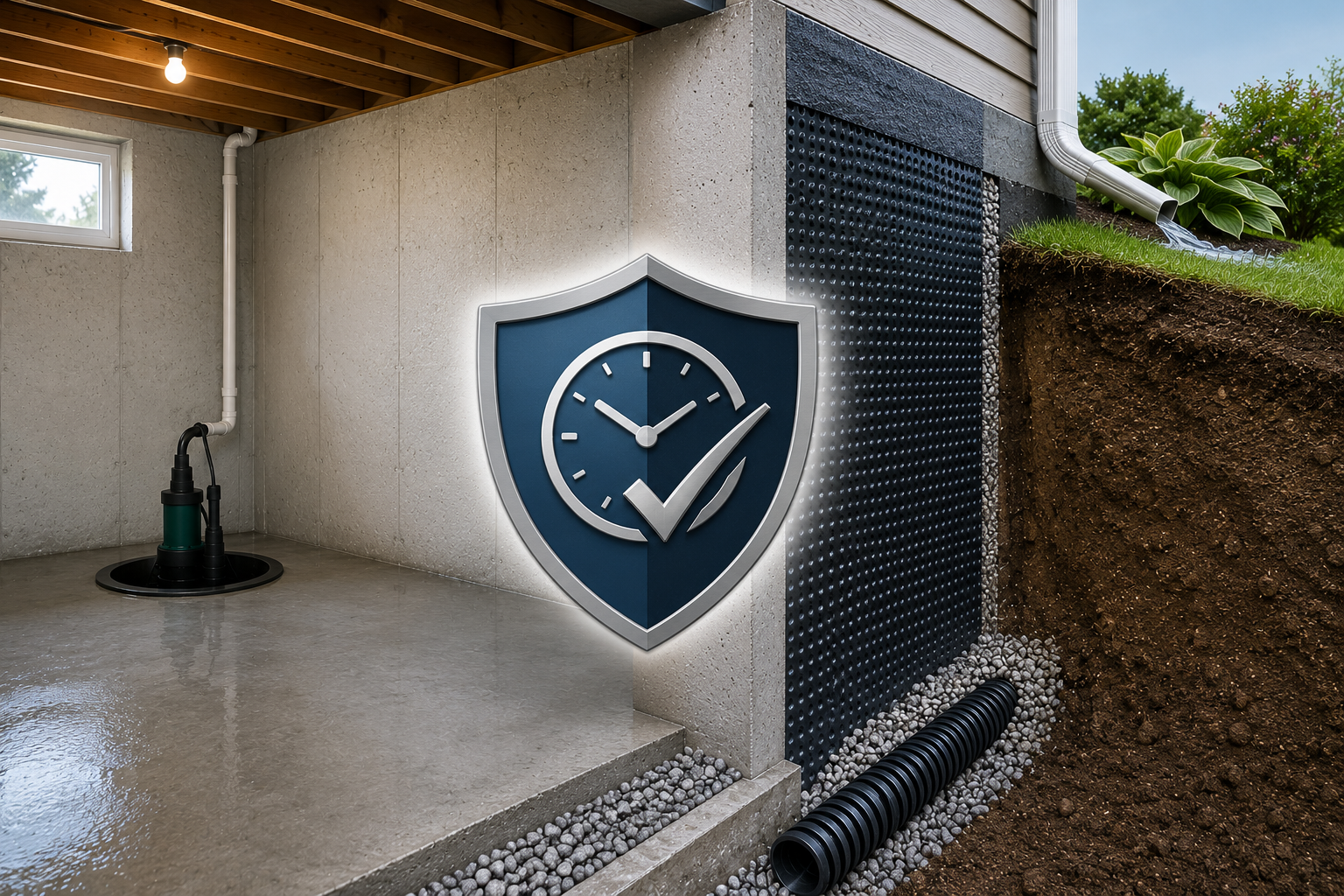

If you're planning to waterproof your basement, one of the first questions you may ask is:
"How long will the waterproofing last?"
The good news is that a properly installed basement waterproofing system can last for many years.
However, the lifespan depends on several things, including the type of waterproofing, the quality of the installation, and how well your home is maintained.
In this guide, we'll explain what affects the life of basement waterproofing and how you can help it last as long as possible.
Is Basement Waterproofing a Permanent Fix?
In many cases, basement waterproofing provides a long-lasting solution. However, no home is exactly the same. The success of any waterproofing system depends on:- The cause of the water problem
- The repair method used
- The quality of the installation
- Regular home maintenance
Different Waterproofing Methods Can Last for Many Years
There are several ways to waterproof a basement. Each one is designed to solve a specific type of water problem. These include:- Interior drainage systems
- Exterior waterproofing membranes
- Foundation crack repairs
- Sump pumps
- Drainage improvements around the home
What Can Affect How Long Waterproofing Lasts?
Several factors can affect the lifespan of your waterproofing system.1. The Quality of the Installation
Even the best waterproofing products won't perform well if they're installed incorrectly. Hiring an experienced waterproofing contractor is one of the best ways to help ensure long-lasting results.2. Proper Drainage Around Your Home
Water should always flow away from your foundation. If water continues to collect beside your house because of poor grading, clogged gutters, or short downspouts, your waterproofing system has to work much harder. Keeping drainage in good condition helps protect your investment.3. Regular Maintenance
Like many parts of your home, waterproofing systems work best when they're maintained. Simple maintenance includes:- Cleaning gutters
- Extending downspouts
- Testing your sump pump
- Keeping window wells clean
- Checking for new foundation cracks
4. Weather Conditions
Homes in areas with heavy rain, snow, or high groundwater levels may experience more pressure around the foundation. While waterproofing systems are designed to handle these conditions, regular inspections are still a good idea.5. Foundation Movement
If your foundation continues to move because of soil settlement or other structural issues, new cracks can sometimes develop. This doesn't necessarily mean the waterproofing failed, but it may mean additional repairs are needed.How Do I Know If My Waterproofing Is Still Working?
A properly working waterproofing system should keep your basement dry. Signs that your system is doing its job include:- Dry basement walls
- No standing water
- No musty smells
- No mold growth
- Low humidity
- No new water stains
What Are the Signs Waterproofing May Need Attention?
Over time, you should watch for:- New water leaks
- Damp walls
- Musty odors
- Mold growth
- Water stains
- New foundation cracks
- Water entering after heavy rain
Can a Sump Pump Last Forever?
No. A sump pump is a mechanical device, and like any machine, it will eventually wear out. That's why it's important to:- Test it regularly.
- Keep the sump pit clean.
- Make sure it turns on properly.
- Consider replacing it if it's old or no longer working reliably.
Can I Make My Waterproofing Last Longer?
Yes. There are several simple things you can do. These include:- Clean gutters regularly.
- Extend downspouts away from the house.
- Keep window wells free of debris.
- Repair plumbing leaks quickly.
- Watch for foundation cracks.
- Inspect your basement after major storms.
Should I Have My Basement Inspected?
If your basement has been waterproofed in the past, occasional inspections are a smart idea. A professional can check for:- New cracks
- Drainage problems
- Sump pump performance
- Signs of moisture
- Changes around your foundation