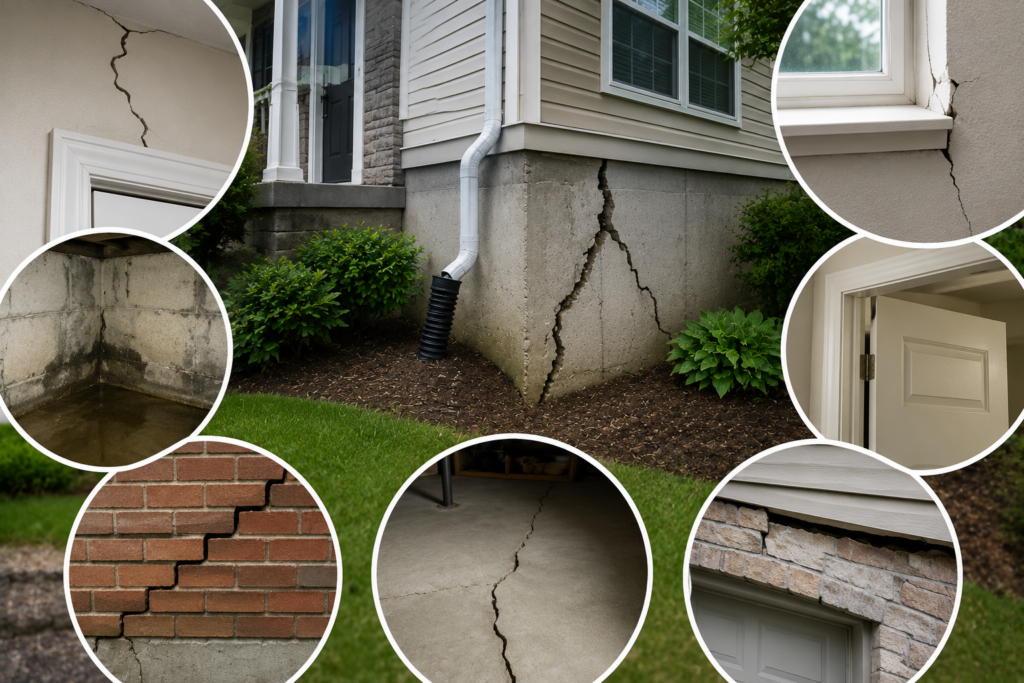
Your home's foundation is built to support your entire house, but like any part of your home, it can develop problems over time.
The good news is that foundation damage usually doesn't happen overnight. In many cases, your home gives you warning signs long before the problem becomes serious.
Knowing what to look for can help you catch problems early, save money on repairs, and protect one of your biggest investments.
Let's look at the most common signs of foundation damage every homeowner should know.
Book A Free Inspection
Or
📞 Call Now for a Free Assessment
1. Cracks in Basement Walls
One of the easiest signs to spot is a crack in your basement wall. Not every crack means you have a serious foundation problem. Concrete naturally develops small hairline cracks as it cures. However, you should pay closer attention if you notice:- Horizontal cracks
- Wide cracks
- Cracks that continue to grow
- Cracks that leak water
- Multiple cracks appearing in different areas
2. Cracks in Drywall
Walk through your home and take a close look at the walls and ceilings. Foundation movement can cause cracks to appear:- Above doors
- Above windows
- In room corners
- Along ceilings
- Where walls meet
3. Doors That Stick or Won't Close
Have you recently noticed that a bedroom door won't latch properly? Does your front door suddenly rub against the frame? As your foundation shifts, door frames can become slightly out of square, making doors difficult to open or close. If several doors begin sticking around the same time, it's worth paying attention.4. Windows That Become Hard to Open
Like doors, windows rely on square frames to operate properly. Foundation movement can cause those frames to shift. You may notice:- Windows that stick
- Windows that won't lock
- Gaps around window frames
- Difficulty opening or closing windows
5. Uneven or Sloping Floors
Floors should feel level when you walk across them. If you begin noticing:- Sloping floors
- Soft spots
- Uneven areas
- Furniture that seems slightly tilted
6. Gaps Around Doors, Windows, or Trim
Foundation movement can pull parts of your home apart slightly. Look for:- Gaps above doors
- Trim separating from walls
- Spaces around windows
- Mouldings pulling away from the ceiling
7. Stair-Step Cracks in Brick Walls
If your home has a brick exterior, inspect it every few months. One of the most common signs of foundation movement is a stair-step crack following the mortar joints between bricks. These cracks may begin small but gradually become larger over time.8. Water Leaks in the Basement
Water entering your basement doesn't always mean foundation damage, but it should never be ignored. Foundation cracks can allow water to enter during heavy rain or snow melt. Moisture inside the basement can also lead to:- Mold growth
- Musty odors
- Damage to flooring
- Damage to stored belongings
9. Bowing or Leaning Basement Walls
Basement walls should remain straight. If a wall appears to lean inward, bulge, or bow, it may be under pressure from the surrounding soil. This is one of the more serious warning signs and should be inspected as soon as possible.10. A Chimney Pulling Away from the House
Take a look at your chimney from outside. If you notice a growing gap between the chimney and your home, it may be caused by uneven foundation settlement. Although this isn't as common as wall cracks or sticking doors, it's a sign that shouldn't be ignored.11. Foundation Cracks Outside Your Home
Walk around your house a few times each year. Look carefully at the exposed foundation. Watch for:- New cracks
- Large cracks
- Horizontal cracks
- Crumbling concrete
- Areas where the crack appears wider than before
Does One Warning Sign Always Mean Foundation Damage?
No. One small crack or a single sticking door doesn't necessarily mean your foundation has failed. Homes naturally settle over time. However, if you begin noticing several warning signs at the same time, or if existing problems continue getting worse, it's a good idea to schedule a professional inspection.When Should You Call a Foundation Repair Specialist?
You should consider having your home inspected if you notice:- Multiple cracks inside or outside
- Horizontal foundation cracks
- Uneven floors
- Bowing basement walls
- Water entering through foundation cracks
- Doors and windows sticking throughout the home
- Large gaps around windows or doors
How Can You Monitor Foundation Damage?
If you're not sure whether a crack is changing, you can keep an eye on it over time. Here are a few simple tips:- Take clear photos every few months.
- Measure the width of larger cracks.
- Write down the date when you first noticed them.
- Check doors and windows every season.
- Watch for new cracks after heavy rain or long dry periods.
Frequently Asked Questions
Are all foundation cracks dangerous?
No. Small hairline cracks are common. Larger cracks, horizontal cracks, leaking cracks, or cracks that continue growing should be inspected.Can foundation damage get worse?
Yes. Foundation problems usually don't repair themselves and often become more expensive if left untreated.How often should I inspect my foundation?
A quick inspection once or twice a year is a good habit, especially after heavy rain, spring thaw, or long dry periods.Is it worth getting a professional inspection?
Absolutely. Even if no repairs are needed, an inspection can provide peace of mind and help identify problems before they become more serious.Learn More About Foundation Repair
Recognizing the warning signs is only the first step. If you'd like to learn what causes foundation problems, the different repair options available, how much repairs may cost, and how to choose the right contractor, read our Complete Homeowner's Guide to Foundation Repair. It's a simple, homeowner-friendly guide that explains everything you need to know to keep your home's foundation safe and strong.Final Thoughts
Your home is often the first to tell you when something isn't right. A crack in the wall, a sticking door, or an uneven floor may not seem like a big deal on its own, but together they can point to an underlying foundation problem. By paying attention to these warning signs and acting early, you can often avoid larger repairs and protect your home's value for years to come. If you ever feel unsure about what you're seeing, a professional foundation inspection is one of the best investments you can make for your home.Book A Free Inspection
Or