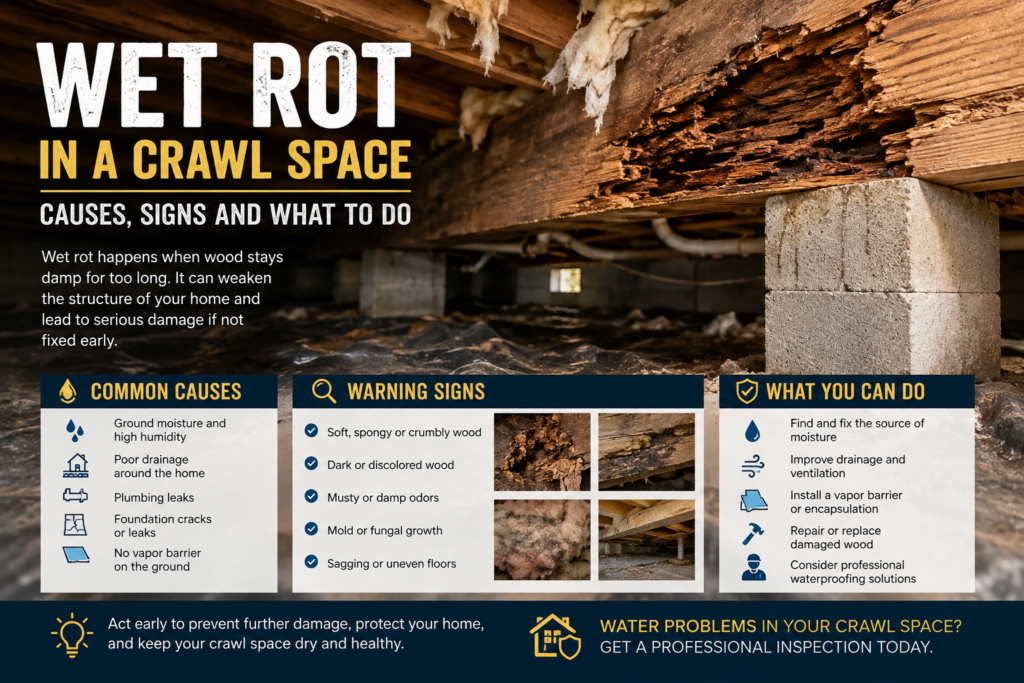
A crawl space is easy to forget because it is hidden under your home. However, water and high moisture in a crawl space can create problems over time.
One problem homeowners may discover is wet rot.
Wet rot happens when wood stays damp for a long period and begins to decay. Floor joists, beams, subfloors, and other wooden parts of a home can be affected if the moisture problem continues.
The good news is that finding the source of the moisture early can help prevent further damage.
This guide explains wet rot in simple terms, including what causes it, what signs to look for, and what you can do if you find moisture or damaged wood in your crawl space.
What Is Wet Rot?
Wet rot is a type of wood decay that develops when wood remains damp for a long time. Wood is strong when it stays reasonably dry. But when it is repeatedly exposed to water or high moisture, fungi can begin to grow and break down the wood. Over time, affected wood may become:- Soft
- Weak
- Cracked
- Darker than normal
- Spongy
- Easy to break
What Causes Wet Rot in a Crawl Space?
Wet rot needs moisture to develop. Crawl spaces can become damp for many different reasons.Ground Moisture
Moisture from the soil underneath a crawl space can move into the air. If the ground is exposed and there is no proper vapor barrier, this moisture can increase humidity inside the crawl space.Water Entering Through Foundation Walls
Cracks or openings in the crawl-space foundation may allow rainwater or groundwater to enter. You may notice damp walls, staining, or standing water after heavy rain.Poor Drainage Around the House
Water should normally flow away from the foundation. If the yard slopes toward the house or water collects beside the foundation, more moisture may find its way into the crawl space.Downspout Problems
Roof gutters collect a large amount of rainwater. If downspouts release that water directly beside the foundation, the soil around the house can become very wet. Extending downspouts farther away may help in some situations.Plumbing Leaks
A leaking pipe, drain, or plumbing connection can introduce water directly into the crawl space. Even a slow leak can create a serious moisture problem if it continues for months without being noticed.High Humidity
A crawl space does not need to have standing water to have a moisture problem. High humidity can keep wood damp enough for mold and wood decay to develop over time.Sump Pump Problems
If a crawl space uses a sump pump and the pump stops working, water may begin to collect. Possible causes include a power failure, blocked discharge line, failed pump, or another problem with the system.How Can You Recognize Wet Rot?
Wet rot is not always obvious, especially when it develops in a part of the crawl space that is difficult to see. There are several warning signs homeowners can look for.Soft or Spongy Wood
Healthy structural wood should feel solid. Wood affected by rot may feel soft or spongy when carefully checked.Dark or Discoloured Wood
Affected wood may look darker than the surrounding wood. However, colour alone cannot confirm that wood has wet rot.Cracking or Crumbling Wood
Damaged wood may develop cracks or begin breaking apart. In more advanced cases, pieces may crumble when touched.Musty Smells
A persistent musty or damp smell can indicate excess moisture in the crawl space. The smell does not necessarily mean wet rot is present, but it is a good reason to investigate the area.Visible Mold or Fungal Growth
Mold or fungal growth can be another sign that the crawl space has too much moisture. Different types of fungi can look different, so appearance alone should not be used to identify the exact problem.Sagging or Uneven Floors
If structural wood under the home becomes badly damaged, you may eventually notice changes in the floor above. These could include:- Sagging areas
- Uneven floors
- Soft areas
- Movement when walking
Wet Rot vs Dry Rot: What's the Difference?
The names can be confusing. Both wet rot and dry rot involve fungi that damage wood. The main difference is the conditions in which the fungi grow and the particular fungi involved. Wet rot is generally associated with wood that remains very damp because of an ongoing moisture source. Despite its name, dry rot also needs moisture to begin growing. It does not simply appear because wood is dry. For homeowners, the most important point is simple:If wood is rotting, you need to determine both the condition of the wood and where the moisture is coming from.It is usually more useful to solve the moisture problem than to try to identify wood decay based only on its appearance.
Can Crawl-Space Moisture Cause Wood to Rot?
Yes. Wood naturally contains some moisture, but long-term exposure to excessive moisture can create conditions where wood-decay fungi can grow. Common sources of crawl-space moisture include:- Damp soil
- Foundation leaks
- Plumbing leaks
- Poor exterior drainage
- High humidity
- Groundwater
- Water entering after heavy rain
Is Wet Rot Dangerous to Your Home?
It can become a serious problem if structural wood is affected. Many homes have wooden components above their crawl spaces, including:- Floor joists
- Support beams
- Subflooring
- Rim joists
- Posts
- Which part of the home is affected
- How much wood is damaged
- How long the moisture problem has existed
- Whether the wood is structural
- Whether the moisture source is still active
Can Wet Rot Spread?
Wet rot does not spread through perfectly dry wood in the same way homeowners sometimes imagine. The bigger concern is that the moist conditions causing the rot may affect additional areas. For example, imagine water regularly entering one side of a crawl space. At first, only one wooden joist may remain wet. If the water problem continues, nearby wood may also become damp enough to support decay. This can make it appear that the rot is spreading. The most important step is therefore to stop the source of the moisture. Once the area is kept appropriately dry, the conditions that allow wet rot to continue are reduced. However, wood that has already suffered significant damage does not automatically regain its original strength simply because it dries.How Do You Stop Moisture in a Crawl Space?
The correct solution depends on where the moisture is coming from. There is no single method that works for every crawl space.Fix Plumbing Leaks
If a pipe or drain is leaking, repair the plumbing problem first. Waterproofing will not solve a leaking water pipe.Improve Exterior Drainage
Check whether rainwater is collecting beside the foundation. Possible improvements may include:- Correcting yard grading
- Extending downspouts
- Cleaning gutters
- Improving drainage around the house
- Installing an appropriate drainage system when needed
Repair Foundation Cracks
Cracks in crawl-space foundation walls may allow water to enter. The correct repair method depends on the type and condition of the crack.Install a Vapor Barrier
A vapor barrier can help reduce the amount of ground moisture entering the crawl space. It is normally installed over exposed soil or other appropriate surfaces as part of a moisture-control system.Improve Drainage Inside the Crawl Space
If groundwater regularly enters the crawl space, a drainage system may be needed to collect and direct the water.Install a Sump Pump
A sump pump can collect and remove water from a low point in the crawl space. The need for one depends on the property's drainage conditions.Crawl Space Encapsulation
In some homes, crawl-space encapsulation may be used to create a cleaner and more controlled environment. An encapsulation system can include a heavy-duty vapor barrier and sealing measures designed to reduce moisture entering the crawl space. The exact approach depends on the design and condition of the home.When Should Damaged Wood Be Repaired?
Stopping the water or moisture source should be a priority, but damaged structural wood may also need attention. Wood should be inspected when it appears:- Soft
- Crumbling
- Badly cracked
- Sagging
- Significantly deteriorated
- Unable to properly support the structure
How Can Crawl-Space Waterproofing Help?
Crawl-space waterproofing focuses on controlling unwanted water and moisture. Depending on the cause of the problem, a waterproofing plan may include:- Foundation crack repair
- Interior drainage
- Exterior drainage improvements
- Sump pump installation
- Vapor barriers
- Crawl-space encapsulation
- Improvements to water drainage around the foundation
Can You Prevent Wet Rot From Coming Back?
Reducing moisture is one of the most important steps. Homeowners can periodically check their crawl spaces for signs such as:- Standing water
- Damp soil
- Foundation leaks
- Plumbing leaks
- Musty smells
- Mold
- Damp insulation
- Wood discoloration
- Water near the foundation
- Sump pump problems
Wet Rot in a Crawl Space: What Should You Do First?
If you discover wet or damaged wood in your crawl space, avoid immediately assuming that you need a particular waterproofing system. Start by answering three questions: 1. Where is the moisture coming from? Is it groundwater, rainwater, a plumbing leak, damp soil, poor drainage, or high humidity? 2. Is the moisture problem still active? Look for current leaks, standing water, damp soil, or high moisture. 3. Has the wood been structurally damaged? If beams, joists, posts, or other important structural components appear weakened, have them properly evaluated. Once you understand these three things, it becomes much easier to determine the next step.Need Help With a Wet Crawl Space?
If your crawl space has standing water, foundation leaks, high moisture, or other water problems, finding the source is the first step toward protecting your home. Learn more about Crawl Space Waterproofing and the different ways water and moisture can be controlled. If you are unsure where the water is coming from, request an inspection to better understand the problem and the possible solutions for your home.Book A Free Inspection
Or