
Have you noticed water collecting around your home after it rains?
Does your yard stay wet for days?
Do you see water near your foundation or in your basement?
If so, you may have a drainage problem.
Good drainage is one of the most important parts of protecting your home. When rainwater flows away from your house, it helps keep your basement dry, protects your foundation, and reduces the risk of expensive repairs.
In this guide, we'll explain how drainage works, why it's important, and what homeowners can do to keep water away from their homes.
Why Is Good Drainage Important?
Every time it rains, water needs somewhere to go. If water cannot drain away properly, it may collect around your home's foundation. Over time, this can lead to:- Wet basements
- Foundation cracks
- Water leaks
- Soil erosion
- Mold and mildew
- Damage to landscaping
Why Does Water Collect Around My House?
Water can collect around your home for many reasons. Common causes include:- Poor yard grading
- Heavy clay soil
- Clogged gutters
- Short downspouts
- Poor drainage systems
- Heavy rainfall
What Is a French Drain?
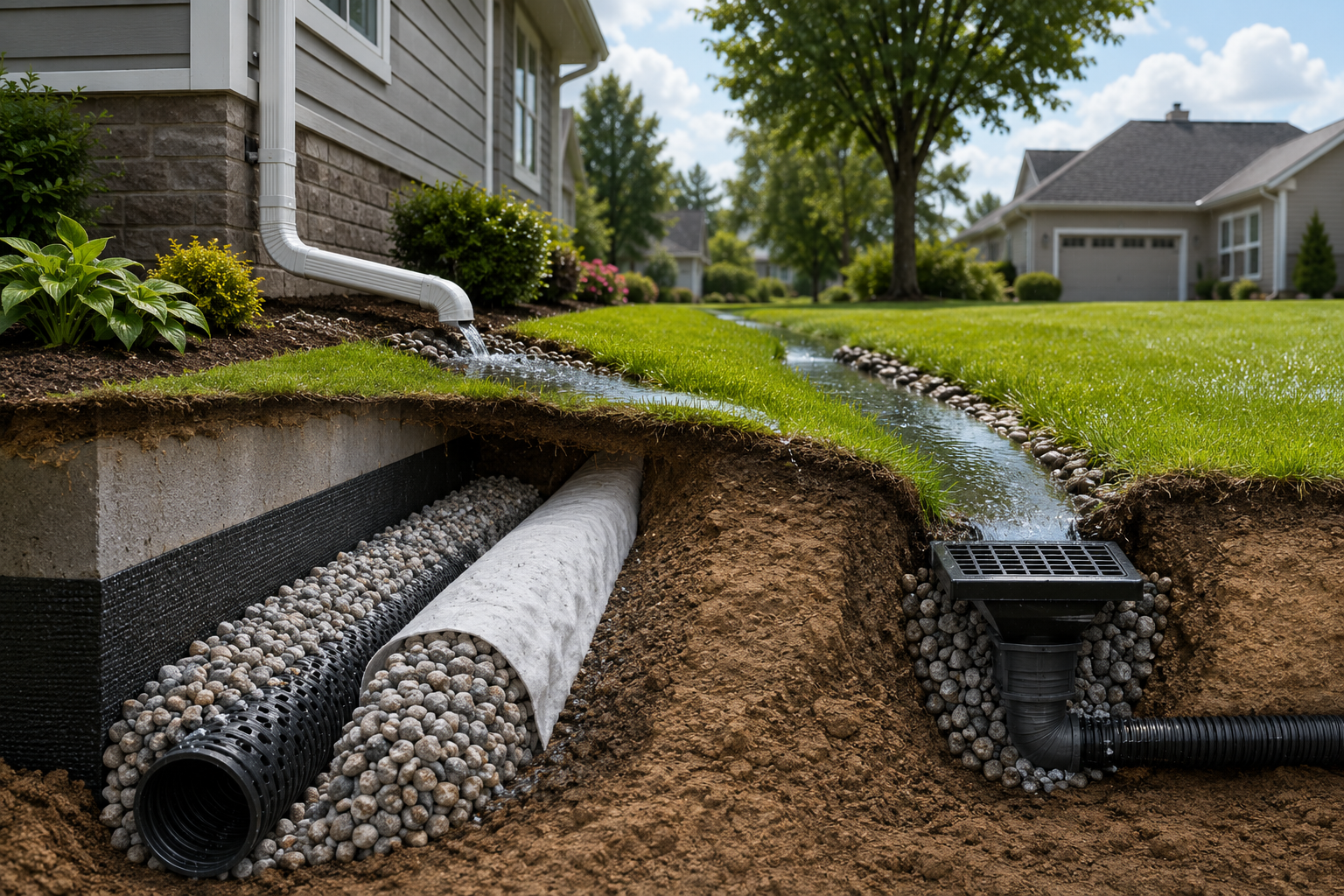
A French drain is one of the most common drainage systems used around homes. It is a trench filled with gravel that contains a perforated pipe. The pipe collects water and carries it away from your home before it reaches the foundation. French drains are often installed in yards, around foundations, or along retaining walls. Read more: What Is a French Drain?What Is Weeping Tile?
Despite its name, weeping tile is usually a pipe, not a tile. It is installed around the outside of your home's foundation. Its job is to collect groundwater and direct it toward a safe drainage point, such as a sump pit. Many newer homes already have weeping tile installed. Read more: What Is Weeping Tile?French Drain vs. Weeping Tile
Many homeowners think these two systems are the same. While they work in similar ways, they are used in different locations and for different purposes. Knowing the difference can help you understand which system is best for your home. Read more: French Drain vs. Weeping Tile: What's the Difference?How Does Yard Drainage Protect Your Foundation?
Your yard plays a big role in protecting your foundation. If rainwater flows toward your home instead of away from it, water can build up around the foundation walls. Good yard drainage helps move water safely away before it causes leaks or foundation damage. Read more: How Does Yard Drainage Protect Your Foundation?Signs Your Yard Has Poor Drainage
Some drainage problems are easy to see. Common warning signs include:- Standing water after rain
- Soggy grass
- Muddy areas
- Water flowing toward the house
- Soil washing away
- Wet basement walls
How Much Does a French Drain Cost?
One of the first questions homeowners ask is how much a French drain costs. The answer depends on several things, including:- The size of your property
- The length of the drain
- Soil conditions
- Where the drain will be installed
- The amount of digging required
How Long Does a French Drain Last?
A properly installed French drain can provide many years of reliable drainage. Its lifespan depends on:- Installation quality
- Soil conditions
- Maintenance
- Tree roots
- Debris buildup
Can I Install a French Drain Myself?
Some homeowners choose to install a French drain themselves. However, proper installation requires:- Planning
- Digging
- Correct slope
- Gravel placement
- Pipe installation
- Proper drainage location
Who Should I Call for Drainage Problems?
If water is collecting around your home, it's best to contact a drainage or basement waterproofing specialist. These professionals can inspect your property, find the source of the problem, and recommend the best solution. Getting two or three estimates is always a good idea before starting major work. Read more: Who Should I Call for Drainage Problems?Simple Ways to Improve Drainage Around Your Home
Not every drainage problem requires major construction. Simple improvements may include:- Cleaning gutters regularly.
- Extending downspouts away from the house.
- Keeping leaves out of drainage areas.
- Making sure the ground slopes away from your home.
- Repairing damaged drainage pipes.
- Checking your sump pump regularly.