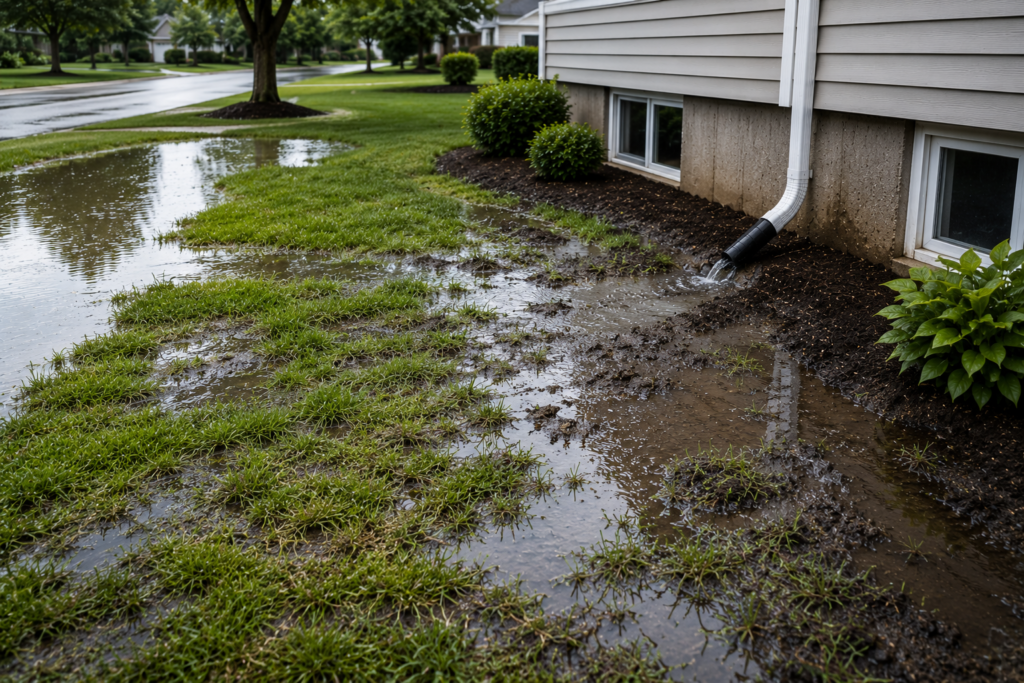
Does your yard stay wet long after it rains?
Do you notice puddles that don't disappear for days?
These are common signs of poor yard drainage.
Poor drainage may seem like a small problem, but over time it can lead to basement leaks, foundation damage, dead grass, and costly repairs.
The good news is that many drainage problems can be fixed if you catch them early.
In this guide, we'll explain the most common signs of poor yard drainage and what you can do about them.
Book A Free Inspection
Or
📞 Call Now for a Free Assessment
Why Is Good Yard Drainage Important?
Every time it rains, water should flow away from your home. If it doesn't, water can collect around your foundation or in your yard. Over time, this can cause:- Basement leaks
- Foundation cracks
- Mold and mildew
- Soil erosion
- Damage to your lawn and landscaping
1. Standing Water After Rain
One of the easiest signs to spot is standing water. If puddles remain in your yard for more than a day or two after a rainstorm, your yard may not be draining properly. While small puddles are normal right after heavy rain, they should disappear fairly quickly.2. Soggy or Muddy Lawn
Does your lawn stay soft and muddy even when it hasn't rained for a while? This is often a sign that water is trapped in the soil. Constantly wet ground can make it difficult for grass to grow and can damage your yard over time.3. Water Collects Near Your Foundation
Rainwater should flow away from your home. If you see water collecting beside your foundation, it's a warning sign that your drainage system may not be working properly. Water sitting next to your foundation increases the risk of basement leaks and foundation damage.4. Basement Leaks After Heavy Rain
If water enters your basement after a storm, poor yard drainage may be one of the reasons. When too much water builds up around the foundation, it can eventually find a way into your basement through small cracks or weak spots.5. Soil Washing Away
Heavy rain can wash away soil if water isn't draining properly. You may notice:- Exposed roots
- Uneven ground
- Small trenches in your yard
- Missing mulch
6. Dead Grass or Dying Plants
Too much water is just as harmful as too little. If certain parts of your lawn are always wet, grass and plants may begin to turn yellow or die because their roots cannot get enough air.7. Water Flows Toward Your House
Watch your yard during a rainstorm if it's safe to do so. If you notice water running toward your home instead of away from it, the ground may not be sloping correctly. This is one of the most common causes of drainage problems.8. Mosquitoes Around Your Yard
Mosquitoes like standing water. If you notice more mosquitoes around your yard after rain, it may be because water is collecting in low areas. Improving drainage can help reduce these wet areas.9. Cracks in Walkways or Driveways
Poor drainage can wash away the soil underneath concrete. Over time, this may cause:- Small cracks
- Uneven sidewalks
- Sunken patios
- Damaged driveways
What Causes Poor Yard Drainage?
Several things can cause drainage problems around your home. Some of the most common include:- Poor yard grading
- Heavy clay soil
- Clogged gutters
- Downspouts that end too close to the house
- Low spots in the yard
- Blocked French drains
- Damaged weeping tile
How Can You Improve Yard Drainage?
Many drainage problems can be improved with simple maintenance. You can:- Clean your gutters regularly.
- Extend downspouts farther away from your home.
- Remove leaves and debris from drains.
- Fill low spots where water collects.
- Make sure the ground slopes away from your foundation.
- Consider installing a French drain if recommended by a professional.
When Should You Call a Professional?
You should contact a drainage or basement waterproofing specialist if:- Your yard stays wet for several days after rain.
- Water collects beside your foundation.
- Your basement leaks after storms.
- You notice soil erosion.
- Standing water keeps coming back.
- You're unsure what's causing the drainage problem.
Frequently Asked Questions
How do I know if my yard has poor drainage?
Common signs include standing water, muddy grass, water near the foundation, basement leaks, and soil erosion.Is it normal for water to stay in my yard after rain?
Small puddles are normal after heavy rain, but they should disappear within a day or two. If they remain longer, you may have a drainage problem.Can poor yard drainage damage my foundation?
Yes. Water collecting around the foundation can increase the risk of basement leaks, foundation cracks, and other structural problems.Can I improve drainage myself?
Simple improvements like cleaning gutters and extending downspouts can help. Larger problems may require professional drainage solutions.Learn More About Drainage & Water Management
Knowing the signs of poor yard drainage is the first step toward protecting your home from water damage. If you'd like to learn about French drains, weeping tile, yard grading, drainage costs, and other ways to keep water away from your home, read our Complete Homeowner's Guide to Drainage & Water Management. It's an easy-to-understand guide created to help homeowners understand drainage systems and protect their homes from basement leaks, foundation damage, and costly repairs.Final Thoughts
Poor yard drainage is a problem that should never be ignored. Standing water, muddy grass, basement leaks, and water collecting near your foundation are all signs that your property may not be draining properly. By fixing drainage problems early, you can protect your foundation, keep your basement dry, improve the health of your lawn, and avoid expensive repairs in the future.Book A Free Inspection
Or