If you've been looking into basement waterproofing or drainage systems, you've probably heard the term weeping tile.
The name can be confusing because it isn't actually a tile.
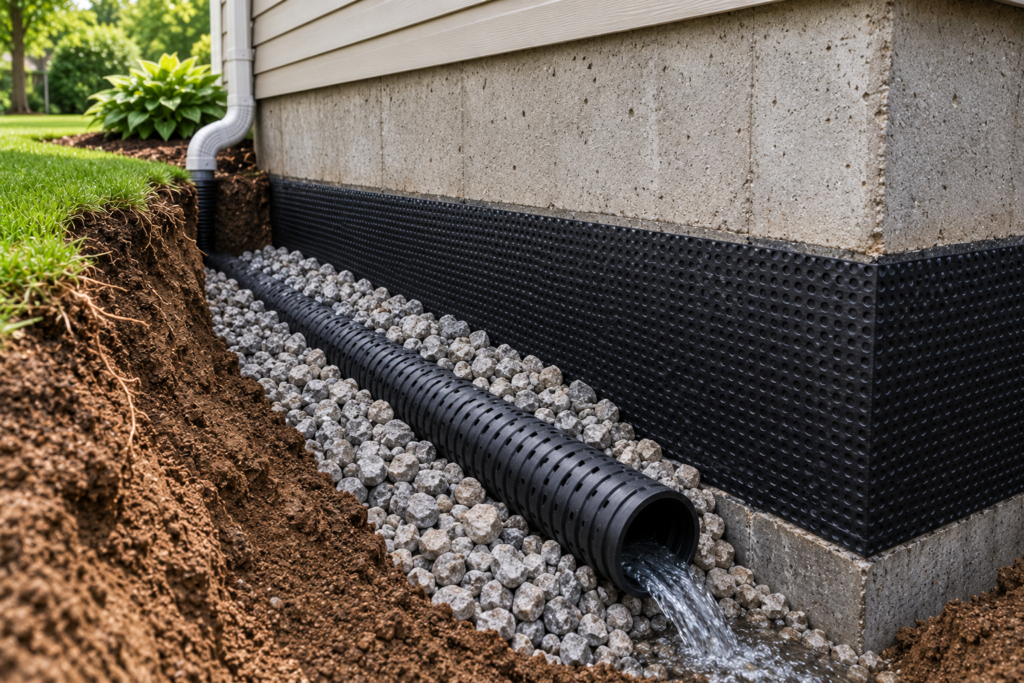
In fact, modern weeping tile is usually a plastic pipe with small holes that collects water around your home's foundation.
Its job is simple: move water away from your foundation before it can enter your basement.
In this guide, we'll explain what weeping tile is, how it works, and why it's an important part of protecting your home.
Book A Free Inspection
Or
📞 Call Now for a Free Assessment
What Is Weeping Tile?
Weeping tile is a drainage pipe installed around the outside of your home's foundation. The pipe has many small holes that allow groundwater to enter. Once the water enters the pipe, it is carried away from your foundation to a safe drainage location, such as a sump pit or a storm drainage system. Although people still call it "weeping tile," today's systems almost always use flexible plastic pipe instead of clay tiles.Why Is It Called "Weeping Tile"?
Years ago, builders used short clay tiles placed end to end around the foundation. Small gaps between the tiles allowed water to seep—or "weep"—into the drainage system. Even though today's systems use plastic pipe, the name weeping tile has remained the same.How Does Weeping Tile Work?
Weeping tile works quietly underground. Here's how it works:- Rainwater soaks into the soil.
- Water moves down toward your foundation.
- The small holes in the weeping tile allow the water to enter the pipe.
- The pipe carries the water away from your home.
- The water is discharged safely through a sump pump or another drainage system.
Where Is Weeping Tile Installed?
Most weeping tile is installed around the outside of a home's foundation near the footing. This allows it to collect groundwater before the water reaches your basement walls. In some homes, an interior weeping tile system may also be installed as part of a basement waterproofing system.Why Is Weeping Tile Important?
Water naturally moves through the soil after it rains. Without a drainage system, that water can build up around your foundation. Too much water around your home can lead to:- Basement leaks
- Wet basement walls
- Foundation cracks
- Mold and mildew
- Water damage
Does Every Home Have Weeping Tile?
Many newer homes have weeping tile installed during construction. Older homes may not have one, or the existing system may no longer work properly. If your home has repeated drainage problems, a waterproofing specialist can inspect your drainage system.Can Weeping Tile Become Blocked?
Yes. Over time, weeping tile may become blocked by:- Dirt
- Mud
- Tree roots
- Small stones
- Debris
What Are the Signs of a Weeping Tile Problem?
A damaged or blocked weeping tile system may cause:- Water in the basement
- Wet basement walls
- Standing water around the foundation
- Damp or musty smells
- Mold growth
- Basement leaks after heavy rain
Can Weeping Tile Be Repaired?
Yes. Depending on the problem, a contractor may recommend:- Cleaning the drainage system
- Repairing damaged sections
- Replacing part of the pipe
- Installing a new drainage system
How Can You Help Your Weeping Tile Last Longer?
Although most of the system is underground, there are still ways to help protect it. Simple maintenance includes:- Keep gutters clean.
- Extend downspouts away from the house.
- Keep surface drains free of debris.
- Watch for standing water after heavy rain.
- Have drainage problems inspected early.
When Should You Call a Professional?
You should contact a drainage or basement waterproofing specialist if:- Your basement leaks after rain.
- Water collects around your foundation.
- You notice damp basement walls.
- Your yard stays wet for long periods.
- You're unsure whether your weeping tile is working properly.
Frequently Asked Questions
Is weeping tile actually made of tile?
No. Modern weeping tile is usually made from perforated plastic pipe. The old name has simply stayed the same.What does weeping tile do?
It collects groundwater around your foundation and carries it away before it can enter your basement.Does every house have weeping tile?
Many newer homes do, but some older homes may not have one or may have an older system that no longer works properly.Can blocked weeping tile cause basement leaks?
Yes. If water cannot drain away properly, it may collect around the foundation and increase the risk of basement leaks.Learn More About Drainage & Water Management
Understanding how weeping tile works is an important step toward protecting your home from water damage. If you'd like to learn about French drains, yard drainage, standing water, drainage costs, and other ways to keep water away from your home, read our Complete Homeowner's Guide to Drainage & Water Management. It's an easy-to-understand guide created to help homeowners understand drainage systems and make informed decisions about protecting their homes.Final Thoughts
Weeping tile is one of the most important drainage systems around your home, even though you'll probably never see it. By collecting groundwater and carrying it away from your foundation, it helps reduce the risk of basement leaks, foundation damage, and costly repairs. If you're experiencing ongoing drainage problems or a wet basement, having your weeping tile system inspected is a smart first step toward protecting your home.Book A Free Inspection
Or