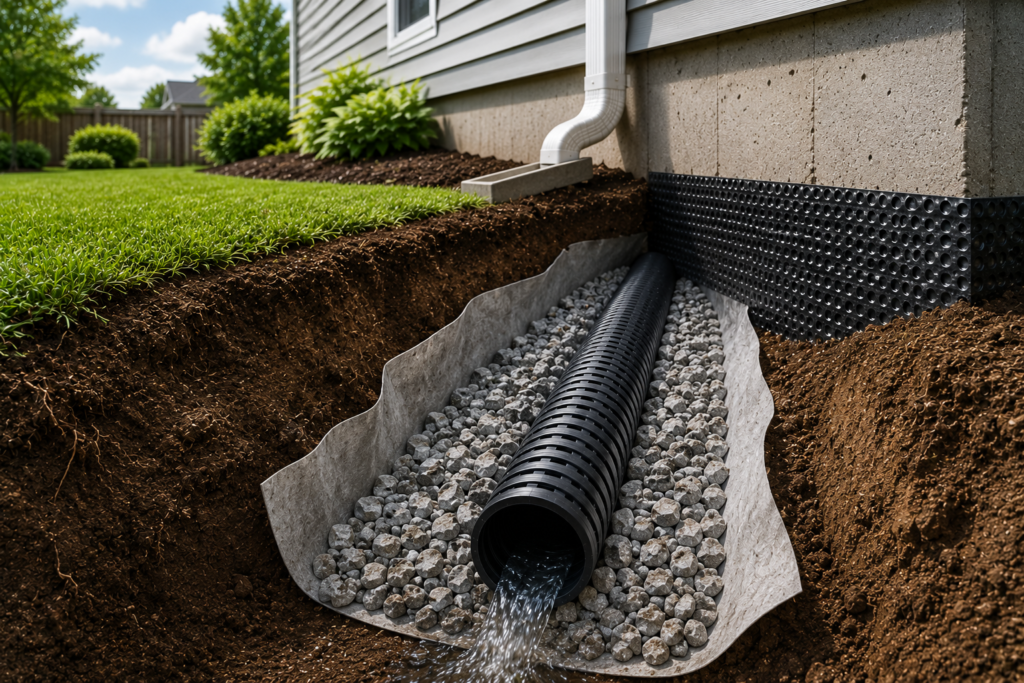
If you're thinking about installing a French drain, you may be wondering:
"How long will it last?"
The good news is that a properly installed French drain can last for many years.
Like any part of your home, its lifespan depends on how well it is installed, the soil around your home, and how well it is maintained.
In this guide, we'll explain what affects the life of a French drain and how you can help it last as long as possible.
Does a French Drain Last Forever?
No. A French drain is built to last a long time, but it won't last forever. Over the years, dirt, roots, and other debris can affect how well it works. The good news is that regular maintenance can help keep it working properly for many years.Book A Free Inspection
Or
📞 Call Now for a Free Assessment
What Affects the Life of a French Drain?
Several things can affect how long a French drain lasts. Let's look at the most common ones.1. Installation Quality
The quality of the installation is one of the biggest factors. A properly installed French drain should have:- The correct slope
- Quality drainage pipe
- Clean gravel
- Good drainage fabric (when used)
- A proper outlet for the water
2. Soil Conditions
The type of soil around your home also makes a difference. For example:- Heavy clay soil drains more slowly.
- Sandy soil usually drains more easily.
- Rocky soil may affect installation.
3. Tree Roots
Large trees growing near a French drain can sometimes cause problems. Tree roots naturally grow toward moisture. Over time, roots may enter or surround the drainage pipe and reduce how well water flows. If large trees are close to the drain, regular inspections may help catch problems early.4. Debris and Dirt
Although French drains are buried underground, dirt and small particles can slowly build up inside the system. This may reduce how well water flows. Keeping surface drains clean and fixing drainage problems early can help reduce the amount of debris entering the system.5. Heavy Rain
A properly installed French drain is designed to handle normal rainfall. However, repeated heavy storms over many years place more demand on the drainage system. Even so, a well-built French drain is designed to continue protecting your home through changing weather conditions.How Can You Help Your French Drain Last Longer?
A French drain doesn't require a lot of maintenance, but a little care can make a big difference. Here are a few simple things you can do.- Clean your gutters regularly.
- Extend downspouts away from your home.
- Keep drainage outlets clear of leaves and debris.
- Watch for standing water after heavy rain.
- Fix drainage problems before they become worse.
- Have the system inspected if you notice changes.
How Do You Know If a French Drain Isn't Working?
You may notice:- Standing water in your yard
- Water collecting near the foundation
- Basement leaks
- Muddy areas that don't dry
- Water returning to places that were previously dry
Can a French Drain Be Repaired?
Yes. If a problem is found, the solution depends on the cause. A contractor may recommend:- Cleaning the drainage system
- Repairing damaged sections
- Replacing part of the pipe
- Improving drainage around the property
Is Replacing a French Drain Common?
Not usually. Most homeowners never need to replace the entire drainage system. In many cases, only a small section needs repair if damage occurs. Regular maintenance and inspections can help avoid larger problems.When Should You Call a Professional?
You should contact a drainage or basement waterproofing specialist if:- Water starts collecting around your home again.
- Your basement leaks after rain.
- Your yard stays muddy for several days.
- You notice standing water near the drainage system.
- You're unsure whether your French drain is working properly.
Frequently Asked Questions
Does a French drain last forever?
No. Like any drainage system, it will eventually wear over time, but a properly installed French drain can provide reliable drainage for many years.Can tree roots damage a French drain?
Yes. In some cases, tree roots can grow around or into the drainage pipe and reduce water flow.Does a French drain need maintenance?
Yes, but very little. Keeping gutters clean, maintaining drainage outlets, and watching for standing water can help the system continue working properly.How do I know if my French drain has a problem?
Standing water, basement leaks, soggy grass, or water collecting around the foundation may be signs that the drainage system should be inspected.Learn More About Drainage & Water Management
Understanding how long a French drain can last is just one part of protecting your home from water damage. If you'd like to learn about French drains, weeping tile, yard drainage, standing water, drainage costs, and other ways to keep water away from your home, read our Complete Homeowner's Guide to Drainage & Water Management. It's an easy-to-understand guide created to help homeowners understand drainage systems and make informed decisions about protecting their homes from water damage.Final Thoughts
A properly installed French drain is a long-term investment in protecting your home. With good installation, regular maintenance, and occasional inspections, it can continue moving water away from your foundation for many years. If you notice standing water, basement leaks, or other signs of drainage problems, don't ignore them. Addressing small issues early can help your French drain continue protecting your home and may prevent more expensive repairs in the future.Book A Free Inspection
Or