Book A Free Inspection
Or
📞 Call Now for a Free Assessment
Article Outline
Part 1: Understanding Basement Sump Pumps
- What Is a Basement Sump Pump?
- How a Sump Pump System Works
- Why Basements Experience Groundwater Problems
- Signs You May Need a Sump Pump
- When Sump Pump Installation Is Necessary
- When a Sump Pump Is Not the Right Solution
Part 2: Types of Sump Pumps and System Components
- Submersible Sump Pumps
- Pedestal Sump Pumps
- Primary vs. Backup Sump Pumps
- Battery Backup Systems
- Sump Basins and Covers
- Float Switches and Water-Level Sensors
- Check Valves and Discharge Pipes
- Sump Pump Alarms and Monitoring Devices
Part 3: Planning the Installation
- Choosing the Best Sump Pump Location
- Determining the Correct Pump Capacity
- Evaluating Existing Basement Drainage
- Planning the Discharge Route
- Electrical and Safety Considerations
- Permits and Local Requirements in Ontario
Part 4: Installation of Sump Pump in Basement: Step-by-Step Process
- Inspecting the Basement and Identifying the Water Source
- Preparing the Installation Area
- Cutting the Concrete Basement Floor
- Excavating the Sump Pit
- Installing the Sump Basin
- Connecting Foundation Drainage
- Positioning the Sump Pump
- Installing the Discharge Pipe and Check Valve
- Connecting the Electrical Supply
- Testing the Complete System
- Restoring and Finishing the Installation Area
Part 5: Installation Costs and Comparisons
- Sump Pump Installation Cost in Ontario
- Factors That Affect Installation Pricing
- New Installation vs. Sump Pump Replacement
- Sump Pump vs. French Drain
- DIY vs. Professional Sump Pump Installation
Part 6: Maintenance and Long-Term Protection
- Common Sump Pump Installation Mistakes
- How to Maintain Your Sump Pump
- Troubleshooting Common Problems
- How Long Does a Sump Pump Last?
- Can a Sump Pump Prevent All Basement Flooding?
- Frequently Asked Questions
- Sump Pump Installation for York Region Homes
- When to Request a Professional Basement Inspection
Part 1: Understanding Basement Sump Pumps
1. What Is a Basement Sump Pump?
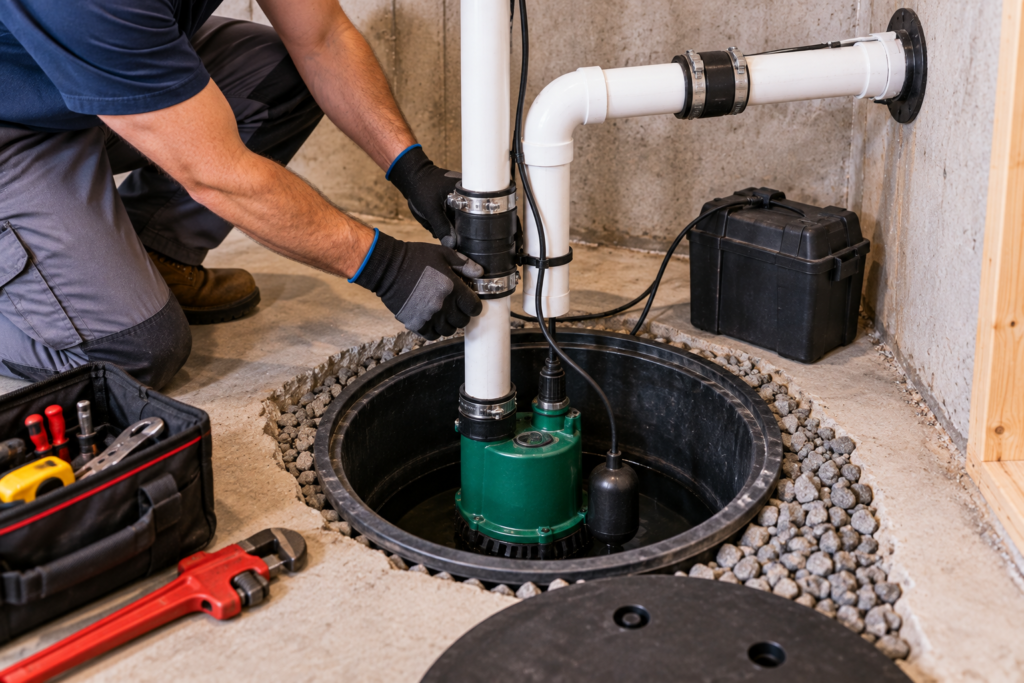
A sump pump is a mechanical device designed to remove accumulated water from a collection basin, commonly called a sump pit. The basin is usually installed below the basement floor. Water enters the basin through connected drainage pipes, openings designed into the basin or other specified collection arrangements. As the water level rises, a switch activates the pump. The pump moves the collected water through a discharge pipe to an appropriate location outside the building or another approved outlet. The main purpose of a sump pump is to prevent collected water from accumulating inside the basement. However, a pump does not necessarily stop water from entering the foundation walls. It manages water after it reaches the drainage system. This distinction matters when deciding whether a home needs sump pump installation, foundation crack repair, exterior waterproofing or a combination of solutions.2. How a Sump Pump System Works
A basement sump pump operates through a relatively straightforward sequence. First, groundwater reaches the drainage collection system. Water then moves toward the sump basin. As the basin fills, the water level rises until it activates the pump's float switch or sensor. The pump pushes water through the discharge pipe. Once the water level falls to the pump's shutoff point, the motor stops. A check valve, where required by the pump design, helps prevent water remaining in the discharge pipe from flowing back into the basin. The cycle repeats whenever sufficient water accumulates. The complete system relies on five essential functions:- Water collection
- Temporary storage in the basin
- Automatic pump activation
- Water discharge
- Reliable shutdown and restart
3. Why Basements Experience Groundwater Problems
Basements are constructed below the surrounding ground level. During periods of heavy rainfall or snowmelt, water can accumulate in the soil around the foundation. The amount of water depends on several factors, including soil permeability, drainage conditions, groundwater levels and surface runoff. Some soils allow water to move through them relatively quickly. Other soils retain moisture and may drain more slowly. When water accumulates around a foundation, it can reach cracks, construction joints and other vulnerable openings. Water may also collect beneath the basement slab. An appropriately designed drainage system can collect some of this water and direct it toward a sump basin. The pump then removes the accumulated water. However, the system must be designed for the property's actual water conditions.4. Signs You May Need a Sump Pump
Not every basement requires a sump pump. However, recurring water problems may indicate that a drainage assessment is necessary. Common warning signs include:- Water pooling on the basement floor after heavy rain
- Repeated seepage along the wall-floor joint
- Water appearing through cracks in the concrete slab
- Seasonal basement flooding
- Persistent groundwater accumulation
- An existing gravity drainage system that cannot discharge properly
- A sump basin that fills but has no functioning pump
5. When Sump Pump Installation Is Necessary
The installation of sump pump in basement spaces may be appropriate when water is collected below floor level and cannot be reliably discharged by gravity. For example, an interior perimeter drainage system may direct groundwater toward a sump basin. If the basin is below the available discharge elevation, a pump is needed to lift the water and transport it away. A sump pump may also be appropriate when an existing drainage system has been designed around mechanical discharge. However, the decision should account for the amount of water, drainage layout, discharge options and potential consequences of pump failure. The objective is to create a reliable water-management system rather than install equipment without a defined purpose.6. When a Sump Pump Is Not the Right Solution
A sump pump cannot solve every basement water problem. Consider the following situations. A leaking water supply pipe: The plumbing defect needs repair. Condensation on cold surfaces: Moisture and temperature control may be more relevant. Water entering through a basement window: Window well drainage, grading or sealing may need attention. An isolated foundation crack: A targeted crack repair may be appropriate. Sewer backup: This requires a different investigation and potentially a backwater protection strategy. Structural foundation movement: A sump pump does not restore structural stability. A basement inspection should distinguish between groundwater, surface water, plumbing leaks and structural defects. Installing the wrong system can add expense without correcting the original problem.Book A Free Inspection
Or
📞 Call Now for a Free Assessment
Part 2: Types of Sump Pumps and System Components
7. Submersible Sump Pumps
A submersible sump pump is designed to operate inside the sump basin. Its motor and pumping assembly are enclosed in a housing suitable for the intended submerged application. Submersible pumps are commonly used in residential basement drainage systems. Because the pump sits inside the basin, a suitable cover may help reduce exposed equipment and operating noise. However, not every submersible model has the same performance characteristics. Pump selection should consider the manufacturer's specifications, expected water volume and required discharge height. The pump must also fit the basin without interfering with its switch.8. Pedestal Sump Pumps
A pedestal sump pump uses a different arrangement. The motor is positioned above the basin, while the pumping mechanism extends downward into the water. This configuration can make the motor easier to access. However, pedestal pumps may occupy more visible space and produce more noticeable operating noise. The exposed motor also requires an appropriate installation environment. Whether a pedestal or submersible pump is suitable depends on the basin dimensions, drainage requirements and installation conditions. Neither style should be selected solely because it has a lower purchase price.9. Primary vs. Backup Sump Pumps
A primary sump pump handles normal drainage conditions. It activates automatically when the basin reaches the designated water level. A backup sump pump provides additional protection if the primary pump becomes unavailable or cannot keep up with certain conditions. Backup systems vary in design. Some operate using a separate battery-powered pump. Others may use different power or operating arrangements. The appropriate configuration depends on the property and the potential consequences of a failure. A backup system should be compatible with the basin, discharge arrangement and primary equipment.10. Battery Backup Systems
A battery backup sump pump can provide limited pumping capability during a power outage. This may be particularly useful when severe storms create both groundwater accumulation and electrical interruptions. However, backup systems have limitations. Their operating duration depends on battery capacity, battery condition, pump demand and water inflow. A battery backup should not be assumed to provide unlimited protection. Homeowners should follow the manufacturer's instructions for battery testing, maintenance and replacement. If the basement has a history of significant flooding, the contractor should assess whether the proposed backup capacity is appropriate.11. Sump Basins and Covers
The sump basin collects water before it is pumped away. Its size and configuration affect pump operation. A basin that is too small may cause frequent pump cycling. An unsuitable basin may also restrict switch movement or complicate maintenance. The basin should be selected for the drainage design and installed in accordance with applicable requirements. A properly fitted cover can help improve safety and limit debris entering the pit. Where radon or soil-gas control is relevant, the basin cover and penetrations may require a specifically designed sealed arrangement. An ordinary loose-fitting cover should not be assumed to provide soil-gas protection.12. Float Switches and Water-Level Sensors
A sump pump needs a reliable method of detecting water levels. Many pumps use a mechanical float switch. As water rises, the float moves and activates the motor. Other systems use electronic sensors or alternative switching mechanisms. Regardless of the design, the switch must have enough clearance to operate correctly. It should not become trapped against the basin wall, discharge pipe or electrical cord. Improper switch placement can prevent the pump from starting or stopping. This is one reason basin dimensions and equipment compatibility matter.Book A Free Inspection
Or
📞 Call Now for a Free Assessment
13. Check Valves and Discharge Pipes
A discharge pipe carries water away from the sump pump. A check valve is commonly installed where specified to reduce reverse flow after the pump stops. Without an appropriate check valve, water remaining in the vertical discharge pipe may return to the basin. This can increase pump cycling. However, the valve must be installed in the correct orientation and location according to the pump manufacturer's instructions. The discharge pipe must also be properly sized and routed. An undersized, obstructed or excessively restrictive discharge arrangement can reduce pumping performance.14. Sump Pump Alarms and Monitoring Devices
A sump pump alarm warns homeowners when water reaches an unusually high level. Some alarms produce an audible signal. Others may provide remote notifications through a connected monitoring system. These devices can be useful when the basement is finished or when homeowners are frequently away. However, an alarm does not remove water. It provides a warning that action may be necessary. Monitoring systems should be tested regularly, and their power requirements should be understood. A remote notification feature may also depend on an operational internet connection or cellular service.Part 3: Planning the Installation
15. Choosing the Best Sump Pump Location
Selecting the right location is a critical part of sump pump installation. The basin should be positioned where it can receive water from the intended drainage system. In many homes, this means locating the sump near an interior foundation drainage route. However, the lowest visible corner of the basement is not automatically the correct location. The contractor must consider:- Water-entry patterns
- Existing foundation drains
- Foundation footing locations
- Underground plumbing and utilities
- Electrical access
- Discharge routing
- Maintenance clearance
16. Determining the Correct Pump Capacity
Sump pump capacity is not determined by horsepower alone. The pump must move the expected volume of water against the resistance created by the discharge system. A key consideration is total dynamic head. This describes the pumping resistance associated with elevation and friction losses in the discharge arrangement. As the required pumping head increases, the flow delivered by a particular pump generally decreases. Manufacturers provide pump performance curves showing the relationship between flow and head. A contractor should use these specifications to select equipment suitable for the property. An oversized pump is not always desirable because an unsuitable pump-and-basin combination can cause excessive cycling.17. Evaluating Existing Basement Drainage
Before installing a new sump pump, determine how water will reach the basin. Some homes already have foundation drainage connected to an existing sump. Others may require an interior French drain or another collection arrangement. A pump installed in an isolated basin may not effectively collect water appearing elsewhere in the basement. The drainage system and pump should be evaluated together. The contractor should identify existing pipe connections, potential obstructions and the intended collection area. If an older system is present, its condition may affect the installation plan.18. Planning the Discharge Route
A sump pump needs a suitable destination for the water it removes. The discharge route should carry water away without directing it back toward the foundation. Poor discharge placement can create a cycle in which the pump repeatedly removes the same water. It may also cause erosion, icing or problems on neighbouring properties. The discharge location must comply with applicable municipal requirements. Do not assume that connecting a sump pump to a sanitary sewer is permitted. The contractor should identify the proposed outlet, pipe route and freeze-protection considerations before installation begins.Book A Free Inspection
Or
📞 Call Now for a Free Assessment
19. Electrical and Safety Considerations
Sump pumps operate in environments where water may be present. Electrical safety is therefore essential. The pump should be supplied and connected according to its manufacturer's instructions and applicable electrical requirements. Extension cords and improvised wiring arrangements should not be used as substitutes for a suitable permanent installation. Any required new electrical work should be performed by an appropriately qualified professional. The installation should also provide access for safely disconnecting equipment during maintenance. Homeowners should never reach into a sump basin containing energized equipment. Disconnect power according to the manufacturer's safety instructions before servicing the system.20. Permits and Local Requirements in Ontario
Requirements for sump pump installation can depend on the municipality and the scope of work. A project may involve plumbing, drainage alterations, electrical work or modifications to the basement floor. The applicable requirements may differ between a straightforward pump replacement and a completely new drainage installation. Homeowners should confirm local permit and discharge requirements before work begins. In York Region, the relevant municipal rules may depend on whether the property is in Newmarket, Aurora, Richmond Hill, East Gwillimbury or another municipality. The contractor should clarify which permits, inspections and licensed trades are required for the proposed scope.Part 4: Installation of Sump Pump in Basement — Step-by-Step Process
The following describes a typical professional installation. Exact methods vary by foundation construction, drainage design and equipment.21. Inspecting the Basement and Identifying the Water Source
The process begins with an inspection. The contractor looks for water-entry locations, drainage problems and signs of foundation deterioration. The assessment may include reviewing:- When water appears
- Whether seepage follows rainfall or snowmelt
- Existing sump equipment
- Foundation cracks
- Exterior grading
- Downspout discharge
- Basement floor conditions
22. Preparing the Installation Area
The installation area must be cleared before excavation begins. Furniture, stored belongings and vulnerable finishes may need to be moved. If the basement is finished, flooring or other materials may require removal. The contractor should locate relevant utilities and identify structural constraints. Dust containment is particularly important when cutting concrete. Concrete cutting can release hazardous respirable crystalline silica. Appropriate equipment, dust-control methods and worker protection must be used. The homeowner should also understand which finishes will be restored after the installation.23. Cutting the Concrete Basement Floor
For a new sump basin, the contractor commonly removes a section of the concrete floor. The opening must accommodate the basin and specified surrounding materials. The location and dimensions depend on the installation design. Concrete cutting should be performed without damaging foundation footings, structural elements or concealed utilities. The removed concrete is then cleared from the work area. The opening should not be enlarged indiscriminately. The goal is to provide sufficient space for the designed installation while preserving the surrounding structure.24. Excavating the Sump Pit
After the concrete is removed, the contractor excavates the required pit. The excavation must accommodate the basin at the specified elevation. Soil conditions and groundwater may affect the process. Excavation near a footing requires special care because removing supporting soil can compromise the foundation. The contractor should not undermine structural components. If unexpected conditions appear, the installation plan may need to change. The pit should be prepared according to the basin manufacturer's requirements and the drainage design.Book A Free Inspection
Or
📞 Call Now for a Free Assessment
25. Installing the Sump Basin
The basin is positioned inside the prepared excavation. It must be properly supported and set at the intended elevation. Depending on the design, the installation may include specified bedding materials and drainage connections. The basin should remain stable and provide adequate clearance for the pump. Its cover must fit the installation requirements. If the basin is part of a sealed soil-gas or radon-control arrangement, the cover and penetrations require the appropriate detailing. The basin should not be treated as an ordinary open bucket placed beneath the floor. It is an engineered component of the water-management system.26. Connecting Foundation Drainage
The next step is connecting the intended drainage system to the sump basin. Water may arrive through an interior French drain, existing foundation drainage or another specified collection route. Connections must be positioned to allow water to enter the basin effectively. The contractor should ensure that pipe connections do not interfere with pump operation. The drainage route should also account for sediment control and maintenance. A pump cannot remove water that never reaches the basin. This is why drainage connections are just as important as the pump itself.27. Positioning the Sump Pump
The selected pump is installed inside or above the basin, depending on its design. For a submersible pump, the unit must sit securely in the correct position. The switch must move freely. The pump inlet should not be obstructed by debris or surrounding materials. A pedestal pump requires appropriate positioning of its motor and pumping assembly. All installation details should follow the manufacturer's instructions. The contractor should verify that the pump is compatible with the basin and expected operating conditions.28. Installing the Discharge Pipe and Check Valve
The discharge pipe is connected to the pump outlet. Its diameter and routing should follow the manufacturer's specifications and the system design. A check valve is installed where required. The valve must be oriented correctly. The discharge pipe should be secured and routed to the approved outlet. The contractor should also consider freezing conditions and avoid arrangements that allow water to collect in vulnerable pipe sections. Water discharged outside must not be directed back toward the foundation.29. Connecting the Electrical Supply
The sump pump is connected to a suitable electrical supply. The installation must comply with applicable electrical requirements and the equipment manufacturer's instructions. If a new circuit or receptacle is needed, the required electrical work should be completed by an appropriately qualified professional. The power connection should remain accessible for maintenance. Cords must be positioned so they do not interfere with the float switch or become damaged. Where a battery backup is installed, its charging and operating arrangements must also be completed correctly.30. Testing the Complete System
Testing is essential before the installation is considered complete. The contractor should verify that the pump activates at the intended water level. The pump should move water through the discharge pipe without visible leaks. The switch should stop the pump at the appropriate level. The contractor should also check the operation of the check valve and any backup equipment or alarms. Testing may involve adding clean water to the basin according to the manufacturer's instructions. The homeowner should receive a demonstration of normal operation and an explanation of warning signs.Book A Free Inspection
Or
📞 Call Now for a Free Assessment
31. Restoring and Finishing the Installation Area
Once the system has been checked, the surrounding floor can be restored. Concrete restoration must follow the installation design. The sump cover should remain accessible. Finished flooring or other materials may also need replacement. The contractor should avoid concealing equipment in a way that prevents inspection or maintenance. Before the project is finished, homeowners should receive documentation covering:- Installed equipment
- Drainage connections
- Discharge location
- Maintenance instructions
- Warranty terms
- Applicable inspection records
Part 5: Installation Costs and Comparisons
32. Sump Pump Installation Cost in Ontario
The cost of installing a sump pump in Ontario depends on whether the project involves replacing an existing unit or constructing an entirely new system. Replacing a pump inside a suitable existing basin is generally a smaller project. A new installation may require concrete cutting, excavation, basin placement, drainage connections, discharge piping and electrical work. For preliminary budgeting, a complete new installation may involve several thousand dollars, with more complicated drainage and restoration projects costing substantially more. These are broad descriptions rather than verified current local quotations. A site inspection and written estimate are necessary to establish the actual price.33. Factors That Affect Installation Pricing
The final price depends on the scope of work.|
Cost factor |
Effect on installation |
|---|---|
|
Pump type |
Equipment specifications and features affect material cost. |
|
New basin |
Requires excavation and floor restoration. |
|
Existing drainage |
New connections or additional drains increase work. |
|
Discharge distance |
Longer pipe routes require more labour and materials. |
|
Electrical work |
New electrical infrastructure may add cost. |
|
Backup system |
Additional pumps, batteries and alarms increase the total. |
|
Basement finishes |
Flooring and wall restoration may be necessary. |
|
Site conditions |
Difficult access or unexpected construction conditions can complicate installation. |
34. New Installation vs. Sump Pump Replacement
A new installation and a pump replacement are different projects. A replacement may involve removing an old pump and installing a compatible unit in an existing basin. The contractor should still inspect the basin, switch clearance, discharge pipe and check valve. A new installation requires creating or modifying the water collection arrangement. This often involves substantially more labour. If an existing pump fails repeatedly, simply replacing it may not solve the underlying problem. Frequent cycling, inadequate discharge or an undersized basin may need correction.35. Sump Pump vs. French Drain
A sump pump and a French drain are complementary components rather than competing products. The French drain collects and transports water. The sump pump removes water from the collection basin. An interior French drain may direct groundwater toward a sump pit. The pump then lifts the water to a suitable discharge location. Some properties may need both. Others may already have an effective collection system and require only pump-related work. The correct approach depends on the drainage design. For more information, read our guide to French Drain in Basement: Costs, Installation & Benefits .36. DIY vs. Professional Sump Pump Installation
Replacing a pump may appear straightforward, particularly when an existing basin and discharge system are already present. However, even a replacement requires correct equipment selection, safe electrical connections and proper discharge arrangements. A completely new installation is more involved. It may require concrete cutting, excavation near foundation components, drainage design and electrical work. Errors can result in equipment failure, basement flooding or structural damage. Professional assessment and installation are particularly important when creating a new sump pit or modifying foundation drainage. Homeowners can still help by documenting flooding patterns, requesting detailed estimates and learning how to maintain the completed system.Book A Free Inspection
Or
📞 Call Now for a Free Assessment
Part 6: Maintenance and Long-Term Protection
37. Common Sump Pump Installation Mistakes
Several mistakes can compromise system performance.Choosing the Wrong Pump Capacity
A pump that cannot meet the required flow and head conditions may fail to remove water quickly enough.Installing an Undersized Basin
An unsuitable basin can cause frequent cycling or interfere with switch movement.Incorrect Float Switch Position
A trapped or obstructed switch may prevent the pump from operating properly.Poor Discharge Placement
Water released too close to the foundation may return to the drainage system.Ignoring Electrical Requirements
Improvised electrical connections can create safety hazards.Failing to Test the System
A pump that has never been tested may fail during the first major storm.Overlooking Backup Protection
Where a power outage could cause serious flooding, the absence of suitable backup protection may increase vulnerability. Avoiding these mistakes requires proper planning, compatible components and thorough testing.38. How to Maintain Your Sump Pump
A sump pump should not be forgotten after installation. Regular inspection helps identify problems before a major rainfall event. Follow the manufacturer's maintenance instructions and consider these general checks:- Inspect the basin for accessible debris.
- Confirm that the float switch moves freely.
- Test pump activation using the manufacturer's recommended procedure.
- Check the discharge outlet for obstructions.
- Listen for unusual operating noises.
- Inspect accessible piping for leaks.
- Test backup equipment and alarms.
- Review battery condition where applicable.
39. Troubleshooting Common Problems
The Pump Does Not Start
Possible causes include a power interruption, defective switch, electrical problem or failed motor. Do not attempt unsafe electrical troubleshooting in a wet basement.The Pump Runs Continuously
Continuous operation may indicate high water inflow, an unsuitable pump, a stuck switch or a discharge problem.The Pump Starts and Stops Frequently
Short cycling can occur when the basin is too small, the switch is improperly adjusted or water returns through the discharge pipe.The Pump Operates but Water Remains
The collection system may not be directing water to the basin. The pump may also be undersized or the discharge pipe obstructed.The Pump Makes Unusual Noises
Grinding, rattling or other unexpected sounds may indicate debris, mechanical wear or installation problems. The cause should be investigated rather than ignored.40. How Long Does a Sump Pump Last?
Sump pumps do not have a guaranteed lifespan. Their service life depends on equipment quality, operating frequency, water conditions, maintenance and installation. A pump that operates frequently may experience more wear than one that runs occasionally. Debris and sediment can also affect performance. Rather than relying on a fixed replacement date, homeowners should monitor operating behaviour and follow manufacturer recommendations. If the pump is aging, unreliable or repeatedly failing, a professional evaluation can determine whether repair or replacement is appropriate. The basin and discharge arrangement should be checked at the same time.41. Can a Sump Pump Prevent All Basement Flooding?
A properly designed sump system can reduce flooding caused by certain groundwater and foundation drainage problems. However, it cannot prevent every type of flood. Examples include:- Burst plumbing pipes
- Sewer backups
- Water entering through basement windows
- Overland flooding
- Water inflow exceeding pump capacity
- Electrical outages without adequate backup
- Mechanical pump failure
Book A Free Inspection
Or
📞 Call Now for a Free Assessment
42. Frequently Asked Questions About Basement Sump Pump Installation
How difficult is the installation of sump pump in basement areas?
Difficulty depends on whether an existing sump basin is available. Replacing a compatible pump may be relatively straightforward for a qualified installer. Creating a new sump pit and connecting drainage can require substantial concrete, excavation, plumbing and electrical work.Where should a sump pump be installed in a basement?
The location should allow water to reach the basin through the intended drainage system while avoiding foundation footings, utilities and other structural constraints. A professional assessment helps determine the appropriate location.Does every basement need a sump pump?
No. Some basements remain dry without one, while others use suitable gravity drainage arrangements. A sump pump should be selected based on actual drainage requirements.Can I install a sump pump without a French drain?
Yes, depending on how water reaches the basin. However, an isolated sump pit may not collect water from distant basement areas. The collection arrangement must match the water problem.How deep should a sump pit be?
The required depth depends on the basin dimensions, drainage connections and installation design. It should not be selected arbitrarily or excavated in a way that undermines the foundation.Should a sump pump run every day?
Not necessarily. Operating frequency depends on groundwater conditions and drainage demand. Frequent operation may be normal for some properties, but a sudden change deserves investigation.Is a battery backup sump pump necessary?
It is not necessary for every property. It may provide additional protection where power outages or primary pump failures could lead to significant water accumulation. Backup capacity and operating duration should be evaluated.Can a sump pump discharge into the sewer?
Discharge requirements depend on local rules and the type of sewer connection. Do not assume that discharge into a sanitary sewer is permitted. Confirm the approved arrangement with the relevant municipality and qualified installer.Does sump pump installation require breaking concrete?
A new basin installed below an existing concrete basement floor commonly requires cutting and removing part of the slab. Replacing a pump in an existing suitable basin usually does not.Will a sump pump reduce basement humidity?
It may help reduce moisture associated with standing groundwater. However, humidity can also result from condensation, air leakage and other moisture sources. Additional moisture-control measures may be required.Can a sump pump be installed in a finished basement?
Yes, but flooring and other finishes may need to be removed around the installation area. Restoration should be discussed before work begins.What happens if the sump pump loses power?
An electrically powered primary pump stops operating during a power outage. A compatible backup system may provide limited pumping capability, depending on its design and available energy.Why does my sump pump keep turning on?
Frequent cycling may be caused by high groundwater inflow, a small basin, an improperly positioned switch or water returning through the discharge pipe. The system should be inspected to identify the cause.Should I replace the sump pump before it fails?
Replacement may be appropriate when the equipment shows signs of wear, unreliable operation or repeated failures. A professional can evaluate its condition and the broader drainage system.How do I know if my sump pump installation was successful?
The pump should activate and shut off correctly, move water through the intended discharge route and operate without visible leaks or switch interference. The complete system should be tested before the project is considered finished.43. Sump Pump Installation for York Region Homes
Basement drainage problems vary from property to property across York Region. A homeowner in Newmarket may experience water accumulation after prolonged rainfall. A basement in Aurora might develop seepage during spring snowmelt. A property in Richmond Hill may have an existing sump pump that runs frequently but does not prevent water from appearing elsewhere on the floor. Similar concerns can arise in East Gwillimbury, Bradford, Stouffville, King and Keswick. These examples do not mean that all homes in these communities have the same groundwater conditions. Each property requires an individual assessment. Consider three common situations.Scenario 1: A Basement With No Existing Sump System
Water repeatedly accumulates near the basement perimeter. An inspection determines whether the problem involves groundwater and whether a drainage collection system is necessary. If mechanical discharge is required, a new sump basin and pump may be proposed.Scenario 2: An Existing Pump That Frequently Fails
The homeowner notices that the sump basin fills but the pump does not activate reliably. The contractor evaluates the motor, switch, electrical supply and discharge arrangement. The solution may involve replacing the pump or correcting another system defect.Scenario 3: A Pump That Works but the Basement Still Floods
The pump activates normally, yet water continues entering at another location. The collection system may not intercept the water. Alternatively, the basement may have a separate foundation crack, surface drainage issue or plumbing leak. A broader inspection is needed before installing additional equipment. These situations demonstrate why sump pump installation should begin with identifying the water source and reviewing the complete drainage arrangement.44. When to Request a Professional Basement Inspection
The installation of sump pump in basement spaces can provide an effective way to manage collected groundwater when the system is properly designed. However, installing a pump without understanding the drainage problem may lead to unnecessary expense or disappointing results. A professional inspection can help determine whether the property needs:- A new sump pump and basin
- Replacement of an existing pump
- Battery backup equipment
- Interior perimeter drainage
- Foundation crack repair
- Exterior drainage improvements
- A combination of water-management measures
Need Help With Sump Pump Installation in York Region?
If your basement experiences recurring water accumulation, your existing sump pump is unreliable or you are considering a new drainage system, an inspection can help identify the appropriate next steps. York Region Waterproofing provides homeowner information and helps connect property owners with independent local professionals who can assess basement drainage concerns. Request a free inspection to investigate your basement water problem and explore whether sump pump installation, replacement or another waterproofing solution is appropriate for your property. A reliable basement drainage system starts with the correct diagnosis, suitable equipment and a carefully planned installation.Book A Free Inspection
Or
Disclaimer: This article provides general homeowner information and is not a substitute for a property-specific assessment. Sump pump installation may involve structural excavation, plumbing, electrical work and municipal discharge requirements. Work should be performed by appropriately qualified professionals in accordance with applicable codes, permits and manufacturer instructions.