If you have a sump pump in your basement, you may have wondered:
"How does it actually work?"
The good news is that a sump pump is a simple device.
Its job is to remove water before it has a chance to flood your basement.
Most sump pumps work automatically, so you don't have to turn them on yourself.
In this guide, we'll explain how a sump pump works in simple, easy-to-understand language.
What Is a Sump Pump?
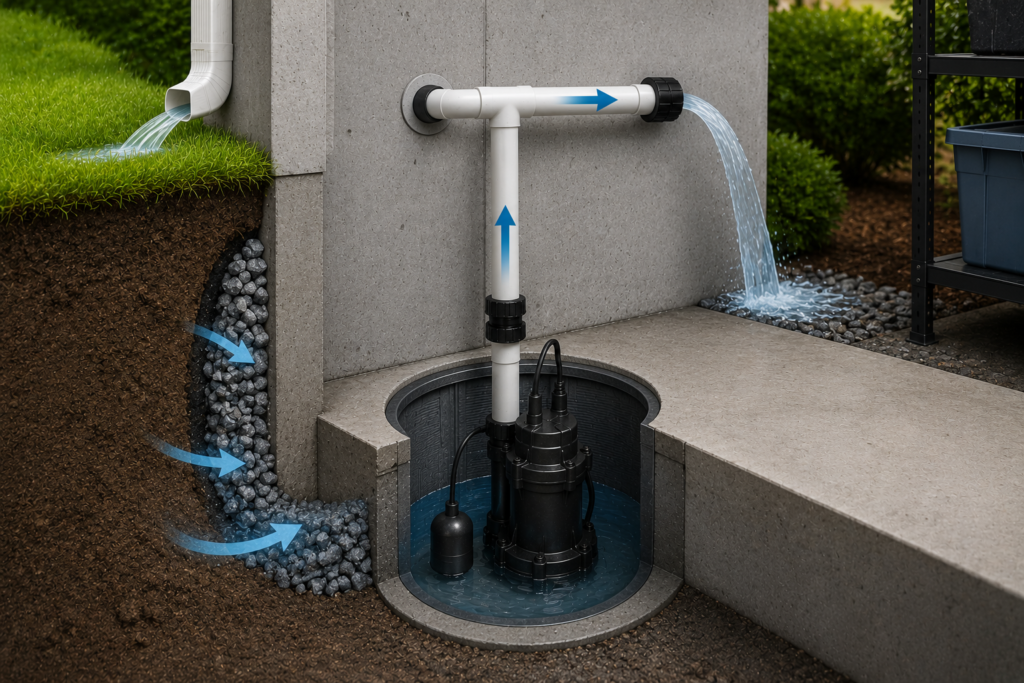
A sump pump is a machine that removes water from your basement. It sits inside a sump pit, which is a small hole in the basement floor. When water collects in the pit, the pump automatically pushes it outside and away from your home's foundation.Book A Free Inspection
Or
📞 Call Now for a Free Assessment
Where Does the Water Come From?
Water can collect around your home's foundation because of:- Heavy rain
- Melting snow
- Groundwater
- A high water table
Step 1: Water Collects in the Sump Pit
The sump pit is the lowest point in your basement. As water enters the drainage system around your home, it flows into the pit. At first, nothing happens. The pump simply waits until enough water has collected.Step 2: The Float Rises
Inside the sump pit is a float switch. It works much like the float inside a toilet tank. As the water level rises, the float rises too. When the water reaches a certain height, the float tells the pump it's time to start working.Step 3: The Pump Turns On
Once the float reaches the correct level, the sump pump automatically turns on. You may hear a humming sound. This simply means the pump is doing its job.Step 4: Water Is Pumped Outside
The pump pushes the water through a discharge pipe. The pipe carries the water safely away from your home so it doesn't flow back toward the foundation. Keeping the discharge point several feet away from the house helps reduce the chance of water returning.Step 5: The Pump Turns Off
As the water leaves the sump pit, the water level drops. The float also drops. Once the water reaches a safe level, the pump automatically shuts off. It waits quietly until it's needed again.What Happens During Heavy Rain?
During a heavy rainstorm, more water may enter the sump pit. The pump may turn on several times. This is normal. In fact, hearing your sump pump running during a storm usually means it's protecting your basement from flooding.What Happens If the Power Goes Out?
Most sump pumps run on electricity. If the power goes out, the pump will stop working. This can be a problem because power outages often happen during strong storms. That's why many homeowners install a battery backup sump pump. A battery backup can continue pumping water even when the electricity is off.How Do I Know If My Sump Pump Is Working?
You can test your sump pump with a simple check. Slowly pour a bucket of water into the sump pit. If everything is working properly:- The float should rise.
- The pump should turn on.
- The water should be pumped outside.
- The pump should shut off when the water level drops.
How Can You Help Your Sump Pump Work Properly?
A little maintenance goes a long way. Here are a few simple tips:- Test the pump several times each year.
- Keep the sump pit clean.
- Make sure the float can move freely.
- Check that the discharge pipe isn't blocked.
- Listen for unusual noises.
When Should You Call a Professional?
You should contact a sump pump specialist if:- The pump won't turn on.
- The pump runs continuously.
- Strange noises come from the pump.
- Water remains in the sump pit.
- Your basement floods even though the pump is running.
- You're installing a sump pump for the first time.
Frequently Asked Questions
Does a sump pump turn on by itself?
Yes. Most sump pumps are automatic. The float switch turns the pump on when the water level rises.Where does the water go?
The pump sends the water through a discharge pipe that carries it away from your home's foundation.How often does a sump pump run?
It depends on the weather and your home's drainage. Some pumps only run during heavy rain, while others may run more often.Is it normal to hear my sump pump running?
Yes. During heavy rain, it's normal to hear the pump turn on and off as it removes water from the sump pit.Learn More About Sump Pumps
Understanding how a sump pump works is an important step toward protecting your basement from water damage. If you'd like to learn whether you need a sump pump, how to maintain it, common repair signs, installation costs, battery backup systems, and how to choose the right pump for your home, read our Complete Homeowner's Guide to Sump Pumps. It's an easy-to-understand guide created to help homeowners keep their basements dry and avoid costly water damage.Final Thoughts
A sump pump may seem like a simple machine, but it plays a very important role in protecting your home. By automatically removing water from around your foundation, it helps reduce the risk of basement flooding and water damage. Testing your sump pump regularly and keeping it well maintained can give you peace of mind, especially during heavy rain and storms.Book A Free Inspection
Or