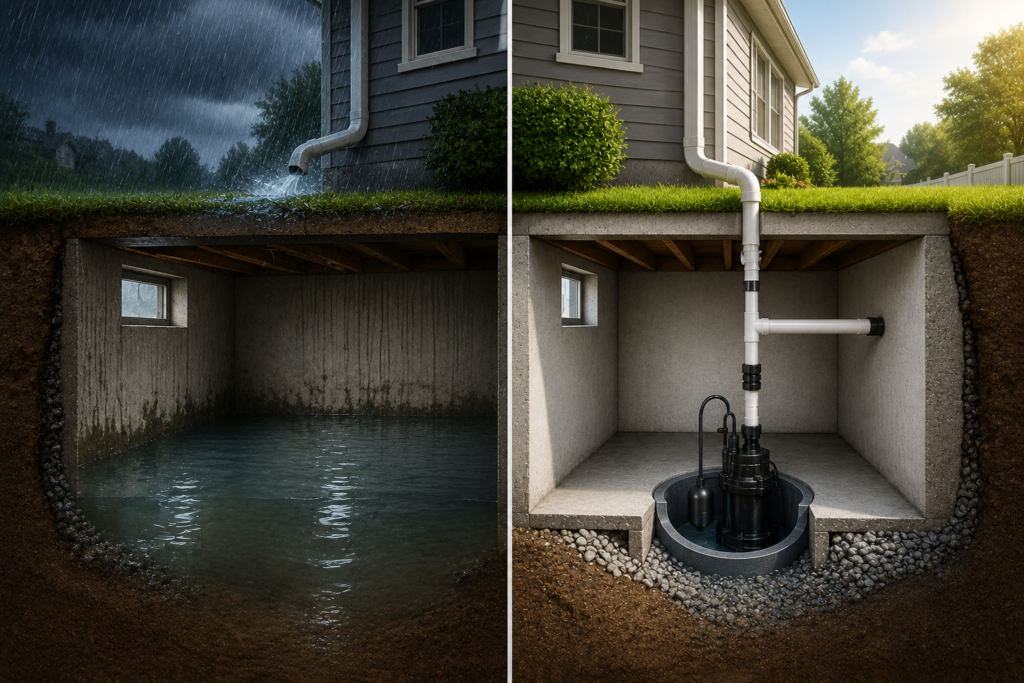
If you've never had water in your basement, you may be wondering:
"Do I really need a sump pump?"
The answer is:
It depends on your home.
Some homes can go for many years without needing a sump pump.
Other homes rely on one every time it rains.
Knowing whether your home needs a sump pump can help you avoid costly water damage in the future.
In this guide, we'll explain who needs a sump pump and how to tell if your home could benefit from one.
What Is a Sump Pump?
A sump pump is a machine that removes water from a sump pit in your basement or crawl space. When water collects in the pit, the pump automatically turns on and pumps the water outside, away from your home's foundation. Its main job is to help keep your basement dry.Book A Free Inspection
Or
📞 Call Now for a Free Assessment
Does Every Home Need a Sump Pump?
No. Not every home has a sump pump. Some homes are built on higher ground with excellent drainage and rarely have water problems. Other homes are built in areas where groundwater collects around the foundation. These homes often benefit from having a sump pump.You May Need a Sump Pump If...
Here are some signs that a sump pump may be a good idea.Your Basement Has Flooded Before
If you've had water in your basement in the past, there's a good chance it could happen again. A sump pump can help remove water before it floods your basement.You Often Get Water After Heavy Rain
Does your basement become damp or wet after a big storm? If so, a sump pump may help keep water from building up around your foundation.Your Home Has a High Water Table
In some neighborhoods, groundwater naturally stays close to the surface. When this happens, water can collect around your foundation more easily. A sump pump helps remove this water before it enters your basement.Your Basement Is Below Ground
Most basements sit below ground level. This means they're surrounded by soil that can become wet after rain or snow melts. A sump pump helps move that water away before it causes problems.You Already Have an Interior Drainage System
Many waterproofed basements have an interior drainage system installed around the foundation. This system collects water and directs it into the sump pit. The sump pump then removes the water from your home. Without the pump, the drainage system wouldn't be able to do its job.Signs You May Not Need a Sump Pump
Some homes may not need one. You may not need a sump pump if:- Your basement has always stayed dry.
- Your home is built on higher ground.
- Water drains well away from your house.
- Your property has never had flooding issues.
What Happens If You Don't Have a Sump Pump?
If your home is at risk for water problems and doesn't have a sump pump, you could experience:- Basement flooding
- Wet floors
- Mold and mildew
- Water damage
- Damaged furniture and storage boxes
- Expensive cleanup costs
Can a Sump Pump Prevent Every Flood?
No. A sump pump is one part of protecting your home. It works best when combined with:- Good drainage around the home
- Clean gutters
- Downspouts that carry water away from the house
- Proper grading around the foundation
- Basement waterproofing when needed
How Do I Know If I Should Install One?
If you're unsure, it's a good idea to have your home inspected by a basement waterproofing specialist. They can look at:- Your home's drainage
- Signs of previous water problems
- The condition of your basement
- The area around your foundation
How Can You Help Reduce the Risk of Basement Flooding?
Whether you have a sump pump or not, regular maintenance helps protect your home. Simple things you can do include:- Clean your gutters regularly.
- Extend downspouts away from the house.
- Keep the ground sloping away from the foundation.
- Test your sump pump several times a year if you have one.
- Check your basement after heavy rain.
Frequently Asked Questions
Does every house need a sump pump?
No. Some homes never need one, while others rely on a sump pump to keep their basement dry.Can I install a sump pump even if I've never had a flood?
Yes. Many homeowners install a sump pump as a preventive measure to reduce the risk of future flooding.Will a sump pump stop all basement leaks?
Not always. If water enters through foundation cracks or poor drainage, additional waterproofing work may also be needed.How do I know if my home needs a sump pump?
If your basement has flooded before, gets wet after heavy rain, or is located in an area with a high water table, a sump pump may be a good investment.Learn More About Sump Pumps
Knowing whether you need a sump pump is an important step toward protecting your basement from water damage. If you'd like to learn how sump pumps work, how to maintain them, common repair signs, installation costs, battery backup systems, and how to choose the right sump pump for your home, read our Complete Homeowner's Guide to Sump Pumps. It's an easy-to-understand guide that answers the most common questions homeowners have about sump pumps and how they help keep basements dry.Final Thoughts
Not every home needs a sump pump, but for many homeowners, it provides valuable protection against basement flooding. If your home has experienced water problems in the past or is located in an area where groundwater is common, installing a sump pump can provide peace of mind and help prevent costly water damage. If you're unsure whether your home needs one, a professional inspection is the best way to understand your options and choose the right solution for your property.Book A Free Inspection
Or