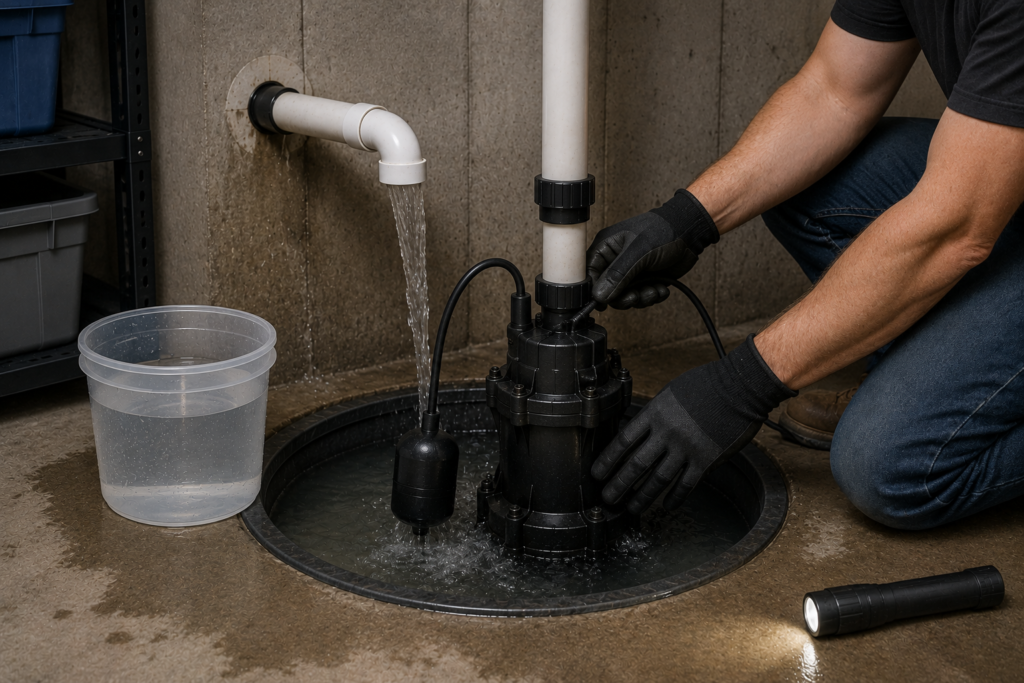
Your sump pump helps protect your basement from flooding.
But how do you know it's working?
The last thing you want is to find out your sump pump has stopped working during a heavy rainstorm.
The good news is that testing a sump pump is easy and only takes a few minutes.
In this guide, we'll show you how to test your sump pump in simple, easy-to-understand language.
Book A Free Inspection
Or
📞 Call Now for a Free Assessment
Why Should You Test Your Sump Pump?
Like any machine, a sump pump can develop problems over time. Testing it regularly helps you discover small issues before they become expensive problems. A working sump pump can help prevent:- Basement flooding
- Water damage
- Mold and mildew
- Damaged furniture
- Ruined personal belongings
How Often Should You Test Your Sump Pump?
Most homeowners should test their sump pump:- At least two or three times a year
- Before the rainy season
- Before spring snow begins to melt
- After a long period without using the pump
Step 1: Make Sure the Pump Has Power
Before testing, check that the sump pump is plugged into a working electrical outlet. If your pump has a battery backup, make sure the battery is connected and charged.Step 2: Look Inside the Sump Pit
Remove the cover if your sump pit has one. Look inside the pit for:- Dirt
- Small rocks
- Leaves
- Debris
Step 3: Pour Water Into the Sump Pit
This is the easiest way to test your sump pump. Slowly pour a bucket of water into the sump pit. As the water level rises, watch what happens.Step 4: Watch the Float
The float should rise with the water. When it reaches the correct height, it should trigger the pump. If the float gets stuck, the pump may not turn on.Step 5: Listen for the Pump
Once the float rises, the pump should automatically start. You should hear a smooth humming sound. Very loud grinding, rattling, or screeching noises may mean the pump needs attention.Step 6: Watch the Water Leave
The pump should quickly remove the water from the sump pit. Check that:- Water is flowing through the discharge pipe.
- Water is moving away from your home.
- The pit begins to empty.
Step 7: Make Sure the Pump Shuts Off
As the water level drops, the float should lower. The pump should automatically turn off. If it keeps running after the pit is empty, there may be a problem that should be inspected.What If the Pump Doesn't Turn On?
If nothing happens after pouring water into the pit, possible causes include:- No electrical power
- A stuck float
- A faulty switch
- A worn-out motor
- A damaged pump
What If the Pump Runs But Doesn't Remove Water?
If the motor runs but the water stays in the pit, there could be:- A clogged discharge pipe
- A blocked pump
- A damaged impeller
- A mechanical problem
Don't Forget to Test the Battery Backup
If your home has a battery backup sump pump, it should also be tested. Make sure:- The battery is fully charged.
- The backup pump turns on properly.
- Water is pumped outside.
- The system switches to battery power when needed.
Simple Maintenance Tips
Regular maintenance helps your sump pump last longer. Here are a few easy things you can do:- Test the pump several times each year.
- Keep the sump pit clean.
- Remove dirt and debris.
- Check the discharge pipe for blockages.
- Make sure the float moves freely.
- Listen for unusual noises.
When Should You Call a Professional?
You should contact a sump pump specialist if:- The pump won't turn on.
- Water stays in the sump pit.
- The pump makes unusual noises.
- The pump runs continuously.
- The battery backup doesn't work.
- Your basement floods even though the pump is running.
Frequently Asked Questions
How often should I test my sump pump?
Most homeowners should test it two or three times each year, especially before the rainy season.Is pouring water into the sump pit the best way to test it?
Yes. It's one of the easiest and safest ways to confirm that the pump turns on, removes water, and shuts off properly.What if my sump pump doesn't turn on?
Check that it has power and that the float can move freely. If it still doesn't work, contact a sump pump professional.Should I test my battery backup sump pump too?
Yes. Your battery backup should also be tested regularly to make sure it will work during a power outage.Learn More About Sump Pumps
Testing your sump pump is an important part of protecting your home from basement flooding. If you'd like to learn how sump pumps work, whether you need one, common repair signs, installation costs, battery backup systems, and how to maintain your sump pump, read our Complete Homeowner's Guide to Sump Pumps. It's an easy-to-understand guide created to help homeowners keep their basements dry and avoid costly water damage.Final Thoughts
A sump pump can't protect your basement if it isn't working. Fortunately, testing your sump pump is quick, simple, and something every homeowner can do. By testing it a few times each year and performing basic maintenance, you can help ensure it's ready when heavy rain arrives and avoid the stress and expense of a flooded basement.Book A Free Inspection
Or