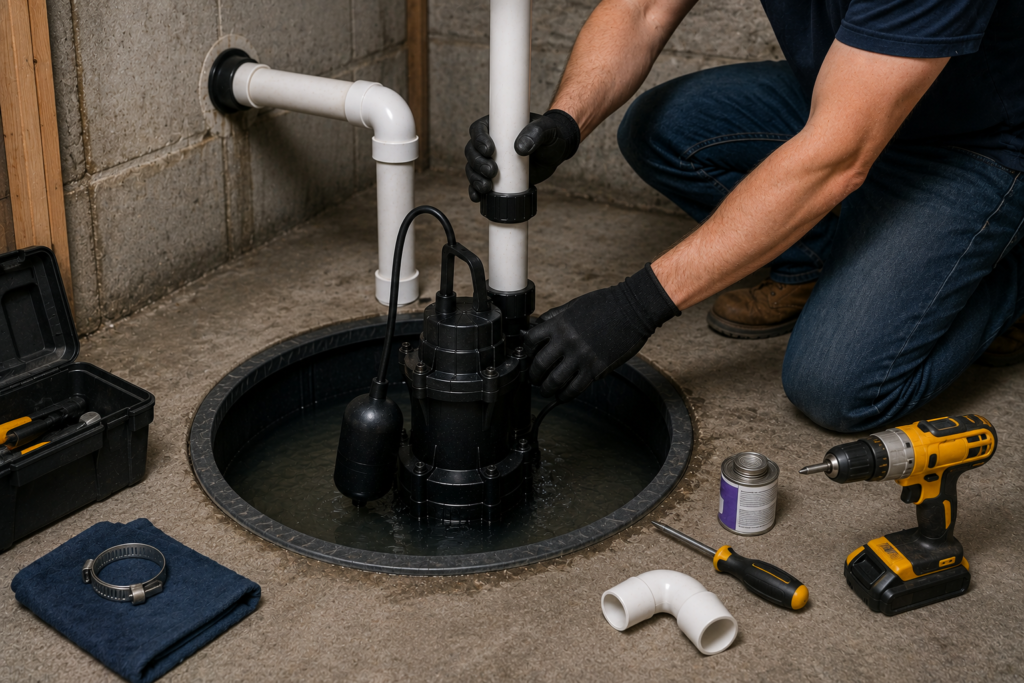
If your basement has water problems, you may be wondering:
"Can I install a sump pump myself?"
The answer is:
Yes, some homeowners can—but it depends on the project.
Installing a sump pump isn't always as simple as plugging in a new appliance.
In some homes, it involves cutting through the basement floor, digging a sump pit, installing plumbing, and making sure water drains safely away from the house.
In this guide, we'll explain when a DIY installation might be possible and when it's better to call a professional.
Book A Free Inspection
Or
📞 Call Now for a Free Assessment
Can Homeowners Install a Sump Pump?
Yes. Some experienced homeowners install their own sump pumps, especially if they already have plumbing and home improvement experience. However, for many people, it's a larger project than expected. Before deciding, it's important to understand what's involved.What Is Involved in Installing a Sump Pump?
If your home doesn't already have a sump pit, installation may include:- Cutting through the basement floor
- Digging a sump pit
- Installing the sump basin
- Installing the sump pump
- Connecting the discharge pipe
- Making sure water drains away from the house
- Connecting electrical power
If Your Home Already Has a Sump Pit
Replacing an old sump pump is usually easier than installing a completely new system. In many cases, the old pump can be removed and a new one installed in the existing sump pit. Even then, it's important to make sure:- The new pump is the correct size.
- The float moves freely.
- The discharge pipe is connected properly.
- The pump is tested before it's needed.
What Can Go Wrong with a DIY Installation?
A sump pump protects your home from flooding. If it's installed incorrectly, problems can happen. For example:- The pump may not turn on.
- Water may not drain properly.
- The discharge pipe may send water back toward the house.
- The float may become stuck.
- The pump may run continuously.
- Basement flooding may still occur.
When Is DIY Installation a Good Option?
A DIY installation may be possible if:- You're replacing an existing sump pump.
- You have plumbing experience.
- You understand basic electrical safety.
- You feel comfortable following the manufacturer's instructions.
When Should You Hire a Professional?
Professional installation is usually the better choice if:- Your home doesn't already have a sump pit.
- You've never installed a sump pump before.
- Your basement has flooded.
- You need a battery backup system.
- You're unsure which type of sump pump to buy.
- You want the installation done correctly the first time.
Why Many Homeowners Choose Professional Installation
Many homeowners hire a professional because they want peace of mind. A professional can:- Recommend the right size sump pump.
- Install it correctly.
- Make sure water drains safely away from the home.
- Test the system before finishing the job.
- Answer your questions about maintenance.
Can You Save Money by Installing It Yourself?
Possibly. Doing the work yourself may reduce labor costs. However, mistakes can become expensive if they lead to:- Basement flooding
- Water damage
- Mold growth
- Incorrect drainage
- Pump failure
How Can You Keep Your Sump Pump Working?
Whether you install the pump yourself or hire a professional, regular maintenance is important. Simple maintenance includes:- Test the pump several times each year.
- Keep the sump pit clean.
- Make sure the float moves freely.
- Check the discharge pipe for blockages.
- Test the battery backup if you have one.
When Should You Call a Professional?
You should contact a sump pump specialist if:- You're installing a sump pump for the first time.
- Your basement has flooded.
- The pump won't turn on.
- Water stays in the sump pit.
- The pump makes unusual noises.
- You're unsure which sump pump is right for your home.
Frequently Asked Questions
Can I install a sump pump myself?
Some homeowners can, especially when replacing an existing pump. However, installing a completely new system is a larger project that often requires professional experience.Is replacing a sump pump easier than installing a new one?
Yes. Replacing an old pump is usually much simpler because the sump pit and plumbing are already in place.Do I need special tools?
If you're installing a new sump pit, you may need specialized tools for cutting concrete and completing the plumbing work.Is professional installation worth it?
For many homeowners, yes. Professional installation helps ensure the sump pump works properly and provides reliable protection against basement flooding.Learn More About Sump Pumps
Knowing whether you can install a sump pump yourself is just one part of protecting your home from water damage. If you'd like to learn how sump pumps work, whether you need one, common repair signs, installation costs, battery backup systems, and maintenance tips, read our Complete Homeowner's Guide to Sump Pumps. It's an easy-to-understand guide created to help homeowners keep their basements dry and avoid costly flooding.Final Thoughts
Installing a sump pump yourself may be possible, but it depends on your experience and the type of installation. Replacing an existing pump is often much easier than installing a brand-new system from scratch. If you're unsure or your home needs a new sump pit, professional installation is often the safest choice. A properly installed sump pump can help protect your basement from water damage and give you peace of mind every time heavy rain is in the forecast.Book A Free Inspection
Or