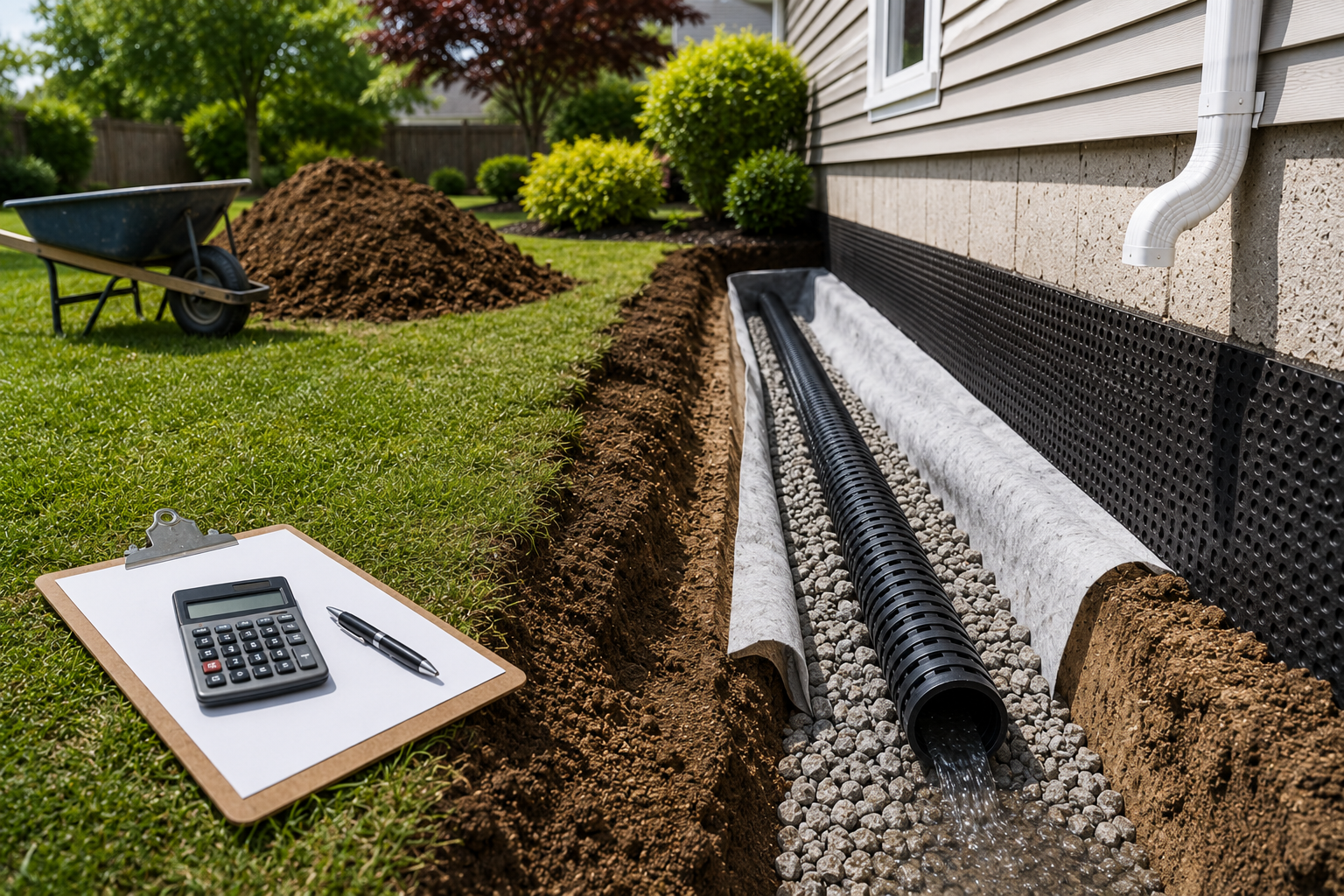

If you have water collecting in your yard or around your home's foundation, you may be thinking about installing a French drain.
One of the first questions homeowners ask is:
"How much does a French drain cost?"
The answer is:
It depends on your property and the amount of work needed.
Every home is different, so there isn't one fixed price for every installation.
In this guide, we'll explain what affects the cost of a French drain and why it can be a good investment for protecting your home.
Is There One Price for Every French Drain?
No. The cost of a French drain depends on several factors, including:- The size of your yard
- The length of the drain
- Where the drain will be installed
- The type of soil
- How much digging is required
- Whether other drainage work is needed
What Can Affect the Cost?
Several things can change the total cost of installing a French drain. Let's look at the most common ones.1. The Length of the Drain
A longer French drain requires:- More digging
- More gravel
- More drainage pipe
- More labor
2. Where the Drain Is Installed
Installing a French drain in an open yard is usually easier than installing one beside a house or under a walkway. The location can affect:- Labor
- Equipment needed
- Time required
3. Soil Conditions
Not all soil is the same. Some properties have:- Heavy clay soil
- Rocky soil
- Hard-packed ground
4. Existing Drainage Problems
Sometimes a French drain is only one part of the solution. A contractor may also recommend:- Yard grading
- Downspout extensions
- Weeping tile repairs
- Sump pump installation
- Basement waterproofing
5. Landscaping
If flower beds, patios, sidewalks, or trees are in the installation area, extra care may be needed during the project. In some cases, landscaping may need to be repaired after the work is finished.Is a French Drain Worth the Cost?
For many homeowners, the answer is yes. A properly installed French drain can help protect your home from:- Standing water
- Basement leaks
- Foundation damage
- Soil erosion
- Wet lawns
- Mold and mildew
Should You Get More Than One Estimate?
Yes. It's always a good idea to get two or three estimates before starting a drainage project. Comparing estimates helps you:- Understand your options.
- Compare different drainage solutions.
- Ask questions.
- Choose a contractor you trust.
Can I Install a French Drain Myself?
Some experienced homeowners install French drains themselves. However, proper installation requires:- Careful planning
- Digging the trench
- Creating the correct slope
- Installing gravel
- Laying the drainage pipe correctly
- Directing water to a safe drainage area
How Can You Help Your French Drain Last Longer?
A French drain requires very little maintenance, but regular care helps keep it working well. Simple maintenance includes:- Keep gutters clean.
- Extend downspouts away from your home.
- Keep drainage outlets free of leaves and debris.
- Watch for standing water after heavy rain.
- Have the system inspected if drainage problems return.
When Should You Call a Professional?
You should contact a drainage or basement waterproofing specialist if:- Water collects around your home after every rain.
- Your yard stays muddy for several days.
- Your basement leaks.
- You notice water beside your foundation.
- You're unsure whether a French drain is the right solution.