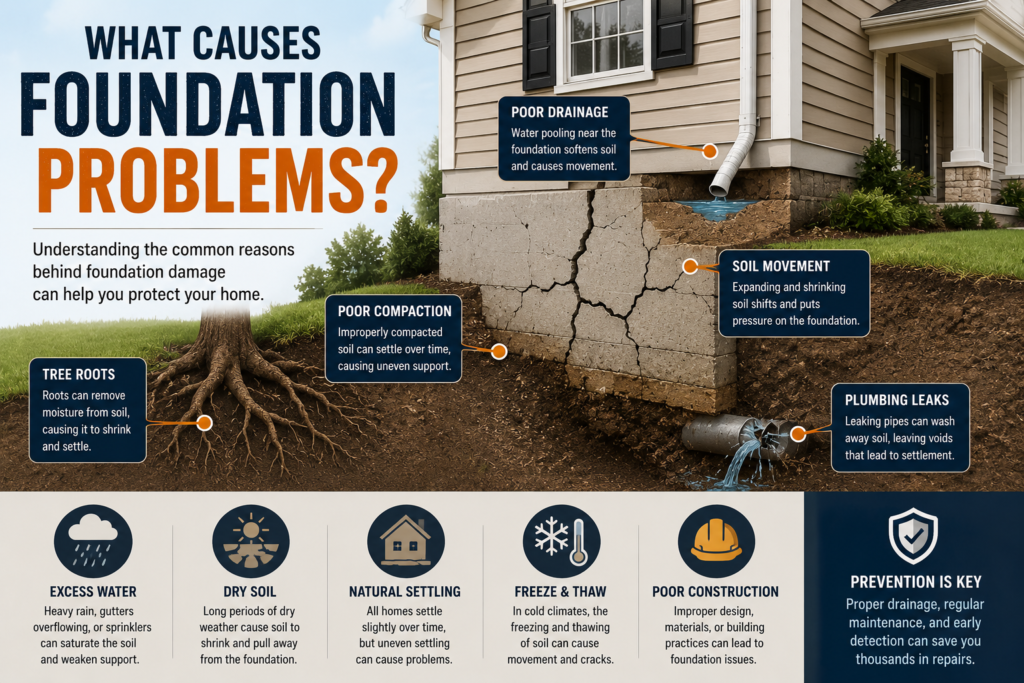
Your home's foundation is designed to last for many years, but that doesn't mean it's immune to problems.
One of the biggest surprises for homeowners is learning that the foundation itself isn't always the problem. In many cases, it's the soil around and beneath your home that's causing the foundation to move.
Understanding what causes foundation problems can help you spot issues early and even prevent costly repairs in the future.
Let's take a look at the most common causes.
Book A Free Inspection
Or
📞 Call Now for a Free Assessment
1. Too Much Water Around Your Home
Water is one of the biggest causes of foundation problems. When large amounts of water collect around your foundation, the soil becomes soft and unstable. As the soil shifts, your foundation may begin to settle or move. Common sources of excess water include:- Heavy rainfall
- Poor drainage
- Clogged gutters
- Downspouts that empty next to the house
- Sprinkler systems that constantly soak the soil
2. Dry Soil
It may sound surprising, but too little water can also cause foundation problems. During long periods of hot, dry weather, the soil beneath your home can shrink. As the soil pulls away from the foundation, parts of the house may settle unevenly, causing cracks and other structural issues. This is especially common in areas with clay soil.3. Expanding and Shrinking Clay Soil
Some types of soil expand when they're wet and shrink when they dry out. Clay soil is one of the biggest examples. Imagine placing your home on a sponge. Every time the sponge gets wet, it expands. Every time it dries, it shrinks. Over the years, this constant movement can put stress on the foundation and cause it to crack or shift.4. Poor Drainage
If rainwater doesn't flow away from your home properly, it can collect around the foundation. Poor drainage is often caused by:- Incorrect grading around the house
- Short downspouts
- Blocked gutters
- Low areas where water pools
5. Tree Roots
Large trees can sometimes contribute to foundation movement. Their roots absorb moisture from the surrounding soil. During dry weather, this can cause the soil beneath parts of the foundation to shrink. This doesn't mean you need to remove every tree near your home, but it's something to keep in mind if large trees are growing close to the foundation.6. Plumbing Leaks
A leaking water pipe beneath your home can slowly wash away or soften the soil supporting the foundation. Because these leaks often happen underground, homeowners may not notice them right away. Signs of an underground plumbing leak may include:- Higher water bills
- Damp areas around the foundation
- Water pooling where it shouldn't
- New foundation cracks
7. Natural Settling
Every home settles a little over time. As a new house's weight presses down on the soil, a small amount of settling is completely normal. Minor settling usually isn't a cause for concern. However, if one part of the house settles much more than another, it can lead to uneven floors, sticking doors, and foundation cracks.8. Poor Construction
Sometimes foundation problems begin before homeowners even move in. Examples include:- Poor soil preparation before construction
- Low-quality concrete
- Inadequate drainage around the home
- Improper compaction of the soil
9. Freeze and Thaw Cycles
In colder climates, including much of Canada, freezing temperatures can affect the ground around your home. When water in the soil freezes, it expands. As it thaws, the soil settles again. Repeating this cycle year after year can gradually place stress on your foundation.Can Foundation Problems Be Prevented?
Not every foundation problem can be avoided, but regular home maintenance can greatly reduce the risk. Here are a few simple things you can do:- Clean your gutters regularly.
- Make sure downspouts carry water several feet away from your home.
- Keep the ground sloping away from the foundation.
- Repair plumbing leaks promptly.
- Watch for new cracks around your home.
- Inspect your basement every few months.
- Avoid allowing the soil around your home to become extremely dry for long periods.
When Should You Be Concerned?
One small crack isn't always a sign of a serious problem. However, it's a good idea to have your home inspected if you notice:- Several new cracks appearing
- Cracks that continue to grow
- Doors or windows suddenly sticking
- Uneven floors
- Bowing basement walls
- Water entering the basement
- Large gaps around windows or doors
Frequently Asked Questions
Is water really the biggest cause of foundation problems?
Yes. Too much water, too little water, and poor drainage are among the most common reasons foundations begin to move.Can heavy rain damage a foundation?
Heavy rain by itself usually isn't the problem. The concern is when water collects around the foundation because it can't drain away properly.Can tree roots crack my foundation?
Tree roots usually don't break concrete directly. More often, they remove moisture from the soil, causing the ground to shrink and allowing the foundation to move.Are foundation problems common?
Yes. Many homes experience some degree of settling over time. The key is knowing when normal settling becomes a structural concern.Learn More About Foundation Repair
Understanding what causes foundation problems is just one part of protecting your home. If you'd like to learn about warning signs, repair methods, repair costs, and how to choose the right contractor, read our Complete Homeowner's Guide to Foundation Repair. It's a homeowner-friendly resource that brings together everything you need to know in one place.Final Thoughts
Foundation problems don't usually happen overnight. Most develop slowly as the soil around your home changes over time. By understanding the common causes—and by taking simple steps like improving drainage, maintaining your gutters, and watching for early warning signs—you can help protect your home and avoid more expensive repairs in the future. If you notice changes around your home that concern you, it's always worth having your foundation inspected. Catching problems early is often the best way to save money and keep your home safe.Book A Free Inspection
Or