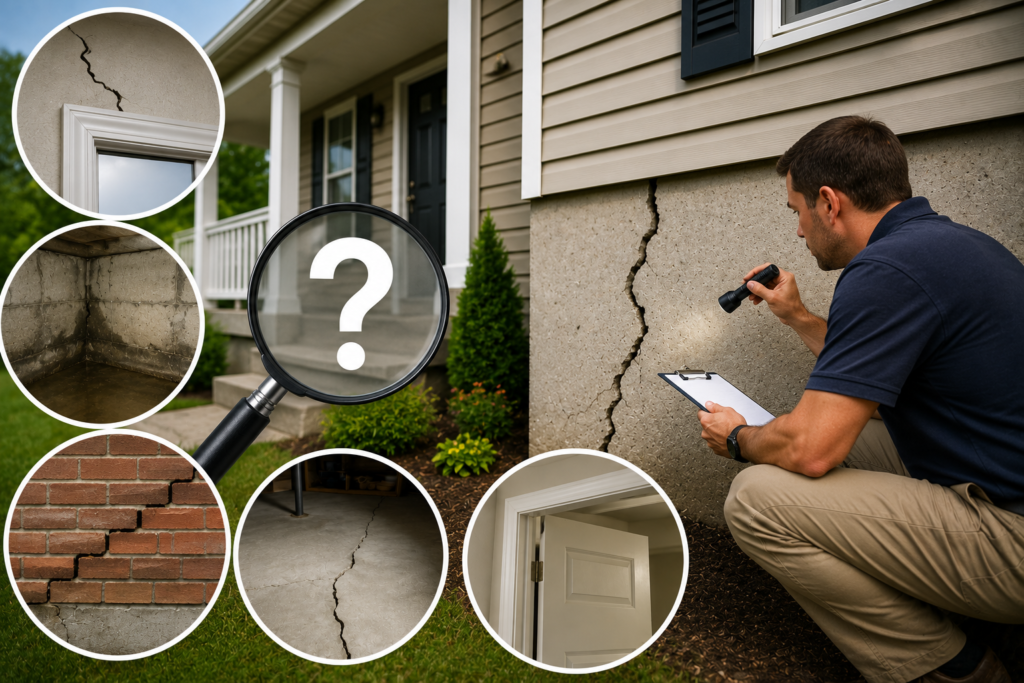
Most homeowners don't spend much time thinking about their home's foundation—until something starts to look different.
Maybe you've noticed a crack in the basement wall. Perhaps a door suddenly won't close properly, or a window has become difficult to open.
These changes don't always mean you have a serious foundation problem, but they shouldn't be ignored either.
In this guide, we'll explain the most common warning signs that your foundation may need repair and when it's time to call a professional.
Book A Free Inspection
Or
📞 Call Now for a Free Assessment
Why Do Foundation Problems Happen?
Your home's foundation rests on the soil beneath it. Over time, the soil can expand, shrink, settle, or shift because of weather, moisture, drainage problems, or natural settling. When the soil moves, your foundation may move with it. Even a small amount of movement can affect the rest of your home. The good news is that many foundation problems can be repaired successfully if they're found early.1. Cracks in Your Basement Walls
One of the first places homeowners notice foundation problems is in the basement. Look for:- Vertical cracks
- Horizontal cracks
- Diagonal cracks
- Stair-step cracks in concrete blocks
2. Cracks in Drywall
Take a walk through your home and look closely at the walls and ceilings. Small cracks above doors and windows or where walls meet the ceiling may indicate that part of the house has shifted. If you notice new cracks appearing in several rooms, it's worth investigating further.3. Doors That Stick or Won't Close Properly
Have you ever noticed a door that suddenly becomes difficult to open or won't latch correctly? This can happen when the frame becomes slightly out of alignment because the foundation has moved. If several doors throughout the house start sticking at the same time, the foundation may be part of the problem.4. Windows That Are Hard to Open
Windows should open and close smoothly. If they suddenly become difficult to operate or don't close completely, it may be because the window frames have shifted. Like sticking doors, this doesn't automatically mean foundation damage, but it's a warning sign worth paying attention to.5. Uneven or Sloping Floors
Walk across different rooms in your home. Do the floors feel uneven? Does a ball roll across the floor by itself? Do you notice a slight slope that wasn't there before? Uneven floors can happen for several reasons, but foundation movement is one possibility.6. Gaps Around Doors and Windows
As a foundation shifts, small gaps may begin to appear. You might notice:- Gaps above window frames
- Spaces around exterior doors
- Trim separating from the wall
7. Cracks in Exterior Brick or Concrete
Step outside and inspect your home's exterior. Look for:- Stair-step cracks in brick walls
- Cracks in concrete foundation walls
- Large cracks in stone or masonry
8. Water Leaks in the Basement
Water entering your basement doesn't always mean your foundation needs structural repair. However, if water is entering through foundation cracks, it's important to have the problem inspected. Water can make foundation problems worse by weakening the soil around your home.9. Bowing Basement Walls
Basement walls should be straight. If a wall appears to lean inward or bulge, it may be under pressure from the surrounding soil. This type of problem should be evaluated as soon as possible because it can become more serious over time.10. Chimney or Porch Pulling Away from the House
Take a look at your chimney, porch, or attached garage. If you notice large gaps forming where these structures meet the house, it could indicate foundation movement. Although this isn't as common as other warning signs, it should never be ignored.Does One Small Crack Mean I Need Foundation Repair?
Not necessarily. Concrete naturally develops small hairline cracks as it cures, and homes settle a little as they age. A single small crack may simply be part of normal settling. You should be more concerned if:- New cracks continue to appear
- Existing cracks become larger
- Several warning signs appear together
- Water begins entering through the cracks
- Doors and windows suddenly stop working properly
When Should I Call a Foundation Repair Specialist?
Consider calling a foundation repair professional if you notice:- Multiple cracks inside or outside your home
- Horizontal foundation cracks
- Uneven floors
- Bowing basement walls
- Large gaps around windows or doors
- Water leaking through foundation walls
- Doors or windows that suddenly become difficult to open
Can Foundation Problems Get Worse?
Yes. Foundation problems usually don't fix themselves. Small cracks can become larger. Doors and windows may become harder to operate. Floors can become more uneven. Water damage can increase. The earlier a problem is identified, the easier and often less expensive it is to repair.Frequently Asked Questions
Are small foundation cracks normal?
Yes. Small hairline cracks are common in many homes. The concern is when cracks become larger, wider, or are accompanied by other warning signs.Can sticking doors mean foundation problems?
Sometimes. Sticking doors can have several causes, but if multiple doors and windows become difficult to use at the same time, foundation movement may be involved.Should I monitor foundation cracks?
Yes. Taking photos every few months can help you see whether cracks are changing in size or shape.Is it worth getting an inspection?
Absolutely. Even if no repairs are needed, an inspection can provide peace of mind and help catch problems before they become more serious.Learn More About Foundation Repair
Recognizing the warning signs is only one part of protecting your home. If you'd like to learn what causes foundation problems, the different repair methods available, how much repairs may cost, and how to choose the right contractor, read our Complete Homeowner's Guide to Foundation Repair. It's a homeowner-friendly guide that explains everything you need to know in simple, easy-to-understand language.Final Thoughts
Your home often gives you small clues when something isn't quite right. A new crack, a sticking door, or an uneven floor doesn't always mean your foundation is failing—but it is worth paying attention. By checking your home regularly and addressing problems early, you can often prevent more expensive repairs in the future. If you're ever unsure, having your foundation inspected by a qualified professional is a smart investment and can give you confidence that your home is safe and stable.Book A Free Inspection
Or