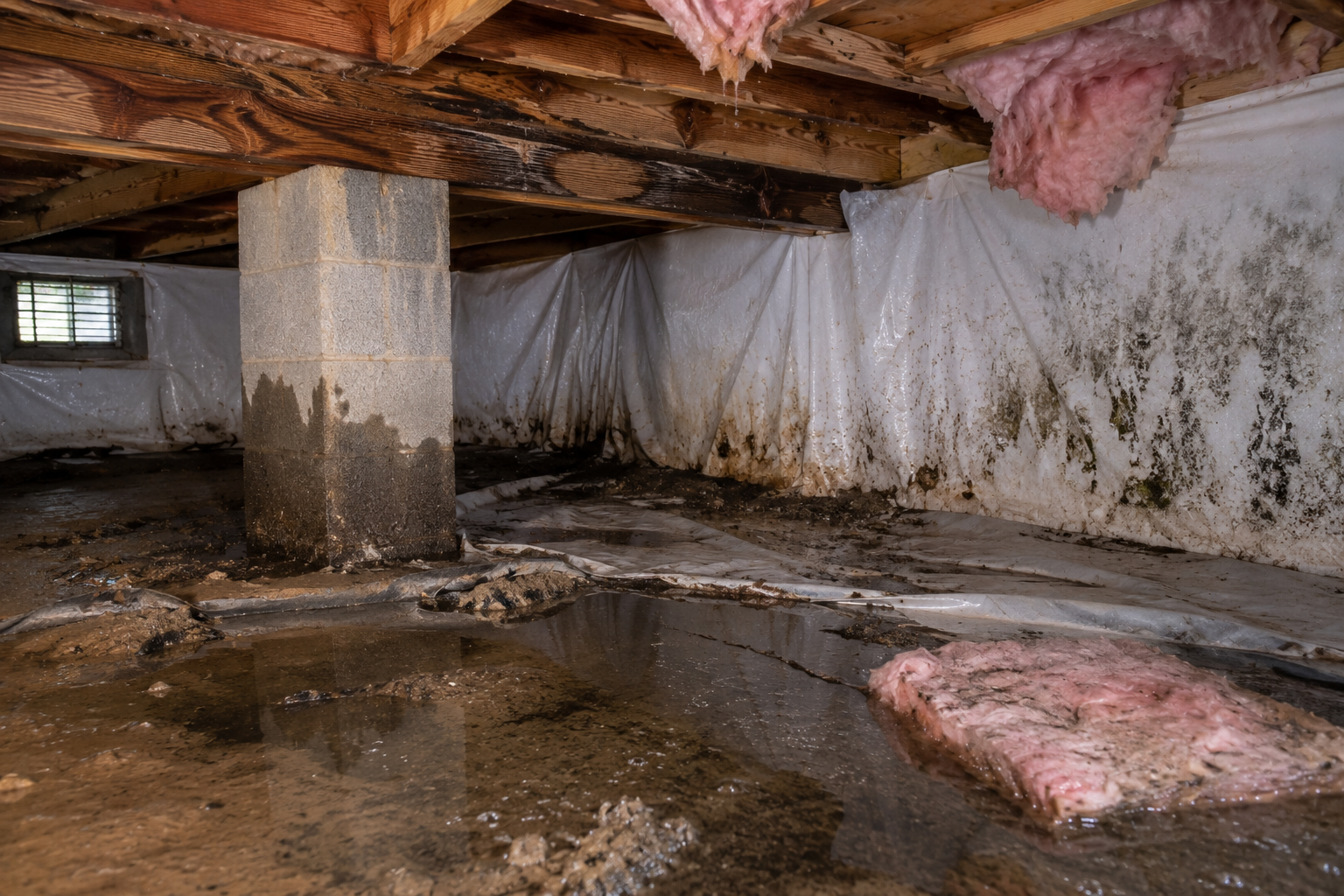

Your crawl space may be out of sight, but it should never be ignored. A small amount of moisture can quickly turn into a bigger problem if it is not fixed.
A wet crawl space can lead to mold, wood rot, bad smells, pests, damaged insulation, and even foundation problems over time.
The good news is that your home often gives you warning signs before serious damage happens. Knowing what to look for can help you fix the problem early and save money on repairs.
Why Does Moisture Build Up in a Crawl Space?
Moisture can enter your crawl space for many reasons, including:- Heavy rain
- Poor drainage around your home
- Leaking pipes
- High groundwater
- Foundation cracks
- High humidity
- Missing or damaged vapor barriers
1. Musty Smells Inside Your Home
One of the first signs of a moisture problem is a musty or damp smell. Many homeowners notice the smell before they ever see water. Because air from the crawl space can move up into your home, unpleasant odors often spread throughout the house. If your home smells musty, especially after it rains, your crawl space may be too damp.2. Standing Water
Standing water is one of the clearest signs that something is wrong. Water may collect after heavy rain or remain there all the time. Standing water should never be ignored because it can quickly lead to mold, wood damage, and pest problems.3. Damp or Wet Soil
Even if you do not see standing water, the ground should not stay wet for long periods. Constantly damp soil means moisture is entering the crawl space and may need a waterproofing solution.4. Mold or Mildew
Mold grows where there is moisture. If you see black, green, white, or gray patches on wood, walls, insulation, or other surfaces, mold may already be growing. Besides damaging your home, mold can affect indoor air quality and may cause health problems for some people.5. Rotting Wood
Wooden beams and floor supports need to stay dry to remain strong. When wood stays wet for a long time, it begins to rot. Signs of wood rot include:- Soft wood
- Crumbling wood
- Dark stains
- A spongy feel
- Wood that breaks easily
6. Sagging or Uneven Floors
If your floors begin to sag, bounce, or feel uneven, moisture in the crawl space may be the cause. Wet wooden supports can weaken over time, allowing parts of the floor above to sink slightly. This is a warning sign that should be inspected by a professional.7. Wet or Damaged Insulation
Many crawl spaces contain insulation between the floor joists. If the insulation becomes wet, it may:- Fall down
- Lose its ability to keep your home warm
- Grow mold
- Develop unpleasant odors
8. High Humidity Inside Your Home
A damp crawl space can increase the humidity inside your home. You may notice:- Sticky air
- Condensation on windows
- Rooms that feel damp
- Your air conditioner running more often
9. More Insects and Pests
Many pests like damp places. A wet crawl space may attract:- Termites
- Ants
- Cockroaches
- Spiders
- Rodents
10. Higher Heating and Cooling Bills
A damp crawl space can make your heating and cooling system work harder. Wet insulation does not work as well, and extra humidity can make your home less comfortable. As a result, your energy bills may increase.11. White Powder on Foundation Walls
Sometimes you may notice a white, chalky powder on the foundation walls. This is called efflorescence. It forms when water moves through concrete and leaves behind minerals as it dries. Although the white powder itself is not harmful, it is a sign that moisture is entering your crawl space.12. Rust on Metal Parts
Moisture can also cause metal parts in the crawl space to rust. You may notice rust on:- Metal support posts
- Pipes
- Nails
- Ductwork
Should You Ignore Crawl Space Moisture?
No. Moisture problems usually get worse over time. Ignoring the warning signs can lead to:- More mold
- More wood rot
- Expensive repairs
- Poor indoor air quality
- Structural damage
- Foundation problems
What Should You Do If You Notice These Signs?
If you notice one or more of these warning signs, it is a good idea to inspect your crawl space or have it inspected by a crawl space waterproofing professional. They can find the source of the moisture and recommend the best solution, such as:- Improving drainage
- Repairing foundation cracks
- Installing a vapor barrier
- Crawl space encapsulation
- Installing a sump pump
- Adding a dehumidifier