Serving York Region, Ontario
info@yorkregionwaterproofing.ca
+1 (416) 829-5228
French Drain vs. Weeping Tile: What’s the Difference?
If you've been researching drainage systems for your home, you've probably come across two terms:
  • French drain
  • Weeping tile
Many homeowners think they are the same thing. While they work in similar ways, they are not exactly the same. Both systems help move water away from your home, but they are usually installed in different places and solve different drainage problems. In this guide, we'll explain the differences in simple, easy-to-understand language.

What Do French Drains and Weeping Tile Have in Common?

Both systems have the same goal: They collect water and move it away from your home. By doing this, they help reduce the risk of:
  • Basement leaks
  • Foundation damage
  • Standing water
  • Wet yards
  • Water collecting around your home
Both systems usually include a perforated pipe with small holes that allow water to enter.

What Is a French Drain?

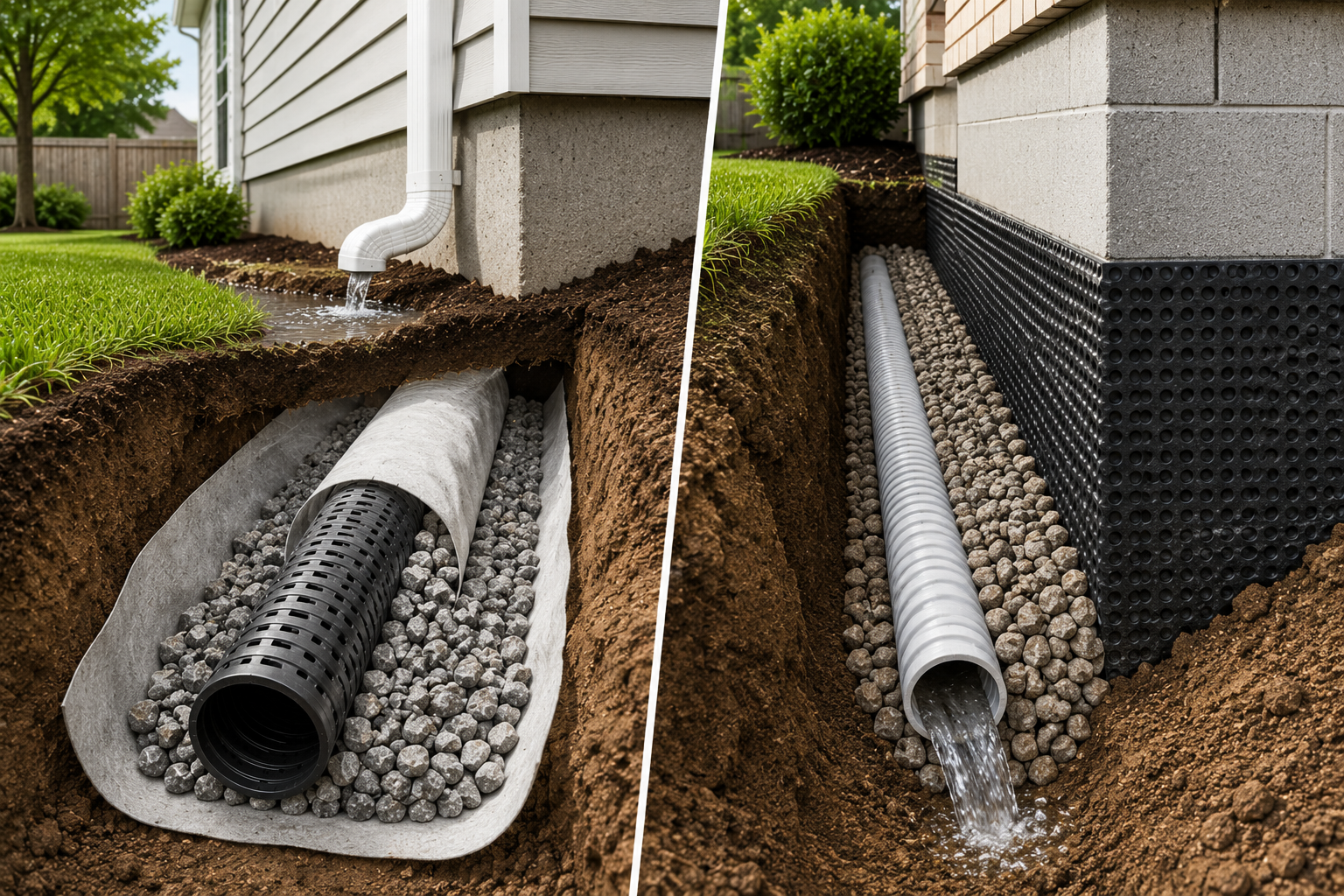
A French drain is a drainage system that is installed where water collects. It consists of:
  • A trench
  • Gravel
  • A perforated drainage pipe
The drain collects water from the surrounding soil and carries it to a safe drainage area. French drains are commonly installed:
  • In yards
  • Along driveways
  • Near patios
  • Around retaining walls
  • Around some foundations
They are designed to solve surface and underground drainage problems.

What Is Weeping Tile?

Weeping tile is a drainage pipe installed around the foundation of a house. Its job is to collect groundwater before it reaches your basement walls. The water is then carried to:
  • A sump pit
  • A sump pump
  • Another drainage system
Most modern weeping tile is made from perforated plastic pipe.

The Biggest Difference

The biggest difference is where they're installed and what they're designed to protect.

French Drain

Usually installed where water collects on your property. Its main job is to improve drainage in your yard and move water away from problem areas.

Weeping Tile

Installed around the foundation of your home. Its main job is to protect your basement by collecting groundwater before it reaches the foundation walls.

Which One Protects the Foundation?

Both can help protect your foundation. However:
  • Weeping tile is specifically designed to protect the foundation.
  • French drains help reduce the amount of water around your property and can also reduce pressure near the foundation.
Many homes use both systems together.

Can a Home Have Both?

Yes. In fact, many homes do. For example:
  • A weeping tile system protects the foundation.
  • A French drain improves drainage elsewhere in the yard.
The two systems work together to move water away from your home.

Which One Do You Need?

It depends on the problem you're trying to solve. You may benefit from a French drain if:
  • Water collects in your yard.
  • You have standing water after rain.
  • Your lawn stays muddy.
  • Water flows across your property.
You may need weeping tile if:
  • Your basement leaks.
  • Water collects around your foundation.
  • Your foundation walls stay damp.
  • Groundwater is causing problems near your home.
A professional inspection can help determine which system is right for your property.

Can They Be Installed Together?

Yes. Many waterproofing projects include both systems. For example:
  • Weeping tile collects groundwater around the foundation.
  • A French drain improves drainage in other areas of the yard.
Using both systems can provide better protection against water damage.

Do They Need Maintenance?

Yes. Although both systems are mostly underground, they still benefit from regular maintenance. Good maintenance includes:
  • Cleaning gutters regularly.
  • Extending downspouts away from the house.
  • Keeping drainage outlets clear.
  • Watching for standing water after heavy rain.
  • Having drainage problems inspected early.
Regular maintenance helps both systems continue working properly.

When Should You Call a Professional?

You should contact a drainage or basement waterproofing specialist if:
  • Water collects around your home.
  • Your basement leaks after rain.
  • Your yard stays muddy.
  • You notice standing water.
  • You're unsure whether you need a French drain or weeping tile.
A professional can inspect your property and recommend the best drainage solution.

Frequently Asked Questions

Is a French drain the same as weeping tile?

No. They work in similar ways, but they are usually installed in different places and have different purposes.

Which one protects my basement?

Weeping tile is designed specifically to collect groundwater around your foundation and help protect your basement.

Can I have both systems?

Yes. Many homes use both a French drain and weeping tile to improve drainage and reduce the risk of water damage.

Which one is better?

Neither is better—they solve different problems. The right choice depends on where the water is collecting and what needs to be protected.

Learn More About Drainage & Water Management

Understanding the difference between French drains and weeping tile is an important step toward protecting your home from water damage. If you'd like to learn about yard drainage, standing water, drainage costs, French drains, weeping tile, and other ways to keep water away from your home, read our Complete Homeowner's Guide to Drainage & Water Management. It's an easy-to-understand guide created to help homeowners understand drainage systems and make informed decisions about protecting their homes.

Final Thoughts

French drains and weeping tile both play an important role in moving water away from your home. While they work in similar ways, they are designed for different purposes. A French drain helps improve drainage around your property, while weeping tile helps protect your foundation from groundwater. If you're unsure which system your home needs, a drainage specialist can inspect your property and recommend the best solution to keep your home dry and protected.

Leave a Reply

Your email address will not be published. Required fields are marked *