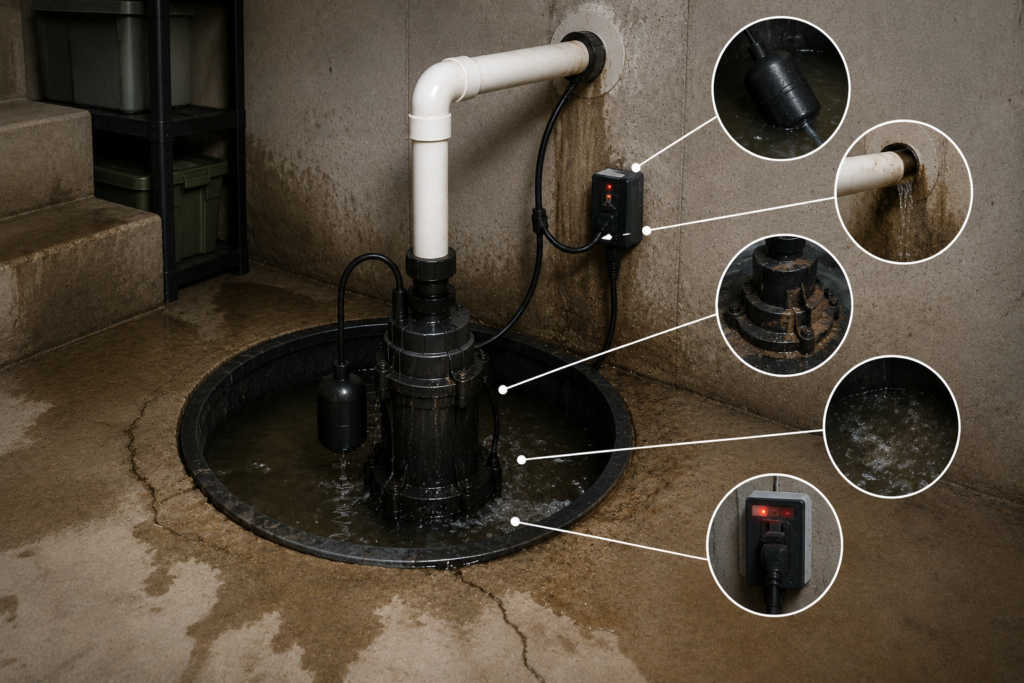
Your sump pump is one of the most important tools for protecting your basement from flooding.
Most of the time, you probably don't even think about it.
It quietly sits in the sump pit, waiting for heavy rain or melting snow.
But like any machine, a sump pump can wear out over time.
Knowing the warning signs can help you repair or replace it before your basement floods.
In this guide, we'll explain the most common signs that your sump pump may need repair in simple, easy-to-understand language.
Book A Free Inspection
Or
📞 Call Now for a Free Assessment
Why Is It Important to Fix a Sump Pump Quickly?
A broken sump pump may not seem like a big problem on a sunny day. However, during the next heavy rainstorm, it could stop working when you need it most. A failed sump pump can lead to:- Basement flooding
- Water damage
- Mold and mildew
- Damaged furniture and belongings
- Expensive cleanup costs
1. Your Sump Pump Won't Turn On
One of the clearest warning signs is when the pump doesn't turn on. If water collects in the sump pit but the pump stays off, there may be a problem with:- The float switch
- The motor
- The electrical connection
- The pump itself
2. The Pump Runs All the Time
A sump pump should only run when it's needed. If it keeps running even after the water is gone, something may be wrong. Possible causes include:- A stuck float switch
- A faulty sensor
- A pump that's too small for the amount of water
- A mechanical problem
3. Strange Noises
Most sump pumps make a gentle humming sound while they're working. However, loud or unusual noises may mean something needs attention. Listen for:- Grinding sounds
- Rattling
- Vibrations
- Screeching
- Banging noises
4. The Pump Vibrates Excessively
Some vibration is normal. However, if the sump pump shakes a lot while it's running, it could be a sign of a damaged part or an unbalanced motor. Too much vibration can shorten the life of the pump.5. Water Stays in the Sump Pit
After the pump finishes running, most of the water should be gone. If the pit remains full of water, the pump may not be working properly. The problem could be:- A clogged pump
- A blocked discharge pipe
- A worn-out motor
- A mechanical failure
6. The Pump Turns On and Off Frequently
A sump pump shouldn't cycle on and off every few seconds. This is called short cycling. Short cycling can happen if:- The float switch isn't adjusted properly.
- The pump is too powerful for the sump pit.
- There's a problem with the float.
7. Your Basement Floods Even Though You Have a Sump Pump
If your basement floods while the sump pump is running, something isn't working correctly. The pump may be:- Too small
- Worn out
- Clogged
- Unable to keep up with the amount of water
8. The Pump Is Old
Even if your sump pump seems to be working, age matters. Older pumps are more likely to fail unexpectedly. If your sump pump has been in service for many years, it may be worth having it inspected before it stops working. Replacing an aging pump before it fails can provide peace of mind.How Can You Test Your Sump Pump?
Testing your sump pump is easy. Simply pour a bucket of water into the sump pit. If everything is working properly:- The float should rise.
- The pump should turn on.
- The water should be pumped outside.
- The pump should turn off when the pit is nearly empty.
How Can You Help Prevent Sump Pump Problems?
Regular maintenance can help extend the life of your sump pump. Here are a few simple tips:- Test the pump several times a year.
- Keep the sump pit clean.
- Make sure the float moves freely.
- Check that the discharge pipe is clear.
- Listen for unusual sounds during operation.
- Consider installing a battery backup system.
When Should You Call a Professional?
You should contact a sump pump specialist if:- The pump won't turn on.
- The pump runs constantly.
- Water stays in the sump pit.
- The pump makes unusual noises.
- Your basement floods even though the pump is running.
- You're unsure whether the pump is working properly.
Frequently Asked Questions
How do I know if my sump pump is failing?
Common warning signs include strange noises, constant running, water remaining in the sump pit, frequent cycling, or basement flooding.Is it normal for a sump pump to run during heavy rain?
Yes. During heavy rain, it's normal for the sump pump to turn on several times as it removes water.Should I repair or replace my sump pump?
It depends on the age of the pump and the type of problem. A professional can help determine whether repair or replacement is the better option.How often should I test my sump pump?
Most homeowners should test their sump pump a few times each year, especially before the rainy season.Learn More About Sump Pumps
Knowing the warning signs of a failing sump pump is an important step toward protecting your basement from water damage. If you'd like to learn how sump pumps work, whether you need one, how to maintain them, installation costs, battery backup systems, and when to replace them, read our Complete Homeowner's Guide to Sump Pumps. It's an easy-to-understand guide that answers the most common questions homeowners have about sump pumps and how to keep them working properly.Final Thoughts
Your sump pump is one of the hardest-working devices in your home, especially during heavy rain. By paying attention to warning signs like unusual noises, constant running, or water remaining in the sump pit, you can often catch small problems before they become expensive emergencies. Regular testing and maintenance can help keep your sump pump ready to protect your basement whenever bad weather arrives.Book A Free Inspection
Or