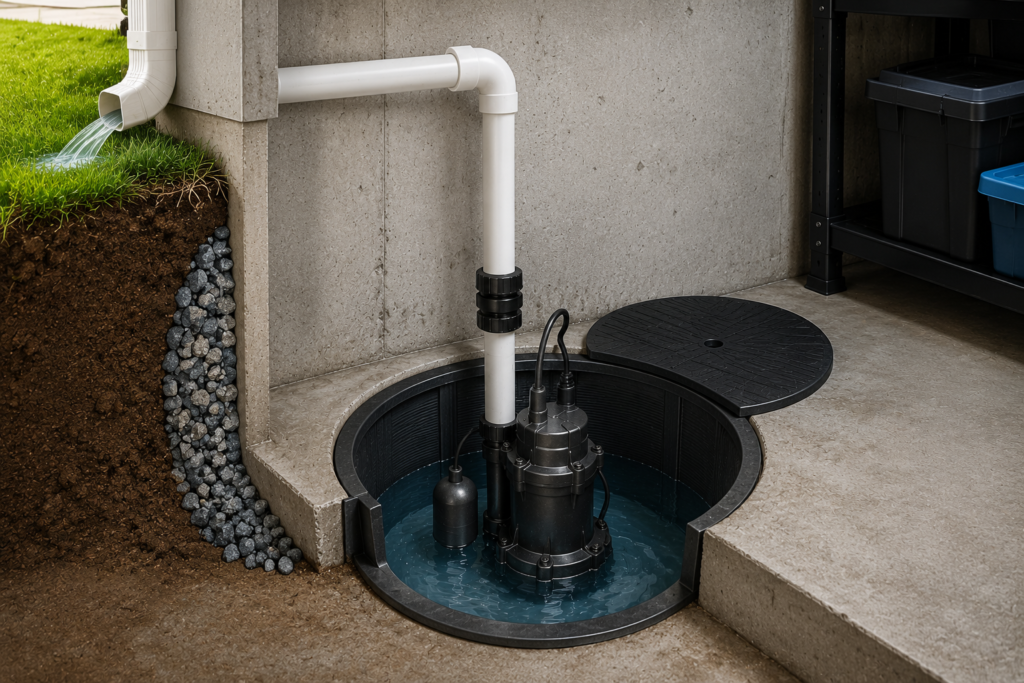
If you've ever had water in your basement, you've probably heard someone mention a sump pump.
But what exactly is it?
A sump pump is a device that helps keep your basement dry by removing water before it can flood your home.
For many homeowners, it's one of the most important pieces of equipment for protecting their basement from water damage.
In this guide, we'll explain what a sump pump is, how it works, and why many homes have one.
What Does a Sump Pump Do?
A sump pump collects and removes water that gathers beneath or around your home's foundation. Instead of allowing water to build up in your basement, the pump moves it safely outside through a discharge pipe. This helps reduce the risk of:- Basement flooding
- Water damage
- Mold and mildew
- Damp basement floors
- Damage to furniture and belongings
Book A Free Inspection
Or
📞 Call Now for a Free Assessment
Where Is a Sump Pump Located?
Most sump pumps are installed in a sump pit. A sump pit is a small hole in the floor of your basement or crawl space. As groundwater or drainage water collects in the pit, the sump pump automatically removes it before the water level becomes too high. You may not even notice the sump pump until you hear it running during heavy rain.How Does a Sump Pump Work?
A sump pump works automatically. Here's what happens:- Water collects in the sump pit.
- As the water level rises, a float rises with it.
- When the water reaches a certain level, the pump turns on.
- The pump pushes the water through a pipe.
- The water is discharged safely away from your home's foundation.
- Once the water level drops, the pump turns itself off.
Why Do Homes Need a Sump Pump?
Not every home needs a sump pump. However, many homes benefit from having one, especially if:- The basement is below ground level.
- Water has entered the basement before.
- The home is built in an area with a high water table.
- Heavy rain is common.
- An interior drainage system has been installed.
What Happens If You Don't Have a Sump Pump?
Without a sump pump, water may collect around your foundation during heavy rain or snowmelt. If enough water builds up, it can enter your basement and cause:- Flooding
- Wet carpets
- Damaged drywall
- Mold growth
- Musty odors
- Damage to stored belongings
Are There Different Types of Sump Pumps?
Yes. The two most common types are:Pedestal Sump Pumps
The motor sits above the sump pit while the pump extends into the water. These pumps are easy to access for maintenance and are commonly found in unfinished basements.Submersible Sump Pumps
The entire pump sits inside the sump pit beneath a sealed cover. These pumps are quieter and hidden from view, making them a popular choice for many homeowners. Both types remove water effectively when installed correctly.How Often Does a Sump Pump Run?
It depends on the weather and your home's drainage. Some pumps only run during heavy rain. Others may run more often if your home has a high water table or receives a lot of groundwater. Hearing your sump pump run during a storm is usually a good sign—it means it's doing its job.How Long Does a Sump Pump Last?
A sump pump doesn't last forever. With proper maintenance, many sump pumps provide reliable service for many years. Regular testing and cleaning can help keep the pump working properly and reduce the chance of unexpected failure.How Can You Keep Your Sump Pump Working?
Regular maintenance is simple and can help prevent problems. Good maintenance includes:- Test the pump a few times each year.
- Keep the sump pit free of dirt and debris.
- Make sure the float moves freely.
- Check that the discharge pipe is not blocked.
- Listen for unusual noises during operation.
When Should You Call a Professional?
You should contact a sump pump specialist if:- The pump won't turn on.
- The pump runs continuously.
- Strange noises come from the pump.
- Water stays in the sump pit.
- Your basement floods even though you have a sump pump.
- You're installing a sump pump for the first time.
Frequently Asked Questions
What is the purpose of a sump pump?
A sump pump removes water from a sump pit and pumps it away from your home to help keep your basement dry.Does every house have a sump pump?
No. Some homes have one, while others don't. Homes with basements or a higher risk of water problems are more likely to have a sump pump.Does a sump pump run all the time?
No. Most sump pumps only run when enough water collects in the sump pit.Can a sump pump prevent basement flooding?
In many cases, yes. A properly working sump pump can help remove water before it floods your basement.Learn More About Sump Pumps
Understanding what a sump pump is is the first step toward protecting your basement from water damage. If you'd like to learn how sump pumps work, whether you need one, how to maintain them, common repair signs, installation costs, and how to choose the right system for your home, read our Complete Homeowner's Guide to Sump Pumps. It's an easy-to-understand guide created to help homeowners keep their basements dry and avoid costly water damage.Final Thoughts
A sump pump may not be something you think about every day, but it plays an important role in protecting many homes from water damage. By removing water before it can flood your basement, a sump pump can help save you from expensive repairs and give you peace of mind during heavy rain. Whether you already have a sump pump or are thinking about installing one, understanding how it works is the first step toward keeping your basement dry and your home protected.Book A Free Inspection
Or