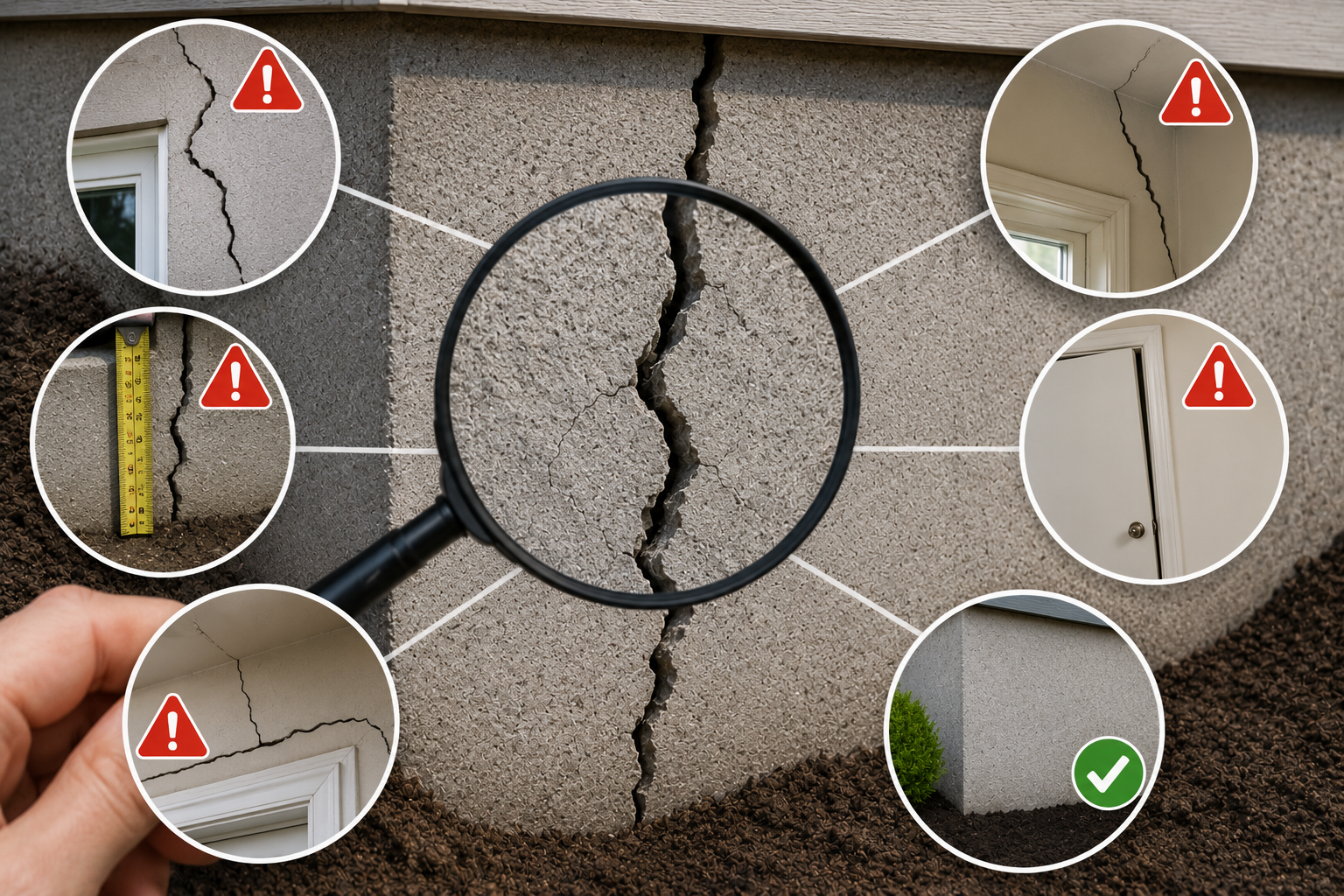

Finding a crack in your foundation can be unsettling.
Many homeowners ask themselves:
- Is this crack normal?
- Should I fix it right away?
- Is my home safe?
Should Every Foundation Crack Worry You?
No. Concrete naturally develops small cracks over time. Many homes have small foundation cracks that never become a major problem. These cracks are often caused by:- Normal settling
- Concrete shrinkage
- Small changes in temperature
1. The Crack Is Getting Bigger
One of the biggest warning signs is a crack that continues to grow. If you notice that a crack becomes:- Wider
- Longer
- More noticeable
2. Water Is Coming Through the Crack
A foundation crack that leaks water should never be ignored. Water entering your basement can lead to:- Mold growth
- Musty smells
- Water damage
- Damaged flooring
- Damaged drywall
3. The Crack Is Horizontal
Horizontal cracks deserve closer attention than many vertical cracks. They may be caused by pressure from the soil pushing against the foundation wall. While not every horizontal crack is a major structural problem, it's a good idea to have one inspected by a foundation professional.4. There Are Several New Cracks
Finding one small crack is common. Finding several new cracks in different areas of the foundation may suggest that something has changed. If you notice multiple cracks appearing within a short period of time, consider having your home inspected.5. The Basement Wall Is Bowing
A basement wall should be straight. If it begins to lean, curve, or bow inward, this may indicate pressure against the foundation. Bowing walls should be inspected as soon as possible.6. Doors and Windows Suddenly Stick
Sometimes the warning signs appear inside the house before they appear outside. If doors or windows suddenly become difficult to open or close, foundation movement could be one possible cause. While there are many reasons this can happen, it's worth checking your foundation if it occurs along with new cracks.7. Your Floors Become Uneven
If your floors begin to slope or feel uneven, it may indicate movement somewhere in the home's structure. This doesn't always mean there's a serious foundation problem, but it should be investigated.8. You Notice Cracks Inside the House
Foundation movement can sometimes cause cracks inside your home. Watch for cracks in:- Drywall
- Ceilings
- Around doors
- Around windows
What If the Crack Is Small?
Small hairline cracks are often part of normal settling. If the crack:- Stays the same size
- Doesn't leak water
- Doesn't cause other problems
Can Foundation Cracks Be Repaired?
Yes. Many foundation cracks can be repaired successfully. The best repair depends on:- The size of the crack
- What caused it
- Whether water is entering
- Whether the foundation is still moving
How Can You Help Prevent Foundation Problems?
While not every crack can be prevented, regular maintenance can reduce the risk. Simple steps include:- Clean gutters regularly.
- Extend downspouts away from the house.
- Keep the ground sloping away from the foundation.
- Repair plumbing leaks quickly.
- Check your basement after heavy rain.
- Monitor existing cracks for changes.
When Should You Call a Foundation Professional?
You should schedule an inspection if you notice:- A crack that keeps growing
- Water entering through a crack
- Horizontal cracks
- Bowing basement walls
- Uneven floors
- Multiple new cracks
- Doors or windows suddenly sticking