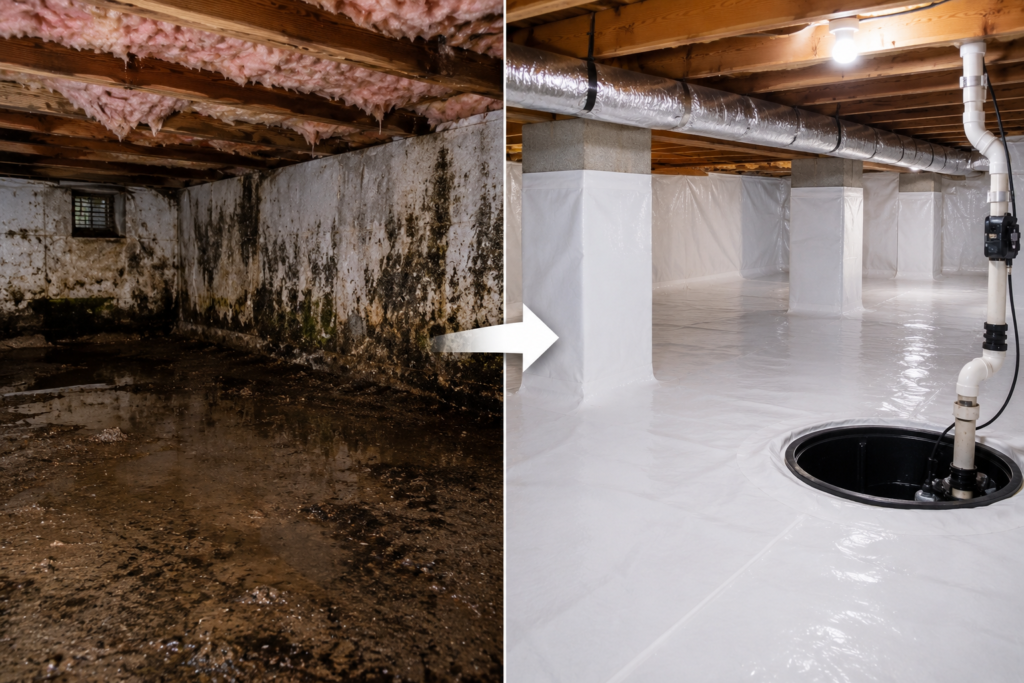
Many homeowners worry about mold in their crawl space, and for good reason. Mold can damage your home, create unpleasant smells, and affect the air you breathe.
If you've found mold or have a damp crawl space, you may be wondering if crawl space waterproofing can solve the problem.
The simple answer is yes, crawl space waterproofing can help prevent mold, but it is important to understand what waterproofing can and cannot do.
Why Does Mold Grow in a Crawl Space?
Mold needs three things to grow:- Moisture
- Warm temperatures
- A food source, such as wood, paper, or insulation
Book A Free Inspection
Or
📞 Call Now for a Free Assessment
How Does Water Get Into a Crawl Space?
Moisture can enter your crawl space in many ways, including:- Heavy rain
- Poor drainage around your home
- Foundation cracks
- Plumbing leaks
- High groundwater
- Humid outside air
- Moisture rising from the soil
Does Waterproofing Stop Mold?
Yes, in most cases. Crawl space waterproofing helps remove the moisture that mold needs to grow. Without moisture, mold has a much harder time growing and spreading. Waterproofing helps create a dry environment where mold is less likely to return.Can Waterproofing Remove Existing Mold?
No. Waterproofing does not remove mold that is already growing. If mold is already present, it usually needs to be cleaned or professionally removed before or during the waterproofing process. Think of it this way:- Mold removal gets rid of the mold that is already there.
- Waterproofing helps stop new mold from growing by keeping the crawl space dry.
How Does Crawl Space Waterproofing Help Prevent Mold?
Waterproofing works by reducing or eliminating moisture. A contractor may recommend one or more of the following:Install a Vapor Barrier
A vapor barrier is a thick plastic sheet placed over the soil. It helps stop moisture from rising into the crawl space.Crawl Space Encapsulation
Encapsulation seals the crawl space using a heavy-duty moisture barrier. It also helps reduce humid air from entering the space. This is one of the most effective ways to control moisture.Improve Drainage
If rainwater is collecting around your home, improving drainage helps keep water away from the crawl space. This may include:- Extending downspouts
- Improving yard grading
- Installing drainage systems
Install a Sump Pump
If groundwater or heavy rain causes water to collect under your home, a sump pump can remove the water before it causes damage.Use a Dehumidifier
A crawl space dehumidifier removes extra moisture from the air. Lower humidity makes it much harder for mold to grow.What Are the Signs of Mold in a Crawl Space?
Many homeowners never enter their crawl space, so mold often goes unnoticed. Common warning signs include:- A musty smell inside the home
- Visible mold on wood or insulation
- Damp or wet insulation
- High humidity
- Water stains
- Rotting wood
- Increased allergy symptoms for some people
Can Mold Affect the Rest of My Home?
Yes. Many people do not realize that air from the crawl space can move into the living areas of the home. If mold is growing underneath your house, mold spores and damp air can travel upward through small openings around pipes, ducts, and flooring. This may lead to:- Musty smells
- Poor indoor air quality
- More humidity inside the home
- Allergy or asthma symptoms for some people
Can I Prevent Mold Myself?
There are a few simple things homeowners can do to reduce moisture, including:- Clean gutters regularly.
- Make sure downspouts carry water away from the house.
- Repair plumbing leaks quickly.
- Check for standing water after heavy rain.
- Keep the crawl space clean.
When Should You Call a Professional?
You should consider calling a crawl space waterproofing contractor if you notice:- Mold growing in the crawl space
- Standing water
- Damp soil
- Musty smells
- Wet insulation
- Wood rot
- High humidity that does not improve
How Can You Keep Mold From Coming Back?
After mold has been removed, keeping the crawl space dry is the best way to prevent it from returning. Regular maintenance can help, including:- Keeping gutters clean
- Extending downspouts away from the foundation
- Repairing leaks quickly
- Checking the crawl space after heavy rain
- Maintaining your sump pump and dehumidifier, if installed
- Fixing drainage problems around your home
Final Thoughts
Crawl space waterproofing is one of the best ways to prevent mold because it removes the moisture that mold needs to grow. However, waterproofing does not remove mold that already exists. If mold is already present, it should usually be cleaned or removed before waterproofing is completed. By keeping your crawl space dry, you can help protect your home's structure, improve indoor air quality, and reduce the chance of mold returning in the future.Frequently Asked Questions
Can mold grow without standing water?
Yes. Mold can grow in a crawl space with high humidity, damp wood, or wet insulation, even if there is no standing water.Does every wet crawl space have mold?
No. However, a wet crawl space creates the right conditions for mold to grow if the moisture is not controlled.Will a dehumidifier stop mold?
A dehumidifier can help reduce humidity, but it may not solve the problem if water is entering the crawl space from outside. The source of the moisture should always be fixed first.Is crawl space encapsulation good for mold prevention?
Yes. Encapsulation is one of the most effective ways to reduce moisture and help prevent future mold growth.Continue Learning About Crawl Space Waterproofing
This article is part of our complete homeowner learning series on crawl space waterproofing. Next Step: Read The Complete Homeowner's Guide to Crawl Space Waterproofing to learn about common causes of crawl space moisture, encapsulation, waterproofing costs, DIY repairs, warning signs of water problems, and how to choose the best waterproofing solution for your home.Book A Free Inspection
Or