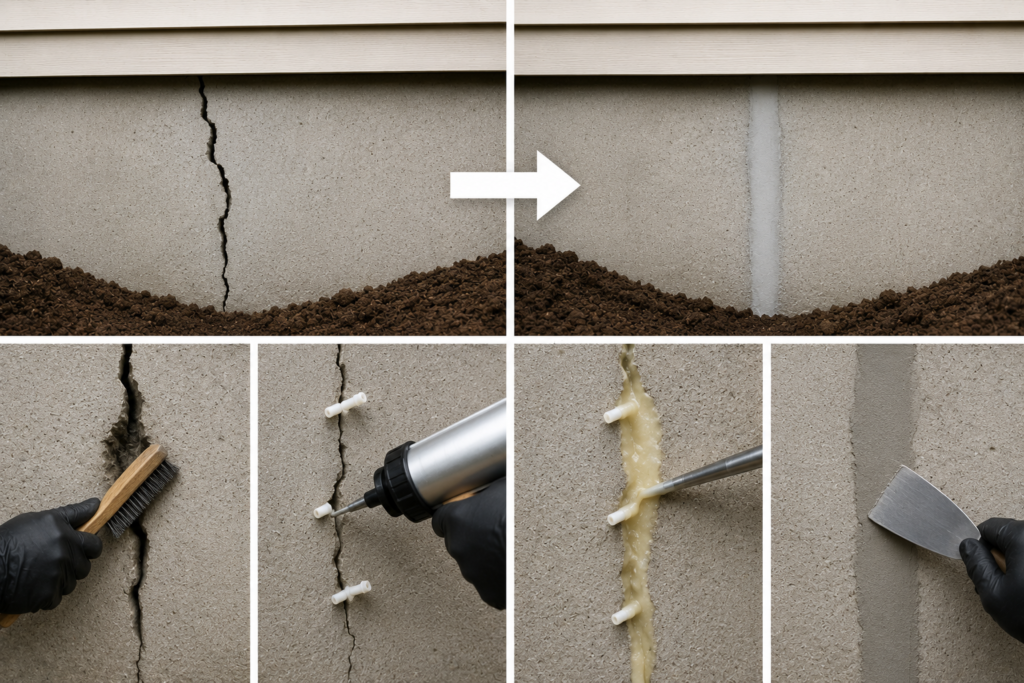
Discovering a crack in your foundation can make any homeowner nervous.
One of the first questions people ask is:
"How do you repair a foundation crack?"
The good news is that many foundation cracks can be repaired successfully.
The best repair depends on what caused the crack, how large it is, and whether water is entering your basement.
In this guide, we'll explain the most common foundation crack repair methods in simple, easy-to-understand language.
Does Every Foundation Crack Need Repair?
No. Many small hairline cracks are caused by normal settling and may never become a serious problem. However, a crack should be inspected if it:- Leaks water
- Continues getting larger
- Is horizontal
- Appears along with other signs of foundation movement
Book A Free Inspection
Or
📞 Call Now for a Free Assessment
Step 1: Inspect the Crack
Before any repairs begin, a foundation repair specialist will usually inspect the crack. They may look at:- The size of the crack
- The direction of the crack
- Whether water is entering
- Whether the crack has changed over time
- Other signs of foundation movement
Crack Injection
One of the most common ways to repair foundation cracks is crack injection. A special repair material is injected into the crack to fill the opening and help prevent water from entering. Crack injection is commonly used for cracks that leak water but are not caused by major structural movement.Sealing Small Cracks
Some small cracks can be sealed to help keep moisture out. Sealing is often used for:- Hairline cracks
- Minor surface cracks
- Small cracks that are stable
Repairing Structural Cracks
If the crack is caused by foundation movement, simply filling the crack may not solve the problem. In these situations, the contractor may first recommend repairing the underlying foundation issue before repairing the crack itself. Fixing the cause helps prevent the crack from returning.Waterproofing Around the Foundation
Sometimes the real problem isn't the crack itself. Water collecting around the outside of your home may be creating pressure against the foundation. In these cases, the contractor may recommend waterproofing solutions such as:- Improving drainage
- Repairing foundation cracks
- Installing an interior drainage system
- Exterior waterproofing
- Extending downspouts away from the home
Can I Repair a Foundation Crack Myself?
Some home improvement stores sell products for repairing small cracks. These may work for certain cosmetic cracks. However, DIY repairs are usually not recommended if:- Water is entering the basement.
- The crack continues growing.
- The crack is horizontal.
- There are several cracks.
- The foundation is moving.
How Long Does Foundation Crack Repair Take?
Many foundation crack repairs can be completed in a single day. Larger projects that involve waterproofing or structural repairs may take longer. The repair time depends on:- The number of cracks
- The type of repair
- The condition of the foundation
- Whether waterproofing is also needed
Will the Crack Come Back?
In many cases, a properly repaired crack will not cause future problems. However, if the original cause of the crack isn't addressed, new cracks may develop over time. That's why solving the underlying problem is just as important as repairing the crack itself.How Can You Help Prevent New Foundation Cracks?
Good home maintenance can help reduce the risk of future cracks. Simple things you can do include:- Clean gutters regularly.
- Extend downspouts away from the house.
- Keep the ground sloping away from the foundation.
- Repair plumbing leaks quickly.
- Check your basement after heavy rain.
- Watch for new cracks.
When Should You Call a Foundation Repair Specialist?
It's a good idea to schedule an inspection if you notice:- Water leaking through a crack
- A crack getting larger
- Horizontal cracks
- Several new cracks
- Bowing basement walls
- Uneven floors
- Doors or windows that suddenly stick
Frequently Asked Questions
Can foundation cracks be permanently repaired?
Many foundation cracks can be repaired successfully. The best repair depends on what caused the crack in the first place.Is crack injection a permanent repair?
Crack injection is a common repair method for many leaking foundation cracks. Whether it provides a long-lasting solution depends on the condition of the foundation and whether the underlying cause has been addressed.Can I repair a foundation crack myself?
Some small cosmetic cracks can be repaired by homeowners. However, cracks that leak water, continue to grow, or may be structural should be inspected by a professional.How do I know which repair my home needs?
A professional inspection is the best way to determine the cause of the crack and recommend the right repair method.Learn More About Foundation Cracks
Understanding how foundation cracks are repaired is an important step toward protecting your home. If you'd like to learn what causes foundation cracks, the different types of cracks, warning signs to watch for, repair costs, and when to call a professional, read our Complete Homeowner's Guide to Foundation Cracks. It's an easy-to-understand guide created to help homeowners make informed decisions about foundation crack repair and home maintenance.Final Thoughts
Finding a foundation crack doesn't always mean you need a major repair. Many cracks can be repaired successfully, especially when they're found early. The most important step is identifying why the crack formed before choosing a repair method. If you're unsure about a crack in your foundation, a professional inspection can help you understand the problem, recommend the right solution, and give you peace of mind.Book A Free Inspection
Or