
If your basement keeps getting wet, you've probably heard about interior waterproofing and exterior waterproofing.
Many homeowners wonder:
"Which one is better?"
The answer is that both methods can work well, but they solve the problem in different ways.
The best choice depends on where the water is coming from, how serious the problem is, and the condition of your home.
In this guide, we'll explain the differences between interior and exterior basement waterproofing in simple, easy-to-understand language.
What Is Interior Basement Waterproofing?
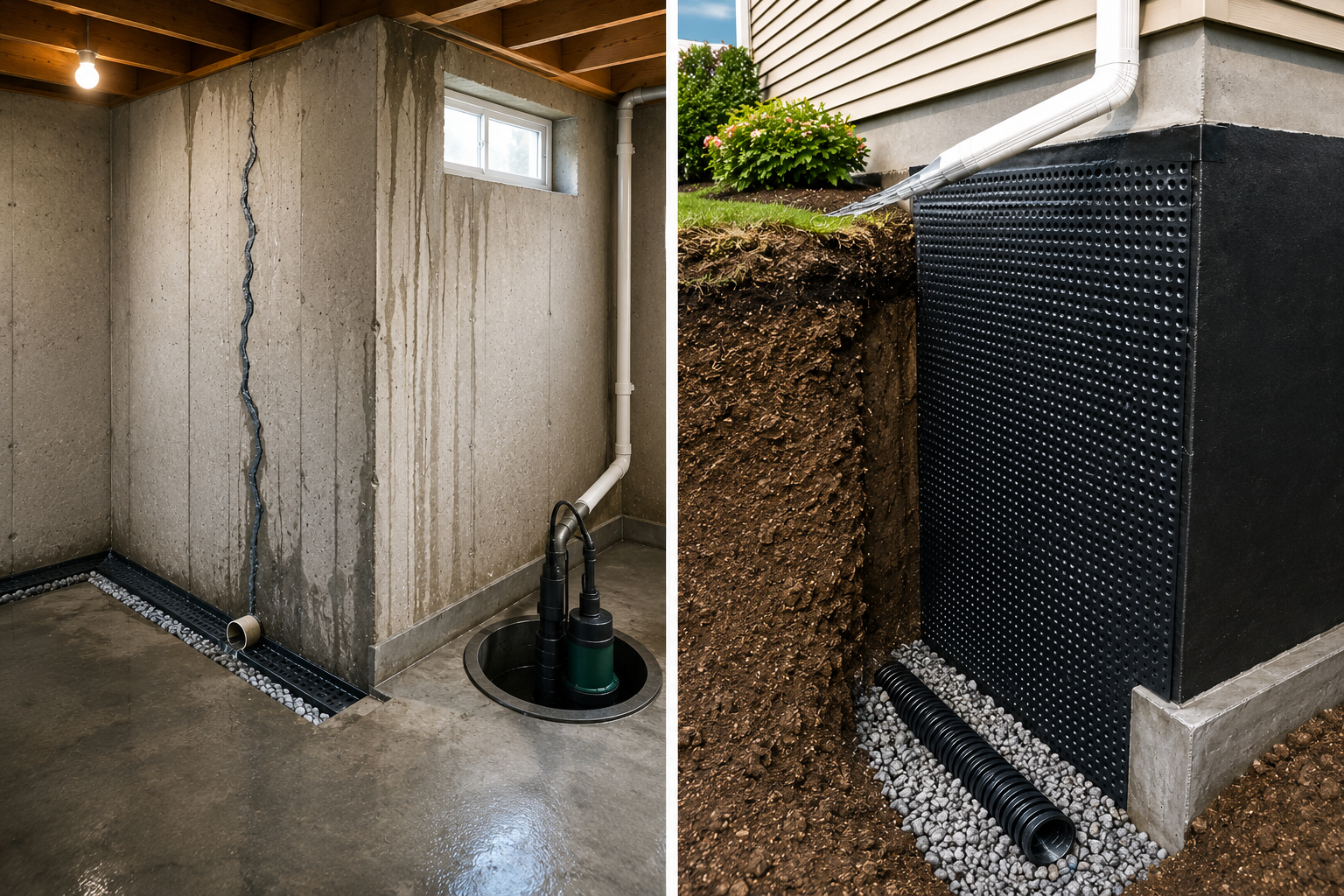
Interior waterproofing focuses on managing water after it reaches your foundation. Instead of stopping water outside the home, it collects the water safely and moves it away before it can flood your basement. A typical interior waterproofing system may include:- Interior drainage channels
- A sump pump
- Drain pipes beneath the basement floor
- Crack repairs
- A vapor barrier on basement walls (in some homes)
How Does Interior Waterproofing Work?
Water that enters around the foundation is directed into a drainage system installed beneath the basement floor. The water then flows into a sump pit. A sump pump automatically pumps the water outside and away from your home. Because the water is removed quickly, your basement stays dry.Advantages of Interior Waterproofing
Interior waterproofing offers several benefits. It can:- Keep your basement dry
- Help prevent flooding
- Reduce mold and mildew
- Usually require less digging than exterior waterproofing
- Be completed without disturbing your landscaping
What Is Exterior Basement Waterproofing?
Exterior waterproofing works differently. Instead of managing water after it reaches the foundation, it stops water before it gets there. This is done by waterproofing the outside of your foundation walls. Exterior waterproofing may include:- Excavating around the foundation
- Applying a waterproof membrane
- Installing drainage boards
- Adding drainage pipe (weeping tile)
- Improving grading around the home
How Does Exterior Waterproofing Work?
Workers carefully dig around the outside of your home's foundation. Once the foundation walls are exposed, they are cleaned and covered with a waterproof coating or membrane. A drainage system is usually installed to carry water safely away from the home. After everything is complete, the soil is replaced. This helps prevent water from reaching the basement walls.Advantages of Exterior Waterproofing
Exterior waterproofing has several important benefits. It can:- Stop water before it reaches the foundation
- Help protect foundation walls
- Reduce hydrostatic pressure against the foundation
- Help prevent future leaks
- Provide a long-lasting solution for many homes
Which Waterproofing Method Is Better?
There isn't one answer for every home. Some homes only need interior waterproofing. Others benefit more from exterior waterproofing. In some situations, both systems may be recommended. The right solution depends on:- Where the water is entering
- The condition of the foundation
- The amount of water
- The age of the home
- Your property's drainage
Is Exterior Waterproofing More Expensive?
In many cases, yes. Because exterior waterproofing involves digging around the foundation, it usually requires more labor, equipment, and time. Interior waterproofing is often less disruptive and may cost less depending on the size of the project. However, every home is different, so the only way to know the actual cost is to have your home inspected.Can Interior Waterproofing Fix Every Leak?
Not always. If water is entering because of serious damage to the outside of the foundation, exterior repairs may be the better long-term solution. On the other hand, many homes with basement leaks are successfully protected using interior drainage systems and sump pumps. The best repair depends on the source of the problem.Can I Choose the Waterproofing Method Myself?
You can certainly learn about both options, but it's best to first understand why your basement is leaking. Choosing a waterproofing method before identifying the source of the water may lead to unnecessary repairs. A qualified waterproofing contractor can inspect your home and recommend the solution that fits your specific situation.How Can I Help Prevent Basement Leaks?
No matter which waterproofing system you have, regular home maintenance is important. Here are a few simple tips:- Clean your gutters regularly.
- Make sure downspouts carry water away from your home.
- Keep the ground sloping away from the foundation.
- Repair foundation cracks promptly.
- Test your sump pump every year.
- Check your basement after heavy rain.