
Finding water in your basement can be frustrating, especially if you don't know where it's coming from.
Maybe you've noticed water on the floor after a heavy rain, damp spots on the walls, or a musty smell that won't go away.
The good news is that basement leaks usually have a clear cause. Once you find out why water is getting in, you can choose the right solution to keep your basement dry.
In this guide, we'll explain the most common causes of basement leaks in simple, easy-to-understand language.
Why Do Basements Leak?
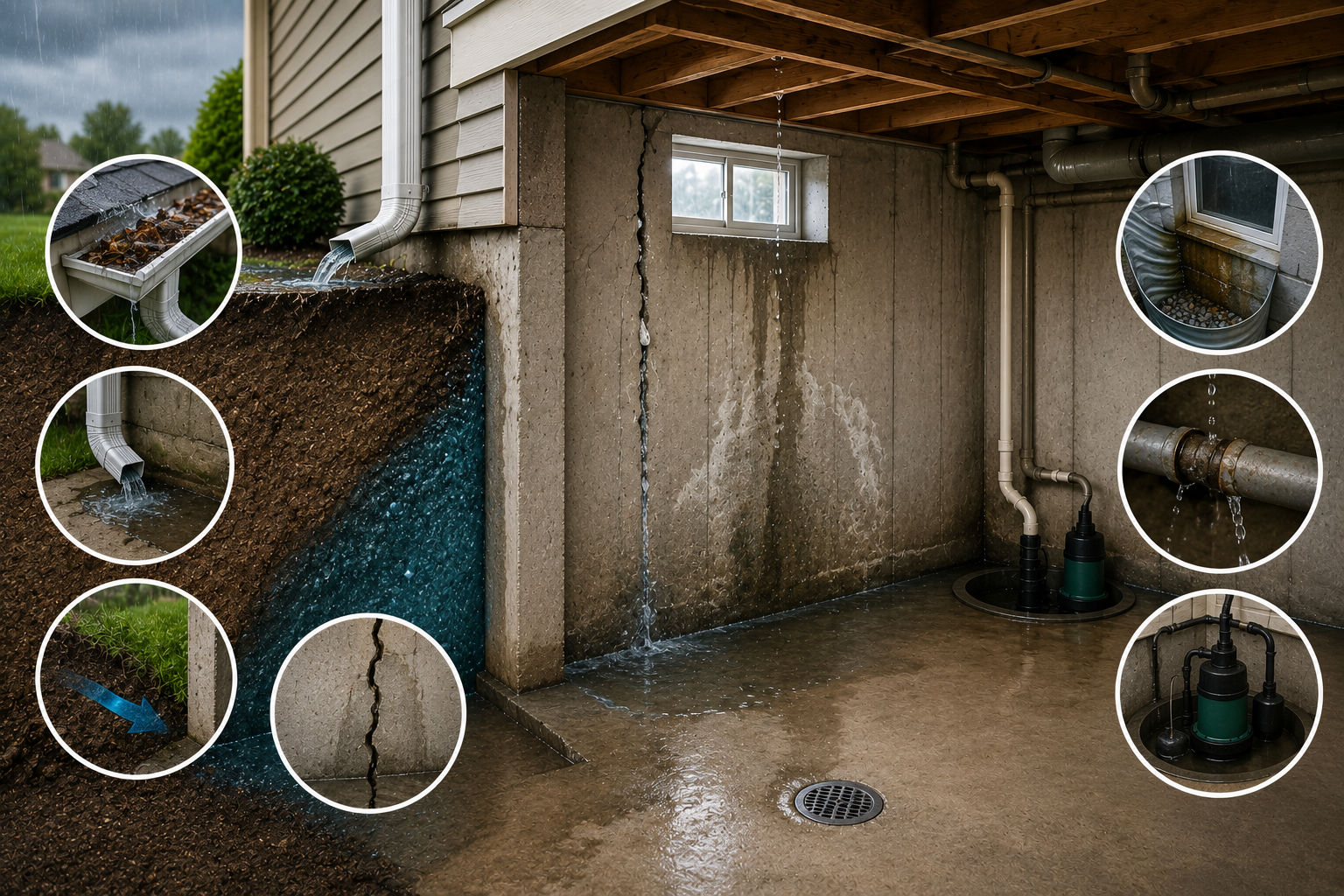
Your basement sits below ground level. When it rains or snow melts, water soaks into the soil around your home. If that water can't drain away properly, it pushes against your foundation. Over time, water may find a way into your basement through cracks, gaps, or other weak spots. Let's look at the most common reasons this happens.1. Foundation Cracks
One of the most common causes of basement leaks is a crack in the foundation. Concrete naturally develops small cracks as it ages. While many of these cracks are harmless, some become large enough for water to seep through. Water often enters through:- Wall cracks
- Floor cracks
- Corners where the wall meets the floor
- Construction joints
2. Poor Drainage Around Your Home
Rainwater should always flow away from your house. If your yard slopes toward your home instead of away from it, water collects around the foundation. The longer water sits against the foundation, the greater the chance it will find a way inside. Improving the grading around your home can often help reduce basement leaks.3. Clogged Gutters
Your gutters are designed to collect rainwater from your roof and direct it away from your home. When gutters become clogged with leaves, dirt, and debris, water overflows and falls beside the foundation. This can soak the soil around your basement and increase the risk of leaks. Cleaning your gutters regularly is one of the easiest ways to help protect your basement.4. Downspouts That Empty Too Close to the House
Downspouts play an important role in keeping water away from your foundation. If they release water only a short distance from your home, the surrounding soil quickly becomes saturated. Extending downspouts several feet away from the foundation can often help reduce water problems.5. Hydrostatic Pressure
Hydrostatic pressure may sound complicated, but it's actually a simple idea. After heavy rain, water builds up in the soil around your home. As more water collects, it pushes against your basement walls and floor. Eventually, the pressure can force water through small cracks, joints, or tiny openings in the concrete. This is one of the most common reasons basements leak after storms.6. Window Well Leaks
If your basement has windows below ground level, they are usually surrounded by window wells. When these wells fill with rainwater because they don't drain properly, water can leak through the window and into your basement. Keeping window wells clean and making sure they drain properly can help prevent leaks.7. Plumbing Leaks
Not all basement leaks come from outside. Sometimes a leaking pipe, water heater, washing machine, or other plumbing fixture is the real cause. Signs of a plumbing leak may include:- Water appearing even when it hasn't rained
- Higher water bills
- Damp areas near plumbing fixtures
- Water around appliances
8. Sump Pump Problems
If your home has a sump pump, it helps remove water from beneath your basement floor. If the sump pump stops working because of a power outage, mechanical failure, or lack of maintenance, water may begin collecting in your basement. Testing your sump pump regularly can help prevent unexpected flooding.9. Damaged Waterproofing
Older homes may have waterproofing systems that have worn out over time. As waterproof membranes, drainage systems, or sealants age, they may no longer keep water out as effectively as they once did. In some cases, repairing or replacing these systems may be necessary.Can Basement Leaks Get Worse?
Yes. Water problems rarely fix themselves. If the source of the leak isn't corrected, you may eventually notice:- Larger leaks
- Mold growth
- Musty odors
- Damaged drywall
- Damaged flooring
- Higher humidity
- Foundation damage
How Can You Prevent Basement Leaks?
There are several simple things homeowners can do to reduce the risk of leaks. These include:- Clean gutters regularly.
- Extend downspouts away from the house.
- Make sure the yard slopes away from the foundation.
- Repair foundation cracks.
- Keep window wells clean.
- Test your sump pump before heavy rain.
- Watch for signs of moisture.
When Should You Call a Waterproofing Professional?
You should consider scheduling an inspection if you notice:- Water on the basement floor
- Water stains on walls
- Damp concrete
- Mold or mildew
- Musty smells
- Foundation cracks that leak
- Water entering after rain