
If you've ever walked into your basement and found a puddle of water, damp walls, or a musty smell, you're not alone.
Many homeowners deal with water problems in their basements at some point. The good news is that there are solutions that can help keep your basement dry and protect your home.
This is where basement waterproofing comes in.
In this guide, we'll explain what basement waterproofing is, why it's important, and how it helps protect your home.
What Is Basement Waterproofing?
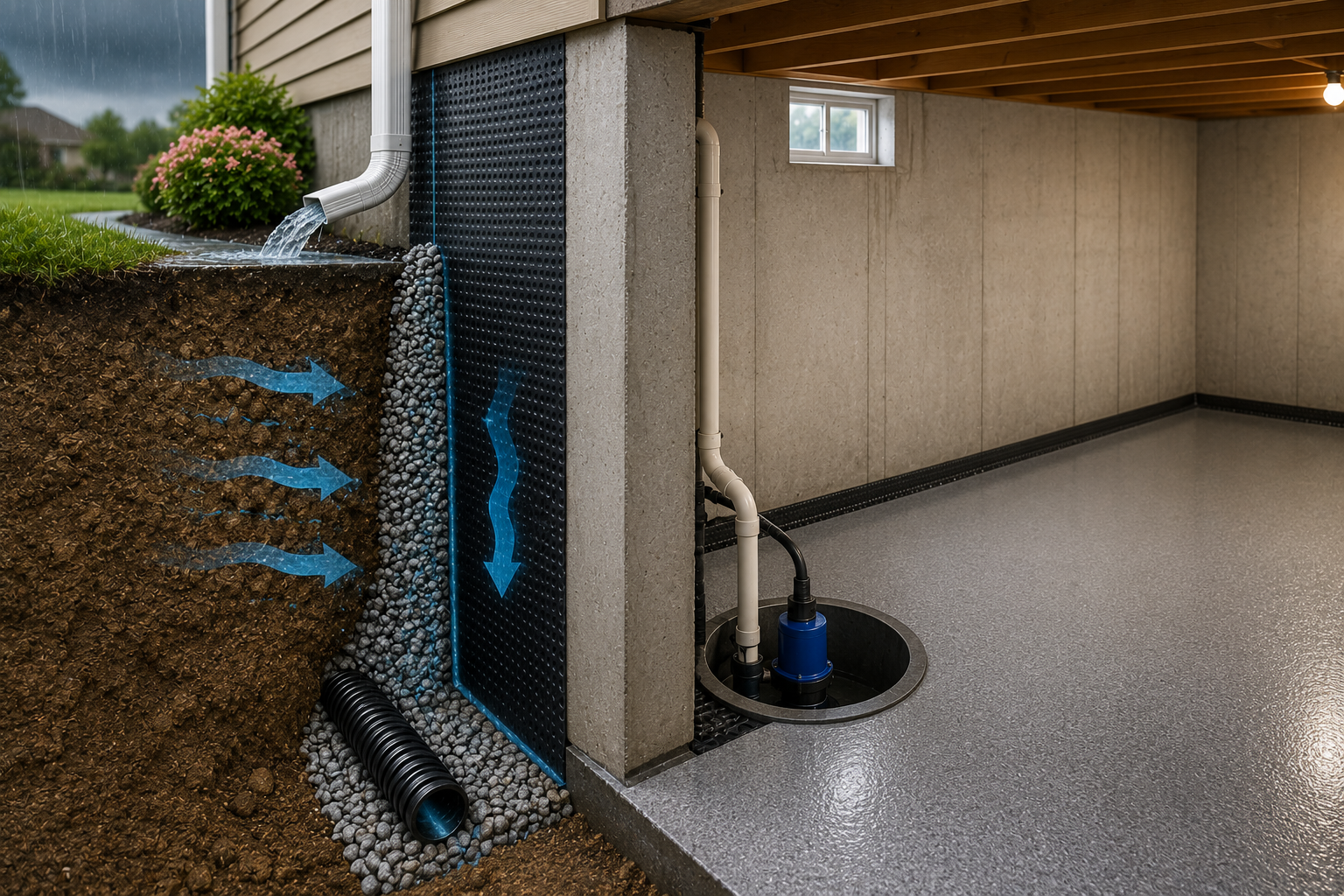
Basement waterproofing is the process of stopping water from entering your basement. The goal is to keep your basement dry by preventing water from getting through the foundation walls or floor. Depending on the cause of the problem, waterproofing may include:- Repairing foundation cracks
- Improving drainage around your home
- Installing an interior drainage system
- Installing a sump pump
- Waterproofing the outside of the foundation
Why Is Basement Waterproofing Important?
Water may seem harmless at first, but over time it can cause serious damage to your home. A wet basement can lead to:- Mold and mildew
- Musty odors
- Damaged drywall
- Rotten wood
- Damaged flooring
- Ruined furniture and storage boxes
- Higher humidity throughout the home
How Does Water Get Into a Basement?
Water doesn't usually appear without a reason. Some of the most common ways water enters a basement include:Foundation Cracks
Small cracks in concrete walls or floors can allow water to seep inside, especially during heavy rain.Poor Drainage
If rainwater collects around your home's foundation instead of flowing away, it can eventually find its way into the basement.Clogged Gutters
When gutters become blocked with leaves and debris, water can overflow and collect beside the foundation.Short Downspouts
Downspouts that empty too close to the house allow large amounts of water to soak the soil around the foundation.Hydrostatic Pressure
After heavy rain or snow melts, water builds up in the soil around your foundation. As pressure increases, water can slowly push its way through tiny openings in concrete walls and floors.Window Wells
If basement window wells fill with water because they don't drain properly, water may leak into your basement through the window.Signs Your Basement May Need Waterproofing
Sometimes the warning signs are obvious. Other times, they're easy to miss. Watch for:- Water on the basement floor
- Damp walls
- Musty smells
- Mold or mildew
- White chalky stains on concrete walls
- Peeling paint
- Rust on metal items
- High humidity
- Water stains on walls
Different Types of Basement Waterproofing
There isn't one waterproofing solution that works for every home. Here are some of the most common methods.Interior Waterproofing
Interior waterproofing helps collect water after it enters around the foundation and safely directs it to a sump pump, where it's pumped away from your home. This is a common solution for many leaking basements.Exterior Waterproofing
Exterior waterproofing stops water before it reaches the foundation. This usually involves digging around the outside of the home, applying a waterproof membrane to the foundation walls, and improving drainage. Because it keeps water away from the foundation, it's often considered one of the most effective long-term solutions.Crack Repair
If water is entering through a foundation crack, repairing the crack may solve the problem. Many cracks can be sealed using specialized materials that help stop future leaks.Sump Pumps
A sump pump removes water that collects beneath your basement floor and pumps it safely away from your home. Homes in areas with frequent groundwater or heavy rain often benefit from having a sump pump.Can I Waterproof My Basement Myself?
Some small maintenance jobs can be done by homeowners. For example, you can:- Clean your gutters
- Extend your downspouts
- Remove debris from window wells
- Make sure water drains away from your house
How Long Does Basement Waterproofing Last?
A properly installed waterproofing system can last for many years. The lifespan depends on:- The repair method
- The quality of the installation
- Soil conditions
- Regular maintenance around your home
When Should You Call a Basement Waterproofing Professional?
You should consider scheduling an inspection if you notice:- Water on your basement floor
- Damp concrete walls
- Water stains
- Mold growth
- Musty odors
- Foundation cracks that leak water
- Water entering after heavy rain