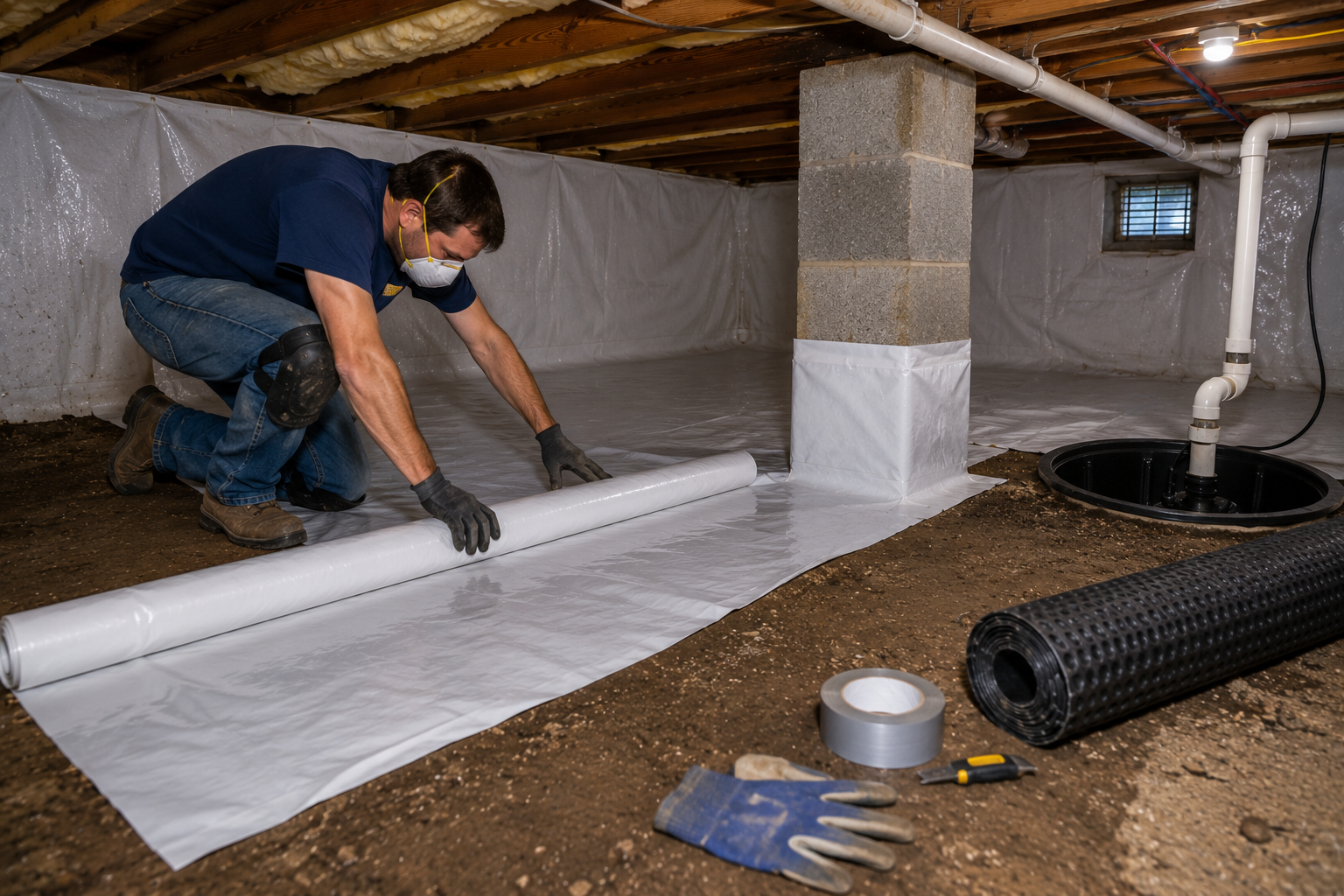

If you have found water or moisture in your crawl space, you may be wondering if you can fix the problem yourself. The answer depends on what is causing the moisture and how serious the problem is.
Some small jobs can be done by homeowners, but larger waterproofing projects usually require special equipment and experience.
In this guide, we'll explain what you can safely do yourself and when it is best to call a professional.
Can Homeowners Waterproof a Crawl Space?
Yes, but only for simple problems. If your crawl space has a small amount of moisture and no major water damage, there are several maintenance tasks you may be able to handle yourself. However, if you have standing water, mold, foundation cracks, or ongoing moisture problems, professional waterproofing is usually the better choice.What Can I Do Myself?
Here are some simple jobs that many homeowners can do.Clean Your Gutters
Clogged gutters allow rainwater to overflow beside your home's foundation. Cleaning your gutters helps direct rainwater away from your house and can reduce moisture in the crawl space.Extend Your Downspouts
Downspouts should carry water several feet away from your home. If they end too close to the foundation, water can soak into the ground and enter the crawl space. Installing downspout extensions is an easy and inexpensive project for many homeowners.Improve Yard Drainage
The ground around your home should slope away from the foundation. If water collects near your house after it rains, adding soil to improve the slope may help move water away from the crawl space.Check for Plumbing Leaks
Look for leaking water pipes, drain pipes, or outdoor faucets. Even a small leak can create enough moisture for mold and wood rot. Repairing leaks quickly can prevent bigger problems later.Remove Small Amounts of Water
If a small amount of water enters your crawl space after heavy rain, you may be able to remove it using:- A wet/dry vacuum
- Towels
- Fans
- A portable dehumidifier
Inspect the Vapor Barrier
Many crawl spaces have a plastic sheet called a vapor barrier that covers the soil. If you notice small tears or loose edges, they may be repaired or replaced. If the barrier is badly damaged or missing, you may need professional help.What Should You Not Try Yourself?
Some waterproofing jobs are much more difficult than they appear. These projects are usually best left to experienced contractors.Installing a Sump Pump
A sump pump removes water from the crawl space. Installing one often requires digging, plumbing, electrical work, and proper drainage. If installed incorrectly, it may not protect your home.Crawl Space Encapsulation
Encapsulation involves sealing the crawl space with a heavy-duty vapor barrier. The material must be installed correctly around walls, support columns, and other obstacles. Poor installation can allow moisture to enter and reduce the system's effectiveness.Installing Interior Drainage Systems
Some homes need drainage pipes installed beneath or around the crawl space. This work requires careful planning and experience to ensure water flows properly.Repairing Foundation Cracks
Small cracks may not look serious, but some can allow water to enter or indicate foundation movement. A professional can determine whether the cracks are cosmetic or need repair.Mold Removal
If mold covers a large area, professional mold removal is often the safest choice. Simply spraying household cleaners on mold may not remove it completely. The moisture problem must also be fixed, or the mold is likely to return.What Are the Risks of DIY Waterproofing?
Trying to waterproof a crawl space without finding the real cause of the moisture can lead to bigger problems. You may:- Miss the source of the leak.
- Spend money on the wrong solution.
- Leave hidden moisture behind.
- Allow mold to continue growing.
- Cause more damage over time.
When Should You Call a Professional?
It is a good idea to contact a crawl space waterproofing contractor if you notice:- Standing water
- Mold
- Wood rot
- Sagging floors
- Wet insulation
- Foundation cracks
- Strong musty smells
- Water returning after every rain
- High humidity that does not improve
What Will a Professional Do?
A crawl space waterproofing contractor will inspect your crawl space to find the source of the moisture. They may recommend:- Improving drainage around your home
- Repairing foundation cracks
- Installing a vapor barrier
- Crawl space encapsulation
- Installing a sump pump
- Adding a dehumidifier
- Repairing plumbing leaks
Can DIY Waterproofing Save Money?
Sometimes. Simple maintenance tasks such as cleaning gutters, fixing small plumbing leaks, or extending downspouts can help prevent moisture problems at a low cost. However, if the problem is more serious, trying to fix it yourself may end up costing more if the water damage continues or the wrong repair is made.How Can You Help Prevent Crawl Space Moisture?
Regular maintenance goes a long way toward keeping your crawl space dry. Here are a few simple habits:- Clean your gutters at least twice a year.
- Keep downspouts pointed away from your foundation.
- Check for plumbing leaks.
- Look inside your crawl space after heavy rain.
- Repair small problems before they become larger ones.
- Keep the area clean and free of debris.