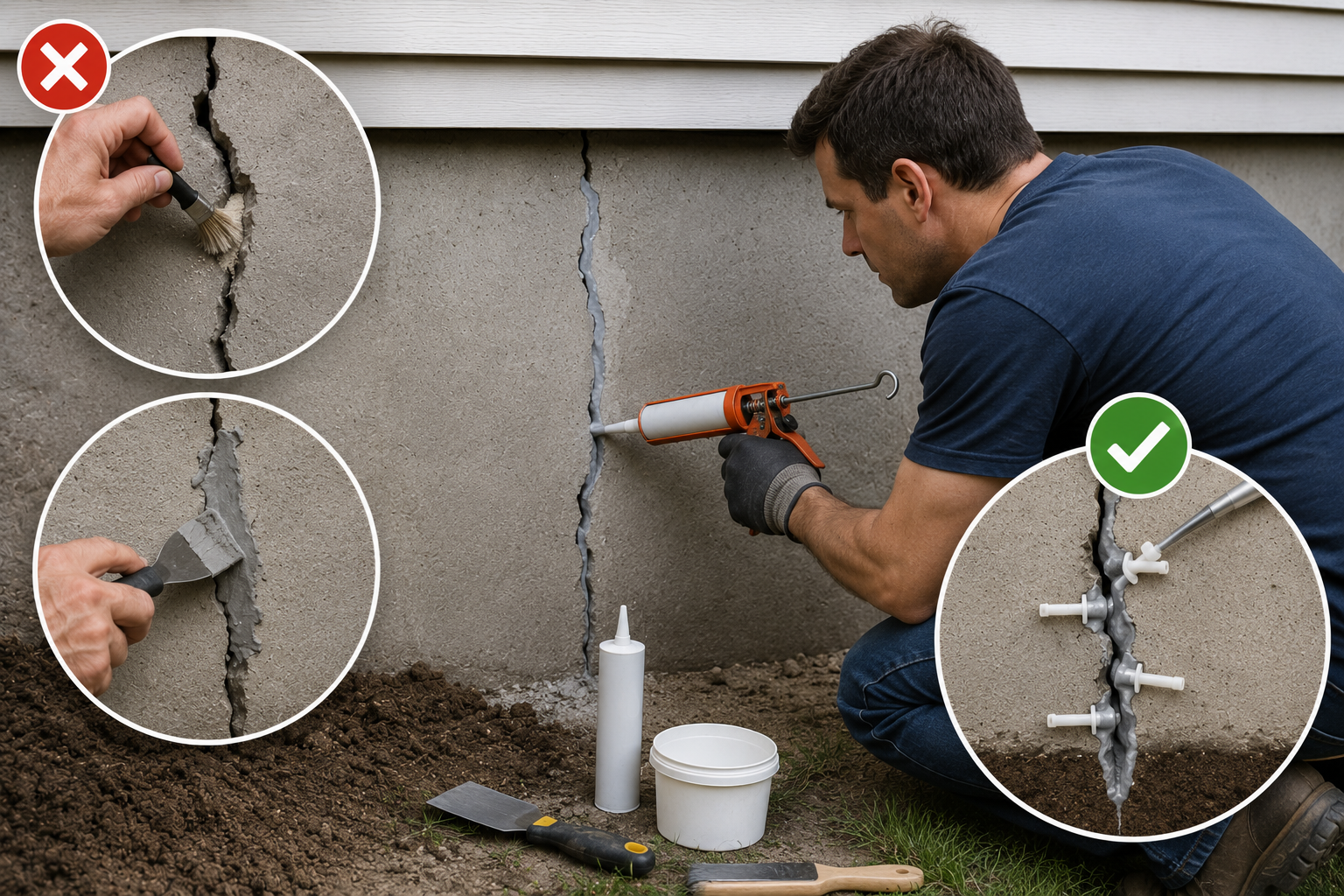

Finding a crack in your foundation can be alarming.
Many homeowners immediately wonder:
"Can I repair this myself and save money?"
The answer is:
Sometimes.
Some very small foundation cracks can be repaired by homeowners, while others should always be inspected and repaired by a professional.
The most important thing is knowing what kind of crack you have before you decide to fix it yourself.
In this guide, we'll explain when a DIY repair might be possible and when it's better to call an expert.
Can You Repair Every Foundation Crack Yourself?
No. Not every foundation crack is suitable for a DIY repair. Some cracks are small and only affect the surface of the concrete. Others may be caused by foundation movement or allow water into your basement. Repairing the wrong type of crack yourself could allow the problem to get worse.Small Cosmetic Cracks
Some small cracks are simply part of a home's natural settling process. These cracks are often:- Thin or hairline cracks
- Small vertical cracks
- Stable over time
- Not leaking water
Cracks That Leak Water
If water is coming through the crack after heavy rain, a simple DIY repair may not solve the real problem. Water pressure around the foundation may continue pushing against the wall. If the source of the water isn't addressed, the leak may return. In many cases, a professional repair provides a more reliable long-term solution.Large Foundation Cracks
Large cracks should not be ignored. If the crack is much wider than a typical hairline crack or appears to be getting larger, it's best to have it inspected. Large cracks may indicate that the foundation is moving. Simply filling the crack may not fix the underlying problem.Horizontal Cracks
Horizontal cracks deserve special attention. These cracks may be caused by pressure from the soil pushing against the foundation wall. Because they can sometimes indicate structural movement, they should be inspected by a foundation repair professional. DIY repairs are generally not recommended for horizontal cracks.Multiple Cracks
Finding one small crack is common. Finding several cracks in different areas of your foundation may suggest a larger issue. If multiple cracks appear within a short period of time, it's a good idea to schedule a professional inspection.Other Warning Signs
A crack may need professional attention if you also notice:- Uneven floors
- Doors that suddenly stick
- Windows that are difficult to open
- Bowing basement walls
- Water entering the basement
- New cracks appearing throughout the home
What Happens If You Repair the Wrong Crack?
Covering a crack without fixing the cause may only hide the problem. The crack may:- Reappear later
- Continue getting larger
- Allow more water into the basement
- Lead to additional cracks nearby
When Should You Call a Professional?
You should contact a foundation repair specialist if:- The crack is getting larger.
- Water is entering through the crack.
- The crack is horizontal.
- Several cracks appear at the same time.
- You notice bowing basement walls.
- You're unsure whether the crack is serious.
Can a Professional Repair Last Longer?
In many cases, yes. Professional repairs are designed to address not only the crack itself but also the cause of the problem. If the underlying issue is corrected, many repairs provide long-lasting protection.How Can You Help Prevent Foundation Cracks?
Good home maintenance can reduce the chance of future cracks. Simple steps include:- Clean gutters regularly.
- Extend downspouts away from the house.
- Keep the ground sloping away from the foundation.
- Repair plumbing leaks quickly.
- Inspect your basement after heavy rain.
- Watch for new cracks.