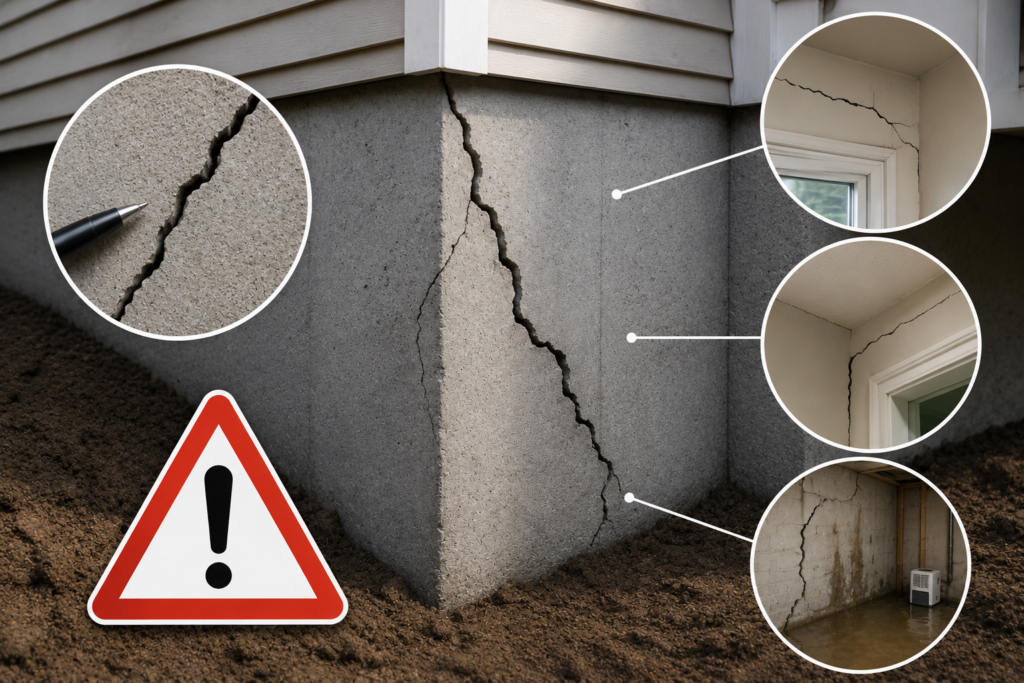
Finding a crack in your foundation can be frightening.
Many homeowners immediately think:
- Is my house safe?
- Is the foundation failing?
- Do I need to fix this right away?
Book A Free Inspection
Or
📞 Call Now for a Free Assessment
Are All Foundation Cracks Dangerous?
No. Many foundation cracks are completely normal. Concrete naturally develops small cracks as it ages and as the house settles into the ground. These small cracks often stay the same size for years and never become a serious problem. However, some cracks deserve closer attention because they may indicate movement in the foundation or allow water into your basement.When Is a Foundation Crack Usually Not Serious?
A crack is often less concerning if it:- Is very small or hairline
- Runs vertically
- Has stayed the same size for a long time
- Does not leak water
- Is not causing other problems in the home
When Can a Foundation Crack Be Dangerous?
Some cracks may indicate that your foundation is under pressure or moving. You should pay closer attention if you notice:- Horizontal cracks
- Large cracks
- Cracks that continue getting wider
- Water leaking through a crack
- Several new cracks appearing
- Bowing basement walls
Can Foundation Cracks Let Water Into My Basement?
Yes. Even a small crack can allow water to seep into your basement after heavy rain or when snow melts. If water enters through a crack, you may notice:- Damp walls
- Water stains
- Small puddles
- Mold or mildew
- A musty smell
Can Foundation Cracks Get Worse?
Sometimes. A crack may stay exactly the same for many years. Other cracks slowly become:- Wider
- Longer
- More noticeable
Other Warning Signs to Watch For
Foundation cracks aren't the only signs of a possible foundation problem. You should also look for:- Uneven floors
- Doors that stick
- Windows that won't close properly
- Gaps around doors or windows
- Cracks in drywall
- Chimneys pulling away from the house
Can Dangerous Foundation Cracks Be Repaired?
Yes. Many foundation cracks can be repaired successfully. The repair depends on:- The type of crack
- What caused it
- Whether water is entering
- Whether the foundation is still moving
Should I Ignore a Small Foundation Crack?
It's usually better not to ignore it. Even if a crack appears small, it's a good idea to:- Take a photo.
- Measure the width.
- Check it every few months.
- Watch for water after heavy rain.
How Can You Help Prevent Foundation Problems?
While not every crack can be prevented, good home maintenance can reduce the risk. Simple steps include:- Clean gutters regularly.
- Extend downspouts away from the house.
- Keep the ground sloping away from the foundation.
- Repair plumbing leaks quickly.
- Inspect your basement after heavy rain.
- Watch for new cracks.
When Should You Call a Professional?
You should schedule an inspection if you notice:- Horizontal cracks
- Large cracks
- Water entering through a crack
- Cracks that continue getting bigger
- Bowing basement walls
- Uneven floors
- Doors or windows that suddenly become difficult to open or close
Frequently Asked Questions
Are most foundation cracks dangerous?
No. Many foundation cracks are small and harmless. However, some cracks can indicate foundation movement or allow water into your basement.Is a small vertical crack dangerous?
Usually not. Many small vertical cracks are caused by normal settling. Still, they should be monitored for changes.Can a foundation crack collapse my house?
This is very uncommon. Most foundation cracks do not lead to a collapse. However, large structural cracks should be inspected so problems can be addressed early.Should I repair a crack even if it isn't dangerous?
If the crack is leaking water or getting larger, repairing it early can help prevent bigger and more expensive problems later.Learn More About Foundation Cracks
Understanding whether a foundation crack is dangerous is an important step toward protecting your home. If you'd like to learn what causes foundation cracks, the different types of cracks, common repair methods, repair costs, and when to call a professional, read our Complete Homeowner's Guide to Foundation Cracks. It's a simple, homeowner-friendly guide that answers the most common questions about foundation cracks and helps you make informed decisions about your home.Final Thoughts
Finding a foundation crack can be unsettling, but it doesn't always mean there's a serious problem. Many cracks are simply part of a home's natural settling process and never become dangerous. The important thing is to watch for warning signs such as growing cracks, water leaks, or other changes in your home. If you're ever unsure about a foundation crack, having it inspected by an experienced professional can give you peace of mind and help protect your home for years to come.Book A Free Inspection
Or