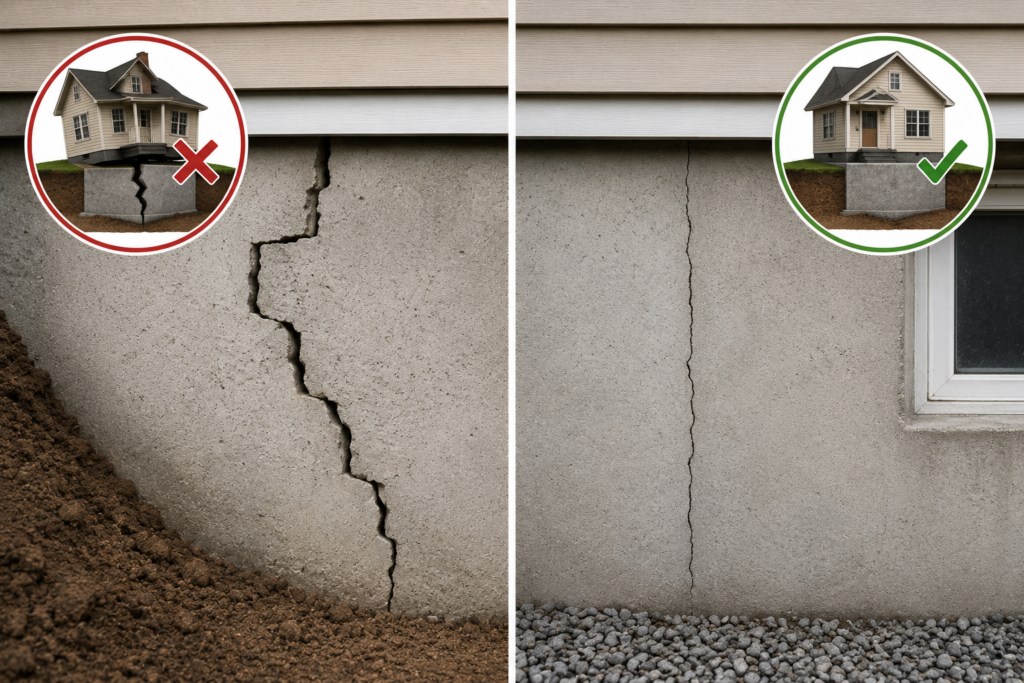
Finding a crack in your home's foundation can be worrying.
Many homeowners immediately wonder:
"Is this just a small crack, or is it a serious structural problem?"
The truth is that not all foundation cracks are the same.
Some cracks are a normal part of a home's aging process and don't affect the strength of the foundation.
Others may be signs that the foundation is moving and should be inspected.
In this guide, we'll explain the difference between structural and non-structural foundation cracks in simple, easy-to-understand language.
Book A Free Inspection
Or
📞 Call Now for a Free Assessment
What Is a Non-Structural Foundation Crack?
A non-structural crack is a crack that usually does not affect the strength of your home's foundation. These cracks are often caused by:- Natural settling
- Concrete shrinking as it cures
- Small changes in temperature
- Minor movement in the soil
What Do Non-Structural Cracks Look Like?
Non-structural cracks are often:- Thin or hairline cracks
- Small vertical cracks
- Short cracks that don't change over time
- Cracks with no water leaking through them
What Is a Structural Foundation Crack?
A structural crack may indicate that part of your foundation is moving or under excessive pressure. These cracks can affect the stability of the foundation if they are ignored. Not every large crack is structural, but structural cracks should always be inspected by a professional.What Can Cause Structural Cracks?
Structural cracks may develop because of:- Expanding soil
- Poor drainage around the home
- Hydrostatic pressure
- Uneven settling
- Foundation movement
- Heavy loads on the foundation
What Do Structural Cracks Look Like?
Some warning signs include:- Horizontal cracks
- Large cracks
- Stair-step cracks in brick or block foundations
- Cracks that continue getting wider
- Several cracks appearing together
- Cracks that allow water into the basement
Can a Non-Structural Crack Become Structural?
Sometimes. A small crack may not be a problem today. However, if the cause of the crack continues, the crack can become larger over time. That's why it's important to keep an eye on any crack you notice. If it changes, it's a good idea to have it inspected.Can Structural Cracks Be Repaired?
Yes. Many structural foundation problems can be repaired successfully. The repair method depends on:- The cause of the crack
- The amount of movement
- The type of foundation
- Whether water is entering the basement
Should I Repair a Non-Structural Crack?
It depends. If the crack is:- Stable
- Very small
- Not leaking water
- Not changing over time
Signs You Should Call a Professional
It's a good idea to schedule an inspection if you notice:- Horizontal cracks
- Cracks getting larger
- Water leaking through a crack
- Multiple new cracks
- Bowing basement walls
- Uneven floors
- Doors or windows that suddenly become difficult to open or close
Can Water Enter Through Both Types of Cracks?
Yes. Even a small non-structural crack can allow water into your basement during heavy rain. That's why some homeowners repair small cracks before they become larger water problems.How Can You Help Prevent Foundation Cracks?
While you can't prevent every crack, you can reduce the risk by taking care of your home. Simple maintenance includes:- Cleaning gutters regularly.
- Extending downspouts away from the house.
- Keeping the ground sloping away from the foundation.
- Repairing plumbing leaks.
- Checking your basement after heavy rain.
- Monitoring existing cracks for changes.
Frequently Asked Questions
Are most foundation cracks structural?
No. Many foundation cracks are non-structural and are simply the result of normal settling or concrete shrinkage.Can a small crack become a serious problem?
Yes. If the crack continues to grow, allows water into the basement, or is caused by foundation movement, it should be inspected.Is a horizontal crack always structural?
Not always, but horizontal cracks deserve closer attention because they may be caused by pressure against the foundation wall.Should I repair a hairline crack?
If it stays small and doesn't leak water, monitoring it may be enough. If it changes or begins leaking, it's a good idea to have it evaluated.Learn More About Foundation Cracks
Understanding whether a crack is structural or non-structural is an important step toward protecting your home. If you'd like to learn what causes foundation cracks, the different types of cracks, common repair methods, repair costs, and when to call a professional, read our Complete Homeowner's Guide to Foundation Cracks. It's an easy-to-understand guide that answers the most common questions homeowners have about foundation cracks and how to deal with them.Final Thoughts
Not every foundation crack is a reason to panic. Many non-structural cracks are small, stable, and never become serious problems. However, structural cracks can indicate that your foundation is under stress and may need professional attention. The key is to monitor any crack you find, watch for changes, and seek expert advice if you're unsure. Taking action early can help protect your home, prevent water damage, and avoid more expensive repairs in the future.Book A Free Inspection
Or