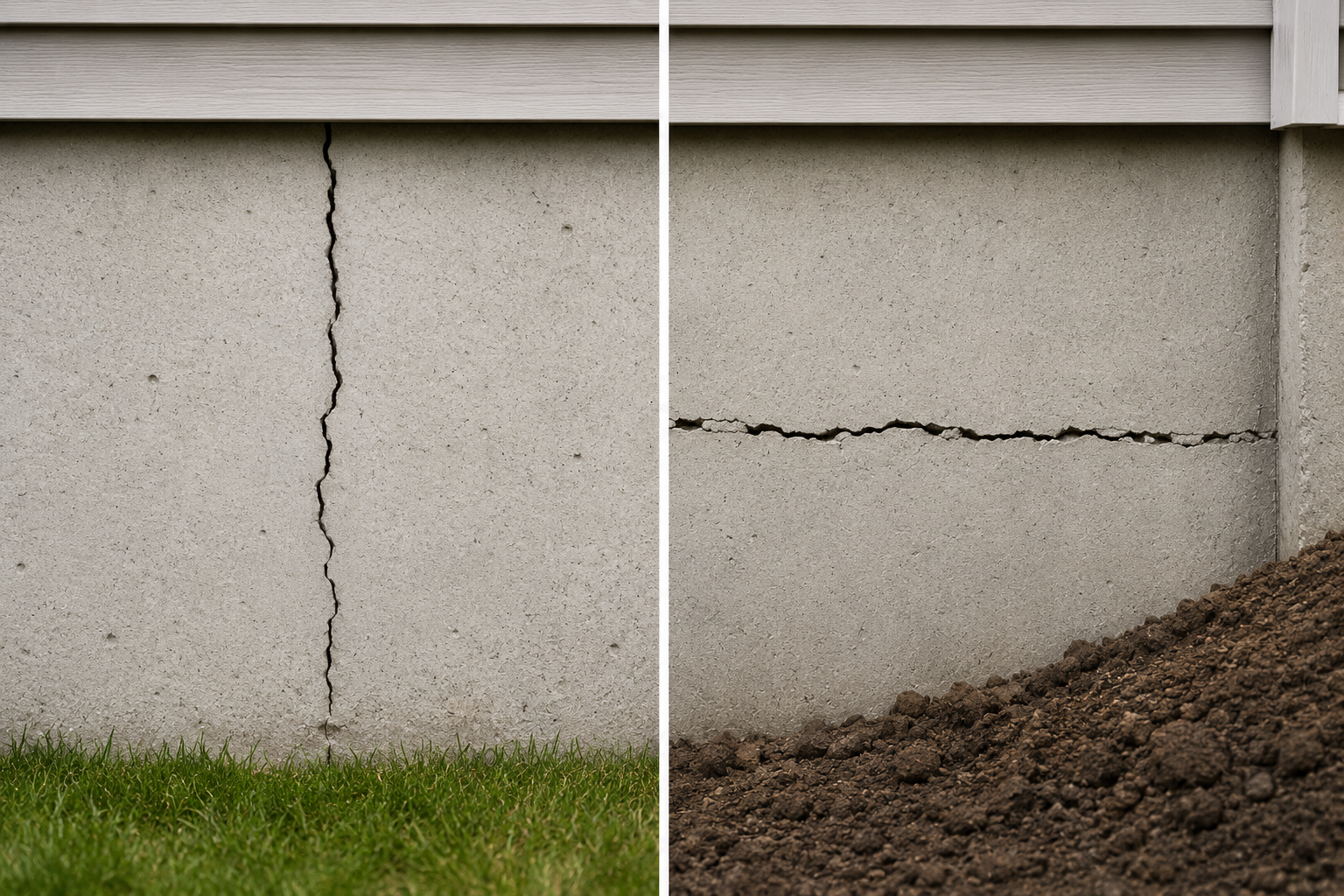

Finding a crack in your foundation can be scary.
One of the first things homeowners ask is:
"Does the direction of the crack matter?"
The answer is yes—it can.
The direction of a foundation crack often gives clues about what caused it and whether it may need repair.
This doesn't mean every horizontal crack is serious or every vertical crack is harmless. However, understanding the difference can help you know when it's time to have your home inspected.
In this guide, we'll explain horizontal and vertical foundation cracks in simple, easy-to-understand language.
What Is a Vertical Foundation Crack?
A vertical crack runs mostly up and down. It may be perfectly straight or have a slight zigzag shape. Vertical cracks are one of the most common types of foundation cracks found in homes. Many are caused by normal settling as a house gets older.What Causes Vertical Cracks?
Some common causes include:- Natural settling
- Concrete shrinking as it cures
- Small movements in the soil
- Changes in temperature
Should I Worry About a Vertical Crack?
Not always. A small vertical crack is often less concerning than other types of foundation cracks. However, you should pay attention if the crack:- Becomes wider over time
- Starts leaking water
- Appears in several locations
- Is much larger than a typical hairline crack
What Is a Horizontal Foundation Crack?
A horizontal crack runs across the wall from side to side. These cracks are less common than vertical cracks. Because they may be caused by pressure pushing against the foundation wall, they deserve closer attention.What Causes Horizontal Cracks?
Horizontal cracks often develop because of pressure from the soil outside your home. This pressure may increase because of:- Heavy rain
- Poor drainage
- Expanding soil
- Hydrostatic pressure
- Frozen soil during winter
Should I Worry About a Horizontal Crack?
A horizontal crack doesn't automatically mean your home is unsafe. However, horizontal cracks are more likely to be associated with movement in the foundation wall. If you notice a horizontal crack, it's a good idea to have it inspected by a foundation repair professional. The sooner the cause is identified, the easier it may be to prevent additional damage.Other Types of Foundation Cracks
Besides horizontal and vertical cracks, homeowners may also notice:Diagonal Cracks
These cracks run at an angle. They may be caused by uneven settling in one area of the foundation.Stair-Step Cracks
These cracks often follow the mortar joints in brick or concrete block walls. They may indicate movement in the foundation and should be inspected if they continue to grow.Can Any Crack Leak Water?
Yes. Water doesn't care which direction a crack runs. Both vertical and horizontal cracks can allow water into your basement if they extend through the foundation wall. If you notice water entering through a crack after rain, it's a good idea to have it repaired.How Can You Tell If a Crack Is Getting Worse?
One simple way is to monitor it. You can:- Take a photo every few months.
- Measure the width of the crack.
- Watch for new cracks nearby.
- Check if water begins entering through the crack.
Can Foundation Cracks Be Repaired?
Yes. Many foundation cracks can be repaired successfully. The repair depends on:- The type of crack
- The cause of the crack
- Whether water is entering
- Whether the foundation is still moving
How Can You Help Prevent Foundation Cracks?
While not every crack can be prevented, regular maintenance can reduce the risk. Here are a few simple tips:- Clean gutters regularly.
- Extend downspouts away from the house.
- Keep the ground sloping away from the foundation.
- Repair plumbing leaks quickly.
- Watch for changes in existing cracks.
- Inspect your basement after heavy rain.