
Finding a crack in your home's foundation can be worrying.
Many homeowners immediately think something is seriously wrong.
The good news is that not every foundation crack is a sign of a major problem.
In fact, many homes develop small foundation cracks over time.
The important thing is understanding why the crack appeared and whether it needs to be repaired.
In this guide, we'll explain the most common causes of foundation cracks in simple, easy-to-understand language.
Why Do Foundation Cracks Happen?
Your home's foundation supports the entire weight of your house. Over time, the foundation is affected by:- The soil beneath it
- Water around the home
- Weather changes
- The age of the house
1. Natural Settling
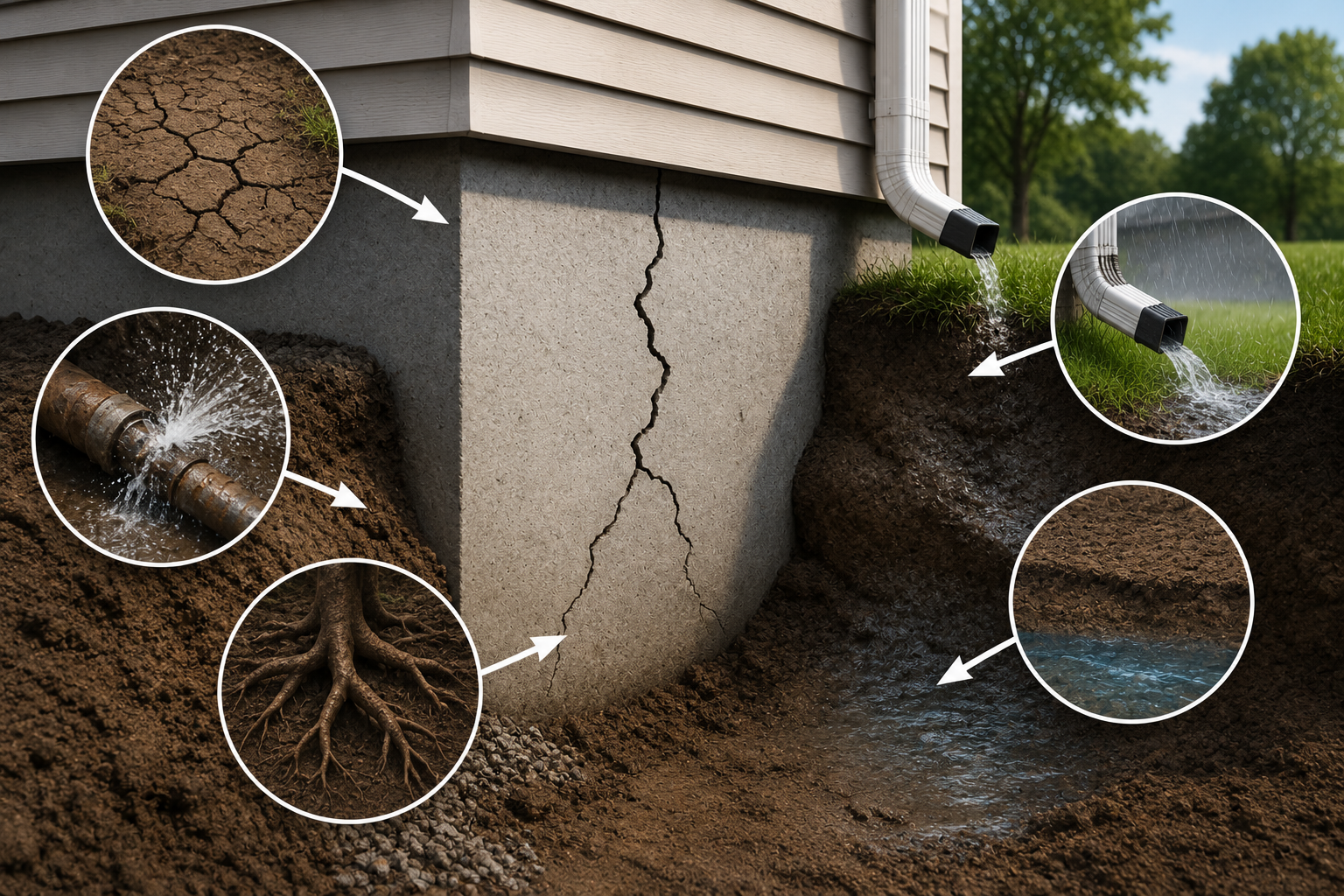
One of the most common causes of foundation cracks is natural settling. After a home is built, the soil beneath it slowly compresses and settles. As this happens, small cracks may appear in the concrete. This is a normal part of many homes and doesn't always mean there's a serious structural problem.2. Soil Movement
The ground beneath your home is always changing. Some soils expand when they become wet and shrink when they dry out. As the soil moves, it places pressure on the foundation. Over time, this movement can cause cracks to develop.3. Heavy Rain and Poor Drainage
Water plays a big role in foundation health. If rainwater collects around your home because of poor drainage, clogged gutters, or short downspouts, the soil around the foundation becomes saturated. This extra moisture can increase pressure on the foundation and contribute to cracking. Keeping water away from your home is one of the best ways to help protect your foundation.4. Dry Weather
Just as too much water can cause problems, so can long periods of dry weather. When the soil dries out, it can shrink and pull away from the foundation. Without proper support beneath the foundation, small movements can occur, leading to cracks.5. Tree Roots
Large trees planted close to a house can sometimes affect the soil beneath the foundation. Tree roots absorb large amounts of water from the ground. As the soil dries out, it may shrink, causing the foundation to move slightly. Not every tree causes foundation problems, but trees growing close to the house should be monitored.6. Temperature Changes
Concrete expands and contracts as temperatures change. Over many years, these repeated changes can contribute to small cracks. This is especially common in areas that experience freezing winters and hot summers.7. Hydrostatic Pressure
After heavy rain or snow melts, water builds up in the soil around your home. As more water collects, it pushes against the foundation walls. This pressure is called hydrostatic pressure. Too much pressure can contribute to foundation cracks and basement leaks.8. Concrete Shrinkage
Concrete naturally shrinks slightly as it cures after it's poured. Because of this, some small hairline cracks may appear within the first few years after construction. These cracks are often cosmetic and don't necessarily indicate a structural problem.Can Small Cracks Become Bigger?
Sometimes. If the cause of the crack continues, the crack may:- Become wider
- Become longer
- Allow water into the basement
- Be accompanied by additional cracks
Can Foundation Cracks Be Prevented?
Not every crack can be prevented, but homeowners can reduce the risk by taking care of their property. Simple steps include:- Clean gutters regularly.
- Make sure downspouts direct water away from the house.
- Keep the ground sloping away from the foundation.
- Repair plumbing leaks quickly.
- Avoid allowing water to collect beside your home.
- Watch for new cracks.
When Should You Call a Professional?
You should consider scheduling an inspection if you notice:- Large cracks
- Horizontal cracks
- Cracks that continue to grow
- Water leaking through a crack
- Several new cracks appearing
- Uneven floors
- Doors or windows that suddenly stick