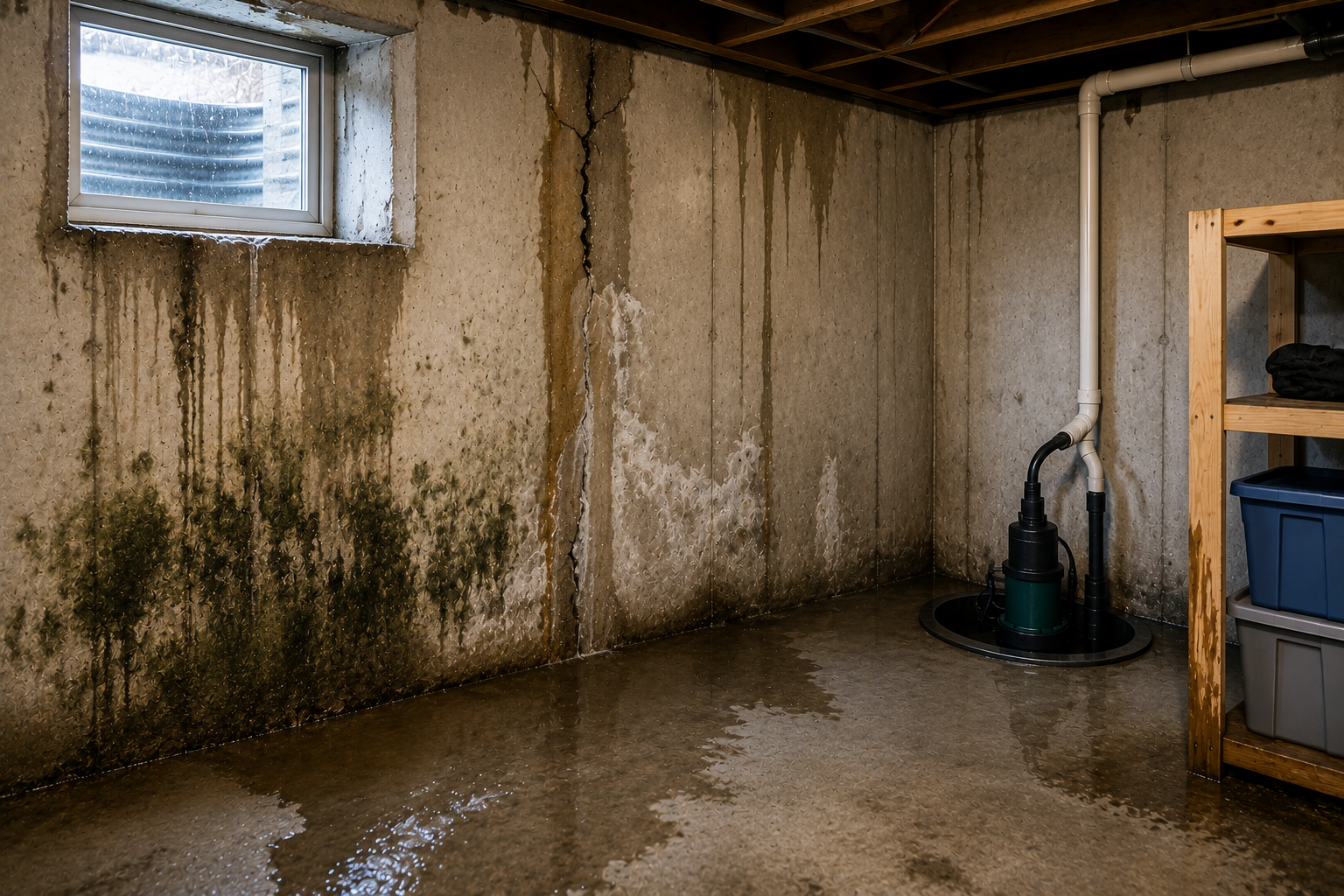

Your basement doesn't have to be flooded to have a water problem.
In many homes, the first warning signs are small and easy to miss. You may notice a damp smell, a stain on the wall, or a little water after a heavy rain.
The good news is that your home often gives you plenty of warning before a small moisture problem turns into a major repair.
In this guide, we'll explain the most common signs that your basement may need waterproofing and what you should do if you notice them.
Why Do Basement Water Problems Happen?
Your basement sits below ground level. After it rains or snow melts, water soaks into the soil around your home. If that water can't drain away properly, it pushes against your foundation. Over time, water may find its way into your basement through cracks, joints, or other openings. The earlier you notice the warning signs, the easier it is to solve the problem.1. Water on the Basement Floor
This is one of the most obvious signs. You may find:- Small puddles after heavy rain
- Water collecting near walls
- Wet spots that keep coming back
2. Damp Basement Walls
Your walls should feel dry. If they feel damp or look wet, moisture may be coming through the foundation. Damp walls are often an early warning sign that waterproofing may be needed.3. A Musty Smell
Does your basement smell damp even though you can't see water? A musty odor usually means excess moisture is trapped in the basement. Over time, that moisture can encourage mold and mildew to grow. If the smell never seems to go away, it's worth finding the source.4. Mold or Mildew
Mold needs moisture to grow. If you notice:- Black spots
- Green patches
- White fuzzy growth
- Mold around walls or stored boxes
5. White Chalky Stains on Concrete Walls
Have you ever noticed a white powder on your basement walls? This is called efflorescence. It happens when water moves through concrete and leaves behind mineral deposits as it dries. While the white stains themselves aren't dangerous, they are a sign that moisture is passing through the foundation.6. Peeling Paint
Paint should stay attached to your basement walls. If you notice:- Bubbling paint
- Peeling paint
- Flaking paint
7. Foundation Cracks That Leak
Not every foundation crack is serious. However, if water enters through a crack during or after rain, it's a sign that waterproofing may be needed. Repairing leaking cracks early can help prevent larger problems later.8. Rust on Metal Objects
Excess moisture doesn't just affect concrete. It can also cause:- Rust on appliances
- Rust on metal shelving
- Rust on tools
- Rust on support columns
9. High Humidity
Sometimes a basement feels damp even without visible water. Signs of high humidity include:- Sticky air
- Condensation on windows
- Water droplets on pipes
- A clammy feeling
10. Water After Heavy Rain
Many homeowners notice water only after a major storm. If your basement leaks whenever it rains, it's a strong sign that water is entering from outside. This often points to problems such as:- Poor drainage
- Foundation cracks
- Clogged gutters
- Short downspouts
Can Basement Water Problems Get Worse?
Yes. Water problems usually don't go away on their own. Over time, you may experience:- Larger leaks
- Mold growth
- Damaged drywall
- Damaged flooring
- Higher humidity
- Damage to stored belongings
- Foundation problems
What Should You Do If You Notice These Signs?
Start by checking around your home. Look for:- Clogged gutters
- Downspouts that drain too close to the house
- Low spots where water collects
- Foundation cracks
- Blocked window wells